

Beyond the “Check-Box”: Why Annapurna IV (7,525m) is Superior Everest Training than Manaslu (8,163m)
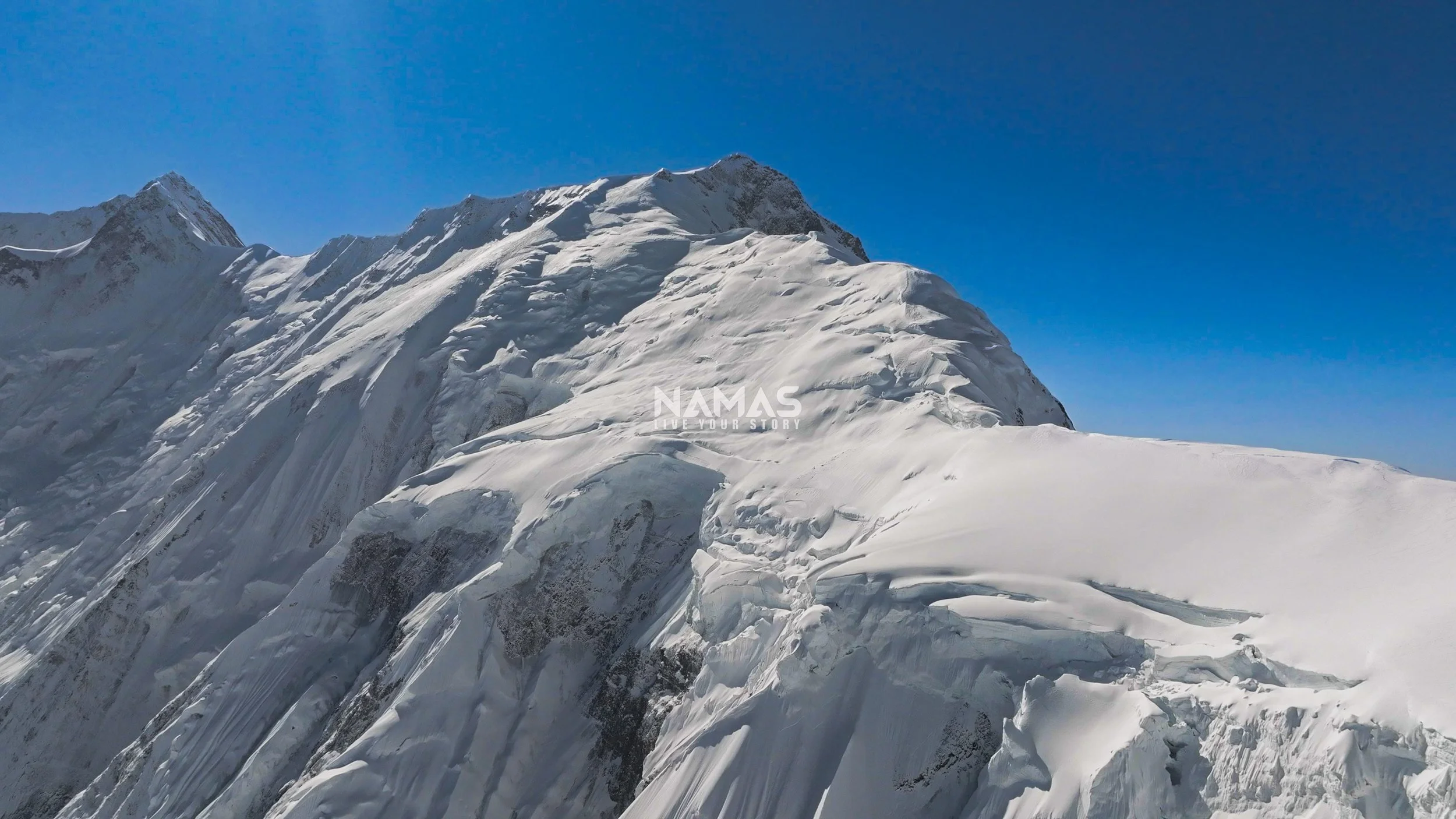
Annapurna IV, ridge line to summit
If your Everest plan is “get a 7,000m certificate as fast as possible,” you’re building your summit attempt on the wrong foundation.
Everest doesn’t fail people because they lacked altitude. It fails people because they lacked competence under stress: moving efficiently on fixed lines, managing fear and fatigue on steep terrain, and making good decisions when you’re cold, hypoxic, and behind schedule.
And now, Nepal is tightening the gate.
The New Reality of 2026 Everest Permits
Nepal has been moving toward restricting Everest permits to climbers who can prove they’ve already summited a 7,000m peak in Nepal—a policy widely reported as part of proposed legislation meant to address safety and overcrowding. (Reuters)
Separate from experience requirements, Nepal has already increased the Everest royalty/permit fee to $15,000 (from $11,000), with the higher fee taking effect from late 2025 for subsequent seasons. (Reuters)
The twist most climbers miss
A permit rule creates a predictable behavior: people start hunting the easiest way to “qualify.” That’s how you end up with climbers who have a valid certificate… and then get shocked on the Lhotse Face.
Ask yourself this, brutally:
Do you want a piece of paper, or do you want movement mastery and a solid confidence?
Do you want the minimum requirement… or do you want to show up to Camp 2 already operating like an Everest climber?
Because the Lhotse Face is not impressed by your resume. It is a steep, fixed-line efficiency test where sloppy technique, slow transitions, and mental fragility get exposed fast.
Annapurna IV — The “Raw” Alternative (Technicality vs. Altitude)
Most people compare peaks by height. Serious Everest prep compares peaks by terrain demands.
Manaslu (8,163m): more altitude, often less skill demand (until it matters)
Manaslu is widely chosen as an “entry” 8,000er. Even we at Namas describe it as “less technical” overall—but still extreme because you’re operating at the edge of the death zone. (Namas Adventure)
Annapurna IV (7,525m): less altitude, more transferable Everest skill
Annapurna IV is where you earn your competence. Our team climbs the classic North-West Ridge, establishing Camp 1–3 (and sometimes Camp 4 depending on conditions) with a rope-fixing strategy to the summit.
It’s graded TD+ / alpine grade 4 on alpine grading system, with steep snow/ice, exposed ridges, and mixed terrain that demands real precision.
We say - “If you can handle the technical ridges of Annapurna IV, the standard route on Everest will feel manageable. If you only climb Manaslu, Everest will still surprise you.”
Why? Because Annapurna IV forces you to practice the exact things that make or break Everest:
Efficient fixed-line travel (up and down, fast and controlled)
Crampon technique on steep terrain
Ridge exposure management (moving when you don’t feel “safe”)
Decision-making when tired (the real killer)
The Crowds & The “True Expedition” Experience
If you want the honest truth: crowd dynamics change who you become on a mountain.
Manaslu is crowded—by the numbers
Manaslu has become the commercial autumn favorite. In 2025, Nepal’s Department of Tourism issued ~374 permits for Manaslu in that season—an enormous number for a single 8,000er, and a strong indicator of how saturated the experience has become. (Kathmandu Post)
When that many teams compress into a single base camp ecosystem, you don’t just lose solitude—you lose responsibility. Systems get outsourced:
Someone else sets the pace.
Someone else fixes the ropes.
Someone else decides when “the push” happens.
You become a passenger.
Annapurna IV is the opposite: small team, real accountability
Namas positions Annapurna IV as rarely climbed, especially in their autumn departures (often with only the Namas team operating). (Namas Adventure)
They also emphasize small teams (3–12 clients) and 1:1 Sherpa support. (Namas Adventure)
And here’s the insight climbers underestimate:
Real preparation for Everest isn’t just physical; it’s mental.
Annapurna IV builds the expedition mindset: patience, self-management, and competence in a remote environment where you can’t hide inside a crowd.
Ask yourself:
When the weather turns and plans change—do you adapt, or do you panic?
When nobody is “carrying” the group energy—can you still perform?
That is Everest training.
Logistics & ROI (Return on Investment)
Everest prep is expensive. The best climbers don’t spend more—they spend smarter.
Manaslu costs more to run like a “safe” 8,000er
Investment for Manaslu has 3 tiers, with Signature, Classic+ PLUS and Classic.
We provide higher oxygen loads included in upper packages (e.g., Signature lists 4 oxygen bottles). It’s also helicopter-based into Sama Gaun in the Signature climbing plan.
This is the key: once you step into 8,000m territory, you typically increase:
oxygen planning and redundancy
high-camp complexity
risk exposure time in the death zone
That’s not “bad.” It’s just a different category of project.
Annapurna IV sits in the sweet spot
Annapurna IV is positioned as a strategic alternative: high enough to test true altitude response, but built around skill development and expedition competence. We at NAMAS explicitly frame it as a way to “skip entry level 8000M” and get ready for Everest.
Investment for Annapurna 4 expedition falls into two tiers “Signature” & “Classic” and both program includes 1 personal oxygen cylinder + regulator—meaning you can allocate budget toward training, coaching, and 1:1 support rather than simply buying more altitude logistics.
We runs Annapurna IV as a 30-day expedition, which matters because real acclimatization and repetition are part of skill transfer.
Bottom line ROI question:
Would you rather spend your money to touch 8,000m once, or to become the kind of climber who moves well on Everest?
The Namas Verdict — Build a Legacy, Not a Resume
Both peaks can help you qualify. Only one reliably helps you succeed.
Manaslu can prove you can survive higher altitude—inside a very crowded, commercially saturated system. (Kathmandu Post)
Annapurna IV forces you to become sharper: better footwork, better rope systems, better pacing, better mindset, and better self-leadership—on a route Namas runs via the North-West Ridge with fixed lines and a deliberate camp strategy. (Namas Adventure)
If you’re serious about Everest 2026, stop optimizing for eligibility. Optimize for competence.
Are you looking to just qualify, or are you looking to succeed?
View our Annapurna IV 2026 Departure Dates
