7000m peaks, mountaineering Sushmita Shrestha 7000m peaks, mountaineering Sushmita Shrestha

Life Above Base Camp: What Every Climber Should Know Before finalizing a 7000m Peak

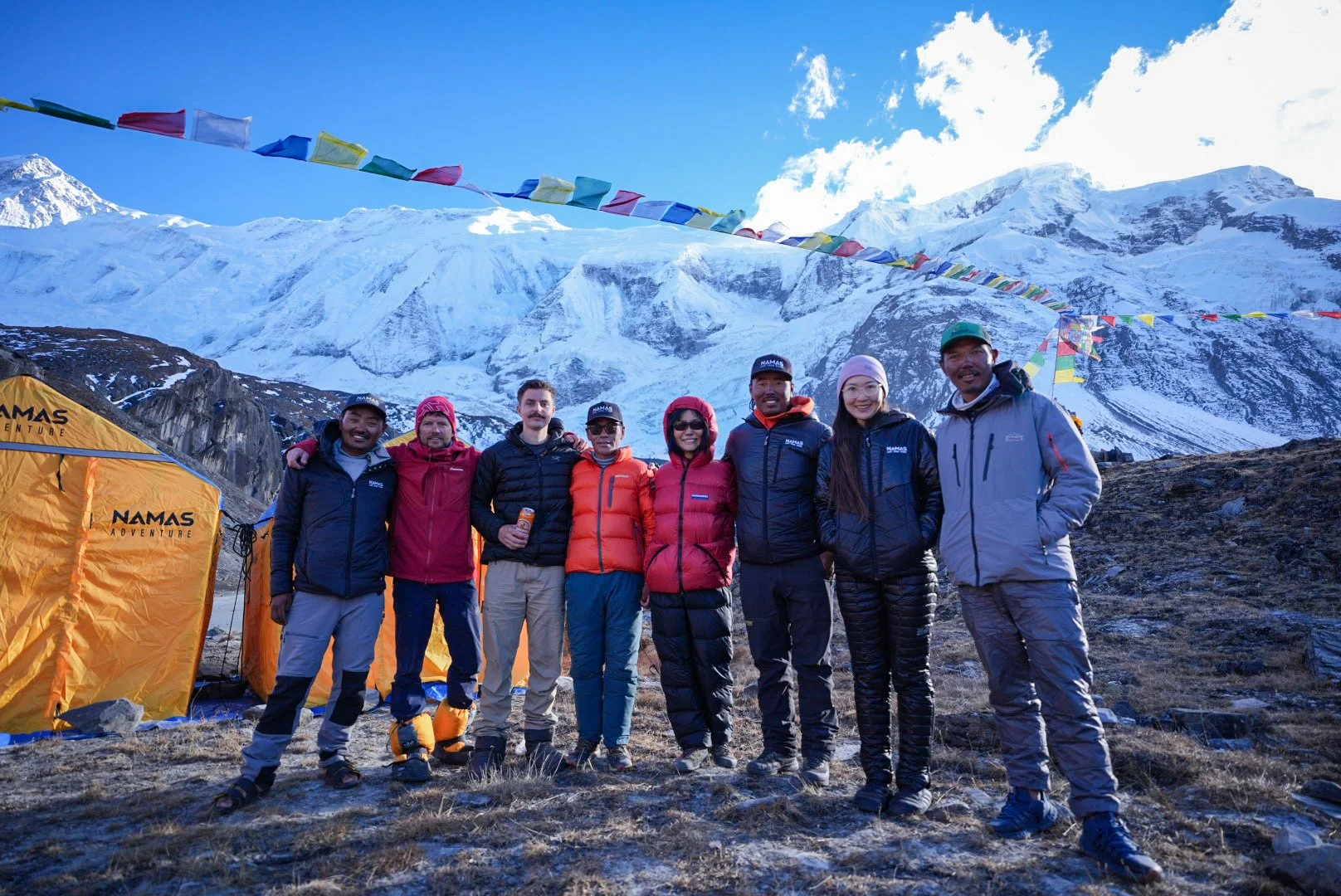
Annapurna IV, 4800M base camp

Life above Base Camp is harsher, colder, and more demanding. But with the right preparation, knowledge, and support, it’s also one of the most rewarding experiences a climber can have. At Namas Adventure, our goal is to help you understand exactly what to expect so you can climb with confidence.

Below, we break down the realities of high-altitude life and the systems that make a 7000m expedition successful

1. Base Camp: Your Recovery & Preparation Zone

Before going higher, you’ll spend a few days at Base Camp resting from the trek in. This is where your body begins adjusting to thinner air and where you perform equipment checks, skill training, meet your personal guides, and settle into a steady daily rhythm.

Base Camp is also the last place where you’ll enjoy relatively comfortable sleeping, bigger meals, and stable communication.

Once the team is fully rested, the acclimatization process begins.

2. Acclimatization Rotations

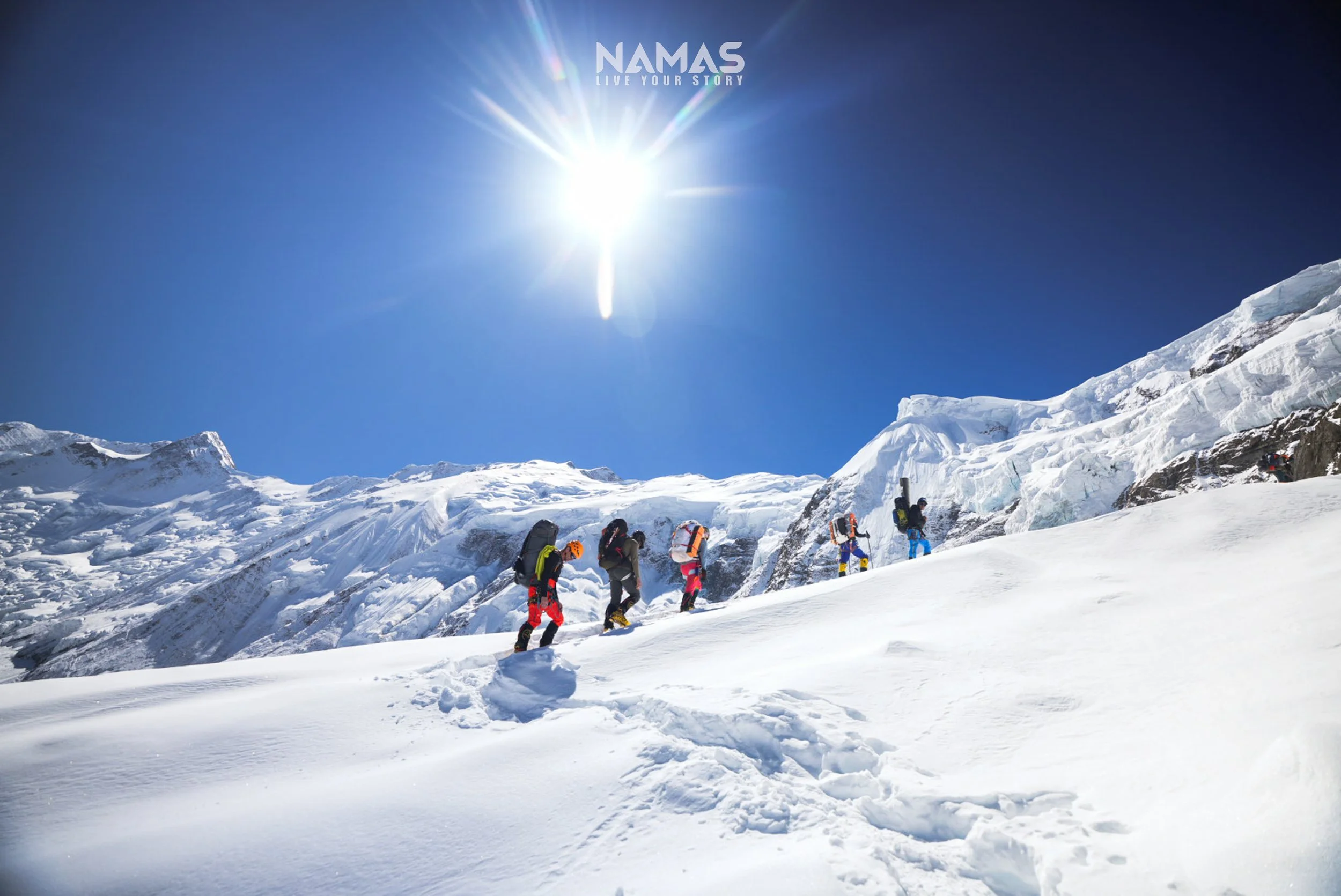
Rotations are the foundation of any successful 7000M expedition. They gradually expose your body to higher altitude, allowing you to adapt safely.

A Standard Rotation Looks Like:

  1. Base Camp → Camp 1

  2. Sleep one night.

  3. Camp 1 → Camp 2

  4. Sleep one night.

  5. Camp 2 → Base Camp

  6. Descend all the way down to base camp to recover.

Benefits - Each rotation strengthens your body’s ability to handle reduced oxygen levels.

Why Rotations Matter

  • Increases red blood cell production

  • Teaches your body to function with low oxygen

  • Helps you understand your personal altitude response

  • Allows you to store gear in higher camps to lighten the summit load

  • Once rotations are complete and weather improves, we prepare for the summit push.

3. Meals, Water, and Sanitation

Life becomes simpler—and much more physical—as you move above Base Camp. Every action you take, whether it’s eating, hydrating, or resting, is aimed at keeping your body strong enough to continue climbing higher.

Meals in High Camps

Food at high altitude needs to be lightweight, easy to prepare, and fuel-efficient. Meals typically include:

  • Porridge, oats, muesli

  • Instant noodles and soups

  • Nuts, biscuits

  • Freeze-dried meals

  • Energy bars and gels

Because food options above Base Camp are limited, if you have specific personal snacks or comfort foods, we highly recommend that you bring them from your home country or purchase them in Kathmandu before heading to the mountain. These familiar foods often provide a big mental and physical boost when climbing gets tough.

Water

All water in the higher camps is made by melting and boiling snow or ice. This process takes time and uses a considerable amount of fuel, so staying hydrated requires patience and discipline.

To prevent your water from freezing, you must use insulated bottles or a high-quality thermos. Even at night or during rest periods, keep your water inside your sleeping bag or close to your body to maintain warmth.

Sanitation

There are no toilet facilities in higher camps. All climbers use wag bags, and every bag must be carried back down to Base Camp. Waste is then properly disposed of in the designated Base Camp toilet area.

This system is important for:

  • Protecting the mountain environment

  • Preventing health issues

  • Keeping higher camps clean for all teams and keeping the mountain clean

At Namas Adventure, we strictly follow Leave No Trace principles, ensuring that the mountain remains pristine for future climbers and local communities.

4. Load Distribution: What You Carry vs. What We Carry

You Typically Carry:

  • Climbing boots, Climbing technical gears

  • Layers and sleeping bag

  • Snacks and water

  • Down suit or summit clothing

  • Sleeping pad

  • Personal essentials

If you prefer a lighter load, you can hire an assistant guide to carry your gear all the way up to the summit. Rules are different at Kyrgyzstan - Lenin Peak or Aconcagua expedition, please inquire with our team for more details.

Guides/Sherpas Carry:

  • Tents

  • Stoves and fuels

  • Group meals

  • Ropes, tools and hardware

  • Group supplemental oxygen and first aid

  • Heavy communal gear

During rotations, you can leave items at higher camps, reducing weight for the summit push.

5. Your Climbing Backpack: Why 60L - 70L Is the Ideal Size

A 60-70 liter pack is perfect for carrying:

  • Sleeping bag

  • Down suit and layers

  • Water, personal snacks, and personal items

  • Technical gear

  • Goggles, mitts, crampons

  • Oxygen (if applicable)

Using dry bags inside your pack keeps gear protected from snow and moisture.

6. boots required for 7000m climb

With better technologies, climbing shoes have improved every year. We highly recommend double-layered boots like Kailas Everest 8000M, La Sportiva Olympus Mons Cube, Scarpa 8000 phantom, Millet Everest summit GTX. It is wise to spend on good mountaineering boots, as so with all the gears that we have mentioned in this post above.

For your down suit and summit clothing, please refer to this link: Down Suit & Summit Gear – choosing the right layers is just as important as having the right boots.

Foot Care Tips:

Your feet are crucial for a safe and comfortable climb. Proper care can prevent blisters, frostbite, and discomfort.

1. Break in Your Boots Early
Wear your boots on long hikes or walks before the expedition to soften them and shape them to your feet. This prevents blisters and pressure points at high altitude.

2. Use a Sock System
A liner sock plus a thick summit sock reduces friction, wicks moisture, and provides insulation. Carry extra pairs to stay dry.

3. Account for Swelling
Feet swell at altitude. Choose boots with enough room for thick socks and swelling, or consider sizing up slightly.

4. Test Boots and Crampons
Practice walking and climbing with boots and crampons together before traveling. Proper fit saves discomfort and prevents accidents.

5. Keep Feet Warm and Dry
Warm feet are safe feet. Avoid tight lacing, use foot warmers if needed, and keep socks dry. Overnight, store boots inside your sleeping bag to maintain warmth.

7. How to Communicate on High-Altitude Expeditions

At most Base Camps, you’ll have either satellite phone or internet connections (2024/25 recent developments - Nepal) to stay in touch with family and friends. Base Camp is also equipped with solar panels and generators to charge mobile phones and other electronic devices.

Once the team moves above Base Camp, communication becomes more structured and essential for safety:

  • Satellite Phone: Your main guide carries a satellite phone, providing a direct line to our expedition office in Kathmandu. This is used for critical updates, including weather changes, logistical needs, or emergencies.

  • Two-Way Radios: All Sherpas carry radios (walkie-talkies) to maintain constant, real-time communication between camps — from Base Camp to higher camps. This ensures smooth coordination for supply movements, schedule adjustments, and rapid response to sudden weather or safety issues.

8. The Summit Push

After rotations and a few days of rest, the summit push begins—usually timed around the best weather window.

Typical Summit Push Schedule

  • Base Camp → Camp 1

  • Camp 1 → Camp 2

  • Camp 2 → Camp 3 (if the route requires it)
    Some routes allow skipping Camp 3.

  • Camp 2 or 3 → Summit → Descend to Camp 2 or Camp 1

  • Final descent to Base Camp

Why We Leave for the Summit at Midnight

  • Firmer snow

  • Lower avalanche risk

  • Calmer winds

  • More stable temperatures

  • Enough daylight for the long descent

What Summit Day Feels Like

It’s a long, slow, intensely focused effort with:

  • Steep slopes

  • Rope sections

  • Extreme cold

  • Very thin air requiring frequent breathing breaks

Supplemental oxygen is optional for many 7000M peaks, depending on climber preference.

Important note: Most climbers underestimate the descent — yet it’s often the most critical and dangerous part of the entire climb. After days of pushing uphill, your body is tired, your focus drops, and that’s when most accidents happen.

The descent is tedious, demanding, and requires just as much strength, awareness, and discipline as the ascent. You must be as strong coming down as you were going up.

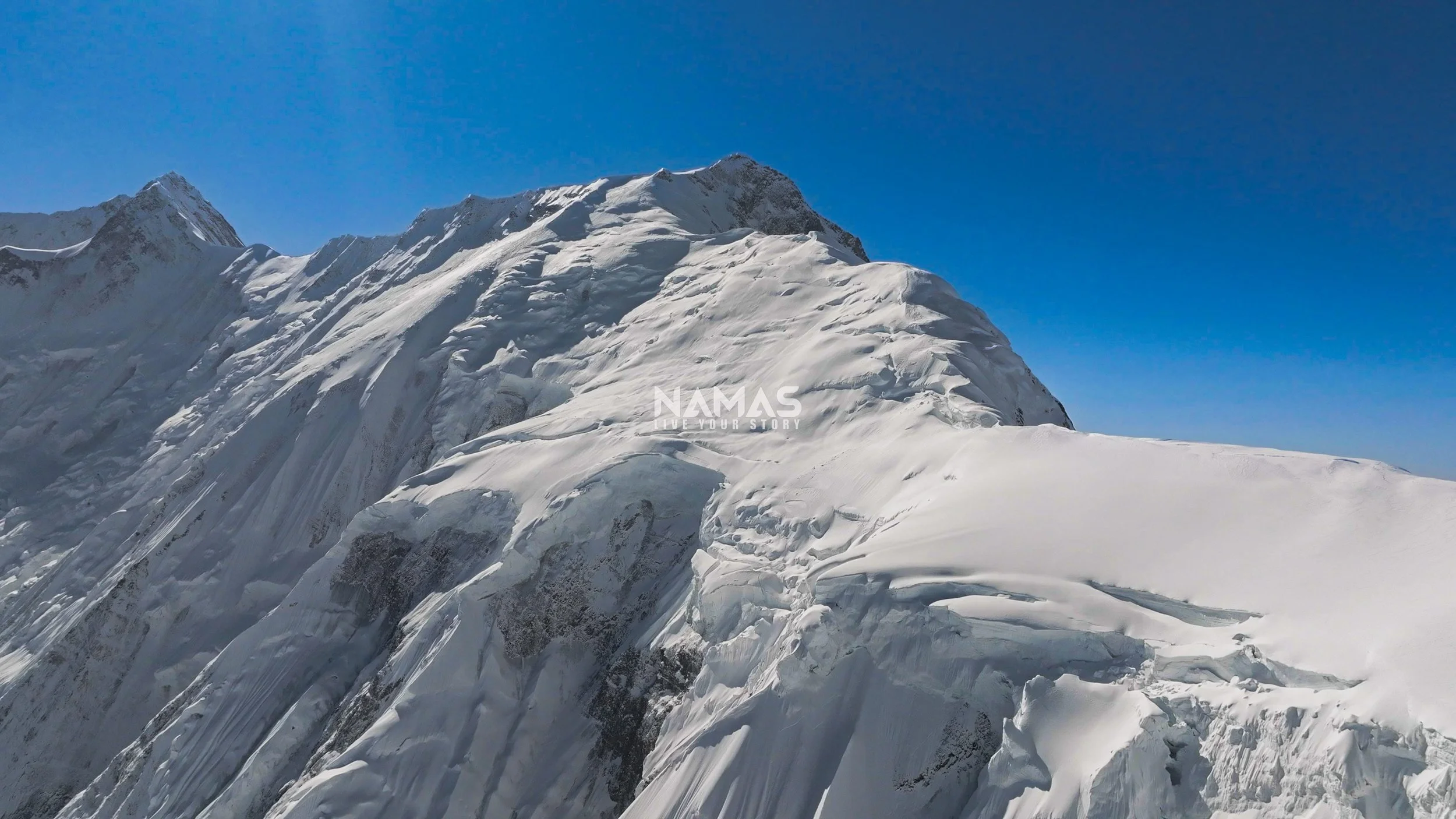
2025, Summit of Himlung Himal 7126M

9. Sleeping System

Nights above Base Camp are brutally cold. Your sleeping system must be reliable:

  • Expedition-grade down sleeping bag

  • Down suit or warm summit layers

  • Insulated sleeping pad(s) to block ground cold

10. Hydration, Nutrition & Mental Endurance

Hydration

Staying hydrated is critical at high altitude, as dehydration can worsen fatigue and increase the risk of altitude sickness. Drink regularly throughout the day, even if you don’t feel thirsty.

Nutrition

At altitude, your appetite often decreases, but your body requires high-calorie, easily digestible foods to maintain energy. Focus on:

  • Soups and instant noodles for warmth and quick energy

  • Energy bars and gels for on the go nutrition

  • Nuts, chocolates, and biscuits for concentrated calories

  • Freeze-dried meals when available

Plan to eat small amounts frequently rather than forcing large meals, as your digestive system slows down in thin air.

Mental Endurance

Life above Base Camp challenges not just the body but the mind. You will face:

  • Limited sleep due to altitude and cold

  • Harsh winds and sub-zero temperatures

  • Slow progress on steep or technical terrain

  • Long days with continuous physical and mental demands

11. Environmental Responsibility & Safety

Environmental Care

  • Pack out all trash

  • Carry down all human waste

  • Respect the local environment and culture

Safety

  • Understand altitude sickness symptoms

  • Weather changes quickly—follow your guide’s decisions

  • Carry personal medications and essentials

  • Communicate honestly with guides about how you feel

At Namas Adventure, your safety is always our top priority.

2025 Annapurna IV team , after descending safely from the summit.

Climbing a 7000m peak is one of the most demanding and rewarding experiences in mountaineering. Life above Base Camp tests your strength, discipline, and mindset — but with the right preparation, guidance, and support system, it becomes a life-changing milestone rather than an overwhelming challenge.

At Namas Adventure, we’ve built our expedition approach around safety, smart acclimatization, experienced Sherpa support, and clear communication from Base Camp to the summit. Whether you aim to gain high-altitude experience, prepare for future 8000m climbs, or push your personal limits, our 7000m expeditions offer the perfect foundation.

Our 7000M Expeditions:

Each mountain carries its own character — from technical challenges to less-crowded routes — giving climbers a chance to grow, learn, and experience the raw beauty of the Himalayas and Central Asia.

If your goal is to climb higher, prepare for an 8000m expedition, or take on a major high-altitude challenge, a 7000m climb is the step that transforms you.

When you’re ready to take that step, we’re here to guide you — safely, confidently, and with purpose.

Live Your Story

Read More
8000M Peaks, 7000m peaks, mountaineering Sushmita Shrestha 8000M Peaks, 7000m peaks, mountaineering Sushmita Shrestha

Climb These 7000M Peaks in Nepal during Autumn to Qualify for Everest Spring Expedition in Nepal

The highline at Annapurna 4

Nepal introduced a new major requirement for Everest climbers in 2025: all potential climbers must have already summited at least one 7,000-meter peak in Nepal prior to climbing Everest. This was done in the interest of safety and to help guarantee that climbers are physically and technically ready for the world's highest mountain. But is one 7,000m peak sufficient? That is something we've discussed in detail on our blog regarding the new Everest rule and why a climb of an "easier" 7000m mountain may not be enough.

Why This Is Important — And Why Autumn is the Time to Get Ready

Autumn (September–November) brings perfect climbing weather to Nepal: stable weather, blue skies, and smaller crowds than in spring. It's an excellent time to acclimatize for Everest by climbing a technically appropriate and physically challenging 7,000m mountain that not only meets the regulation—but also develops the skill, confidence, and stamina to climb Everest safely.

Entry-Level 8000m Peaks: A Better Way to Prepare?

Whereas 7,000m peaks qualify you for Everest, entry grade 8,000m peaks such as Manaslu and Cho Oyu provide an even more comprehensive preparation experience. Climbs on these summits allow you to acclimatize at extreme altitude, push the boundaries of mental and physical tolerance, and fine-tune logistics for high-altitude mountaineering. For serious climbers eyeing Everest, this is the golden path.

Top 7000M Peaks to Climb This Autumn in Nepal

Here’s a curated list of high-quality, challenging 7000m expeditions to consider—each one with the right balance of altitude, technical requirement, and expedition experience to truly get you Everest-ready.

1. Annapurna IV (7,525M)

Annapurna 4 base camp

Annapurna 4, base camp

Annapurna 4 will shape you with the right experience to climb 8000M peaks or even Mt. Everest or K2.

Highlights:

  • Rarely climbed and accessible 7500M Peak with few objective dangers.

  • 1:1 Climbing support

  • Small and dedicated team strategy. 3-10 max client members

  • Personal supplemental oxygen (1 cylinder and regulator)

  • Skip entry level 8000M and get ready for Everest or another 8,000m peak

  • Camp 1,2 3 & 4 strategy. Heated Dining tent, solo tent at base camp

  • Technical alpine climbing terrain

Alpine / Fitness grading: TD+ / 4 (technical mixed climbing with fixed ropes)

Pre-requisite requirements (Prior two or more Prior 6000m+ experience): Lobuche East & Island Peak, Chulu West, Khumbu 3 Peak expeditions, Aconcagua (Similar semi-technical 6000M peaks or higher), Denali, Himlung Himal 7126M or higher and multi-pitch climb (rock or ice), rock climbing grade up to 5.9/5.10 (not a must but a bonus)

2. Himlung Himal (7,126M)

climber at camp 1 in Himlung Himal

Camp 1 at Himlung Himal expedition

Highlights:

  • Accessible, classic mountaineering style and higher summit success rate

  • Small and dedicated team strategy. 1-8 max client members

  • 1:1 Guide/Client support ratio during the expedition

  • The southern flank of the north-west ridge route, Camp 1 - 2 and 3 strategy

  • Nar & Phu Villages and Manaslu conservation area

Alpine / Fitness grading: AD / 4 (less technical, gradual slope)

Pre-requisite requirements (Ideal for first-time 7000m climbers with at least one or more 6000m summit.): Kilimanjaro, Mt. Elbrus, Lobuche East & Island Peak, Chulu West, Khumbu 3 Peak expeditions, Aconcagua, Mt, Blanc. (Similar 4000M - 6000M peaks or higher)

3. Tilicho Peak (7,134M)

Highlights:

  • One of the more technical 7000m peaks at intermediate grade

  • Part of Annapurna massif

  • Small and dedicated team strategy. 3 - 10 max client members

  • North-West Shoulder Ridge route, Camp 1, 2, and 3 strategy

  • 7 - 14 days in Tilicho Base Camp 4910M and higher

  • 1:1 Guide/Client ratio throughout the expedition

  • Base camp by picturesque Tilicho lake 4900M, Annapurna 1,2,3, AIV Gangapurna seen from Summit

Alpine / Fitness grading: D+ / 4 (steep ice, rock sections)

Pre-requisite requirements (Prior two or more Prior 6000m+ experience): Lobuche East & Island Peak, Chulu West, Khumbu 3 Peak expeditions, Aconcagua (Similar semi-technical 6000M peaks or higher), Denali, Himlung Himal 7126M or higher, Strong alpine background, confident with steep ice and fixed ropes.

4. Baruntse (7,129M)

Highlights:

  • 1:1 Guide/Climber ratio during Summit Climb.

  • South-east ridge route, Camp 1 - 2 strategy

  • Small and dedicated team strategy. 1-8 max client members

  • 10 days in Baruntse Base camp 5460M and higher. Heated Dining tent and Single person tent at base camp

  • Return via helicopter after the expedition

Alpine / Fitness grading: AD+ / 4 (mixed climbing, snow ridges)

Pre-requisite requirements (at least one or more): Lobuche East & Island Peak, Chulu West, Khumbu or Annapurna 3 Peak expeditions, Aconcagua (Similar semi-technical 6000M peaks or higher)

5. Putha Hiunchuli (7,246M)

climbers pushing to camp 2 at Putha hiunchuli

Highlights:

  • Small and dedicated team strategy. 3-10 max client members

  • Northern Flaks, Camp 1,2 and 3 strategy

  • 10 - 12 days in Putha Hiunchuli Base camp and higher alpine camping

  • 1:1 Guide/Client ratio throughout the expedition

  • Ski ratio 1:3 Guide to Client

  • Far West Nepal destination. Extremely remote, secluded, and pristinely beautiful DOLPO region.

Alpine / Fitness grading: AD+ / 4 (gentler slopes, glacier travel)

Pre-requisite experiences (at least one or more): Kilimanjaro, Mt. Elbrus, Lobuche East & Island Peak, Chulu West, Khumbu or Annapurna 3 Peak expeditions, Aconcagua, Mt, Blanc. (Similar 4000M - 6000M peaks or higher)

6. Lakpa Ri (7,045M) (Note: While technically in Tibet, it’s often climbed as part of a Nepal-Tibet expedition)

Highlights:

  • Stunning views of Everest North Face

  • easier logistics

  • good entry-level peak

Alpine / Fitness grading: PD / 4 (non-technical snow climb)

Pre-requisite requirements (Ideal for first-time 7000m climbers with at least one or more 6000m summit.): Kilimanjaro, Mt. Elbrus, Lobuche East & Island Peak, Chulu West, Khumbu 3 Peak expeditions, Aconcagua, Mt, Blanc. (Similar 4000M - 6000M peaks or higher)

Conclusion: Don’t Just Qualify—Train Smart for Everest

The 2025 Everest rule isn’t just a regulation—it’s an opportunity. Instead of checking the box with the easiest 7000m climb you can find, choose a peak that truly prepares you for Everest’s demands. Autumn in Nepal offers the ideal conditions to climb the right mountain, gain real expedition experience, and transition smoothly into the Everest season.

At Namas Adventure, we specialize in high-altitude expeditions with a focus on safe, strategic, and skill-based climbing progression. If Everest is your dream, start your journey this autumn—with purpose.

Ready to Begin Your Everest Journey?

If you want to learn more about preparing for an Everest expedition, please email us at booking@namasadventure.com for expert guidance, tailored training plans, and expedition support.

Live Your Story!

NAMAS Adventure

Read More