

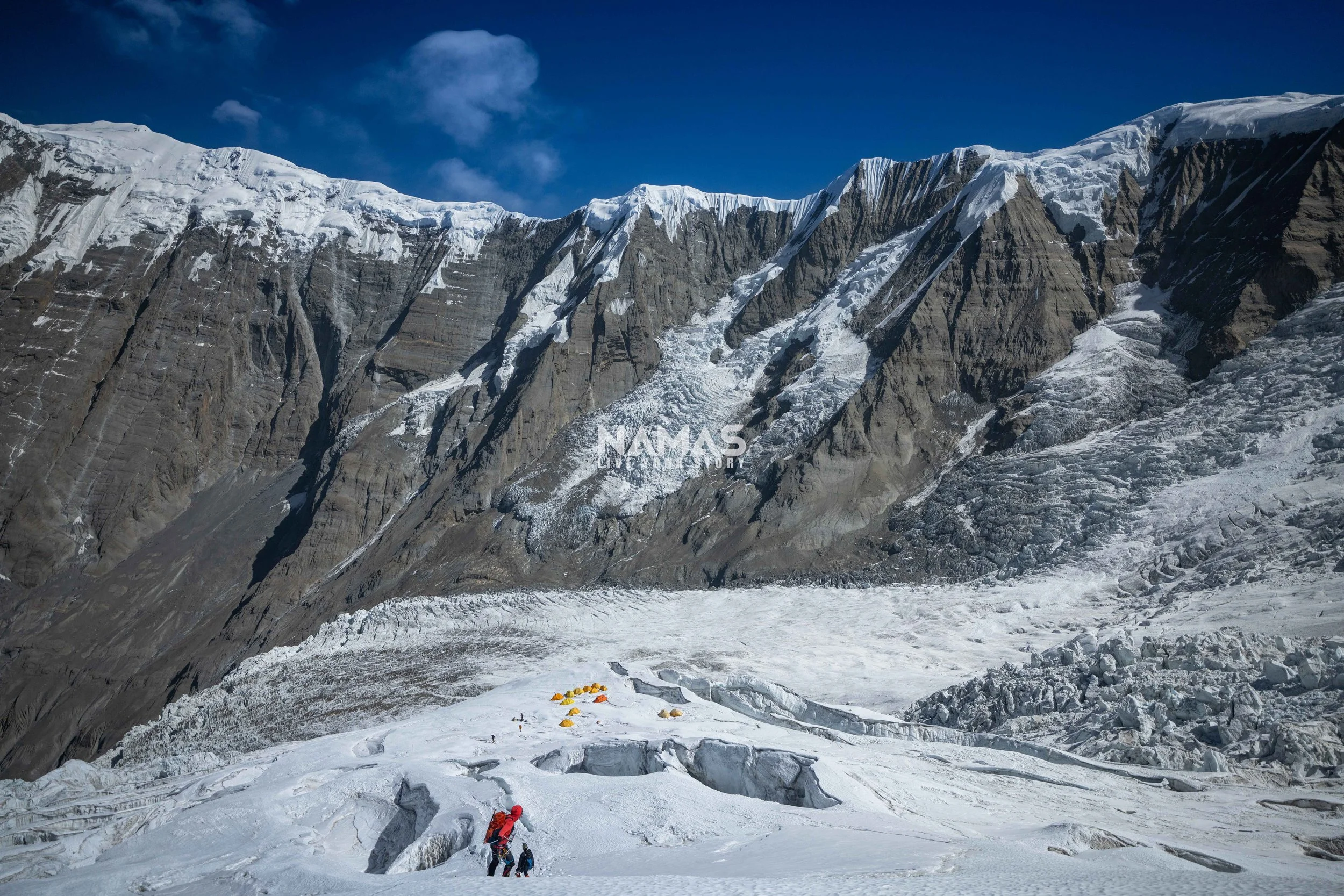
8000m Expeditions: The 14 Eight-Thousanders Guide
8000m is not “one level harder.” It’s a different sport.
For climbers who want a serious plan—whether your goal is your first 8000m, Everest preparation, or the long game: climbing all 14 eight-thousanders (14×8000).
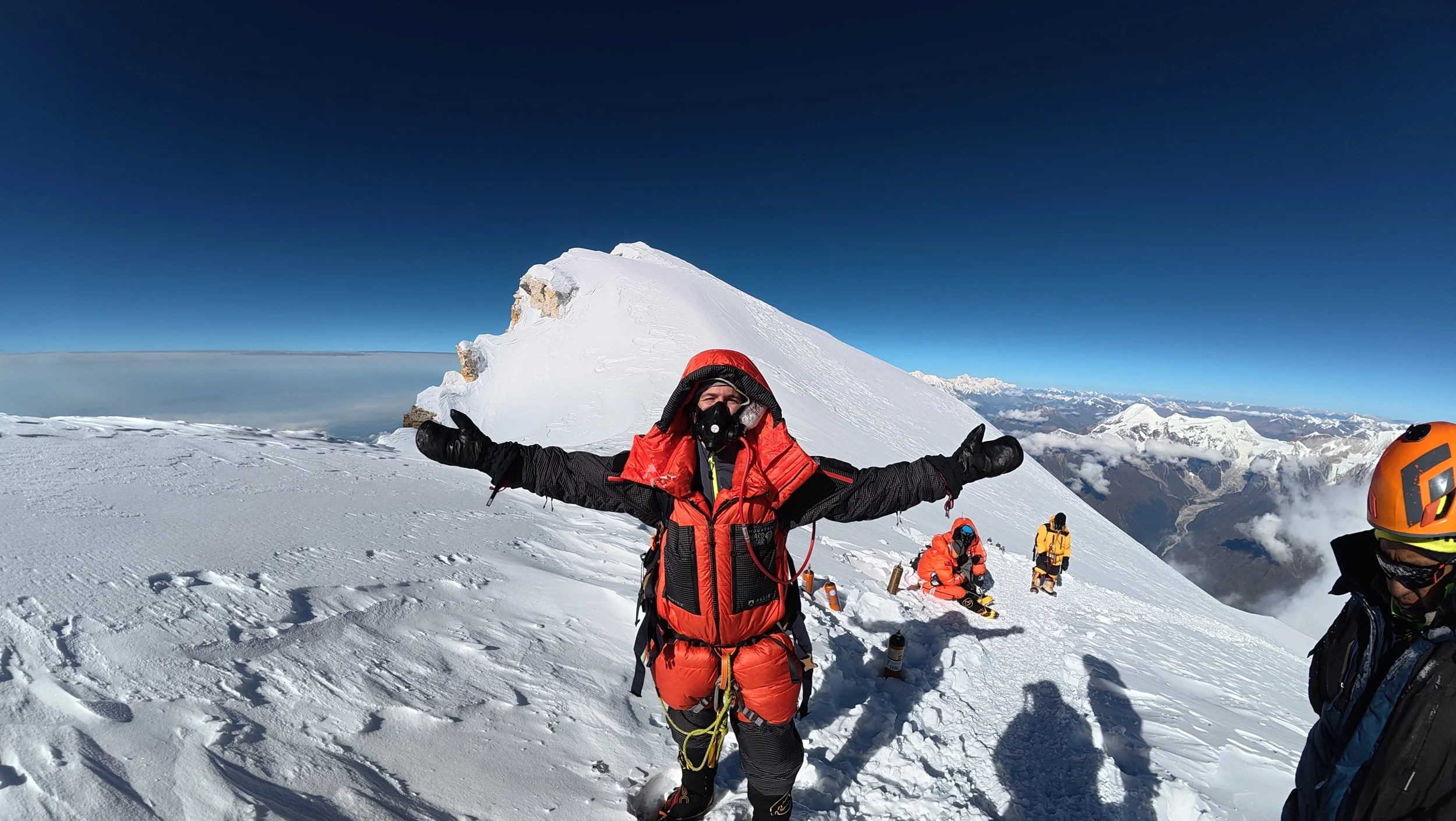
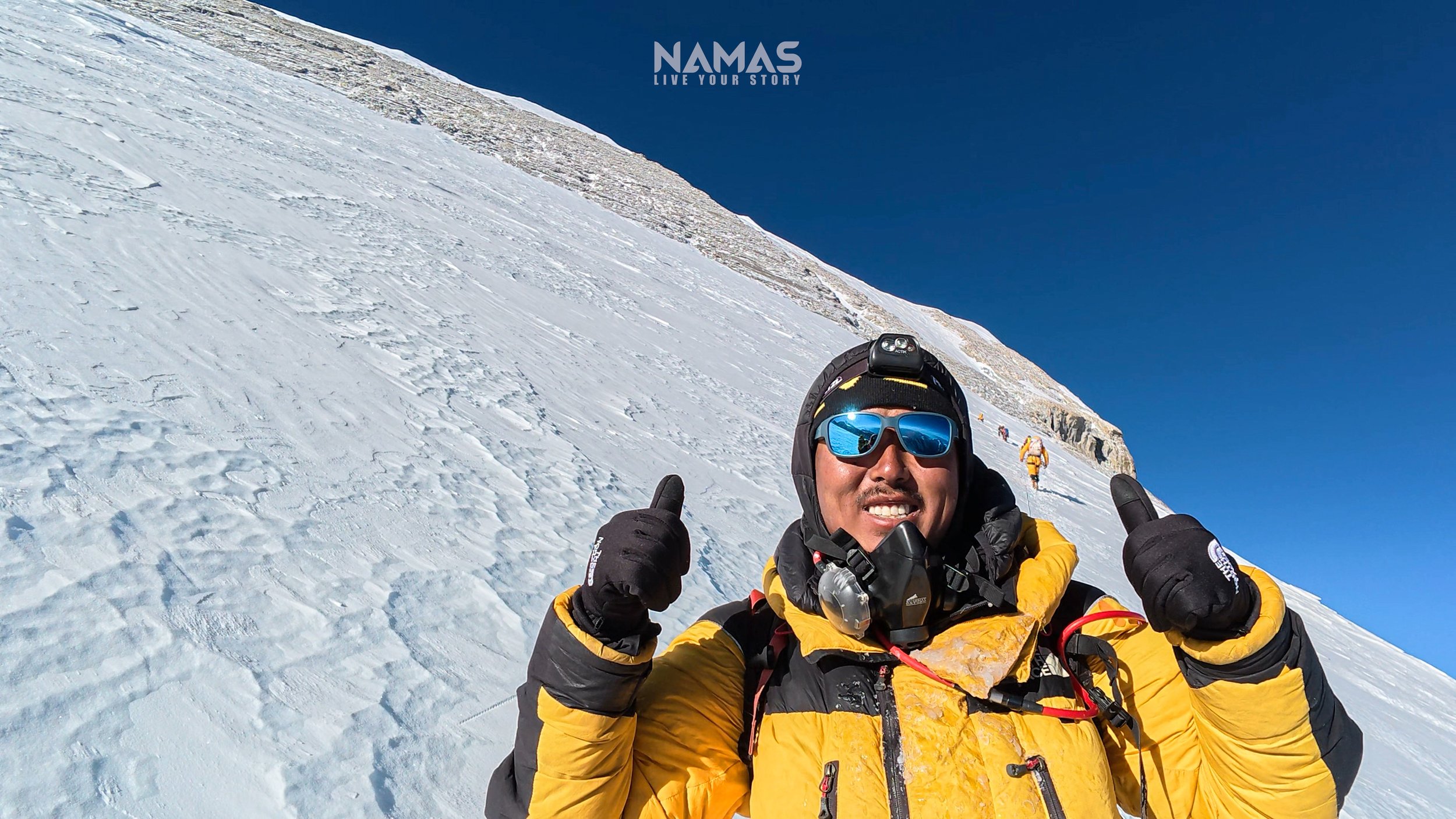
What “8000m” Really Means
At 8,000m+, you are operating in an environment where performance drops and recovery becomes limited. That is why the zone is literally called the Death Zone.
If you want a summit and you want to come home, you need a plan that prioritizes:
Acclimatization discipline (not ego)
Conservative decision rules (turnaround times, oxygen triggers, weather margins)
Systems over hype (camp strategy, rope strategy, comms, medical, rescue)
Quick Truths (read this before picking a peak)
Above 8,000m is the Death Zone—your body cannot recover the same way.
Decision-making degrades. Small mistakes compound fast.
Logistics matter as much as fitness: oxygen systems, Sherpa ratios, weather windows, camp strategy, and rescue planning.

What Is 14×8000?
14×8000 means summiting all 14 mountains above 8,000 meters—a list that is widely treated as the “classic” 14.
Where they are:
8 peaks in Nepal, 5 in Pakistan, 1 in China (Tibet).
If you are serious about 14×8000, your real challenge is not “finding a guide.” It’s building the right sequence, the right seasons, and a team that can execute consistently for years.
| Rank | Mountain | Height (m) | Height (ft) | Region / Country |
|---|---|---|---|---|
| 1 | Mount Everest | 8,849 m | 29,032 ft | Nepal / China |
| 2 | K2 | 8,611 m | 28,251 ft | Pakistan / China |
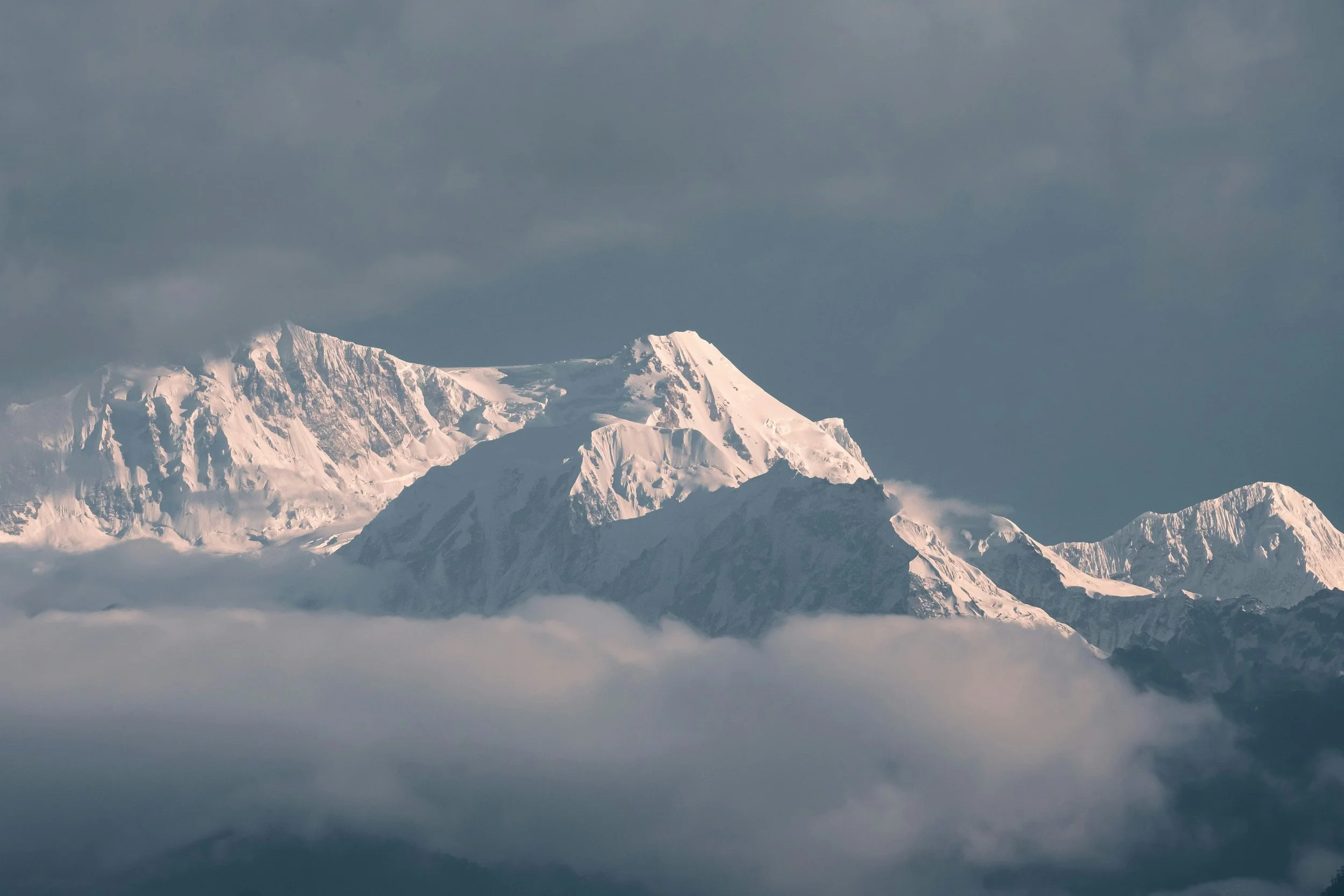
| 3 | Kangchenjunga | 8,586 m | 28,169 ft | Nepal / India |
| 4 | Lhotse | 8,516 m | 27,940 ft | Nepal / China |
| 5 | Makalu | 8,485 m | 27,838 ft | Nepal / China |
| 6 | Cho Oyu | 8,188 m | 26,864 ft | Nepal / China |
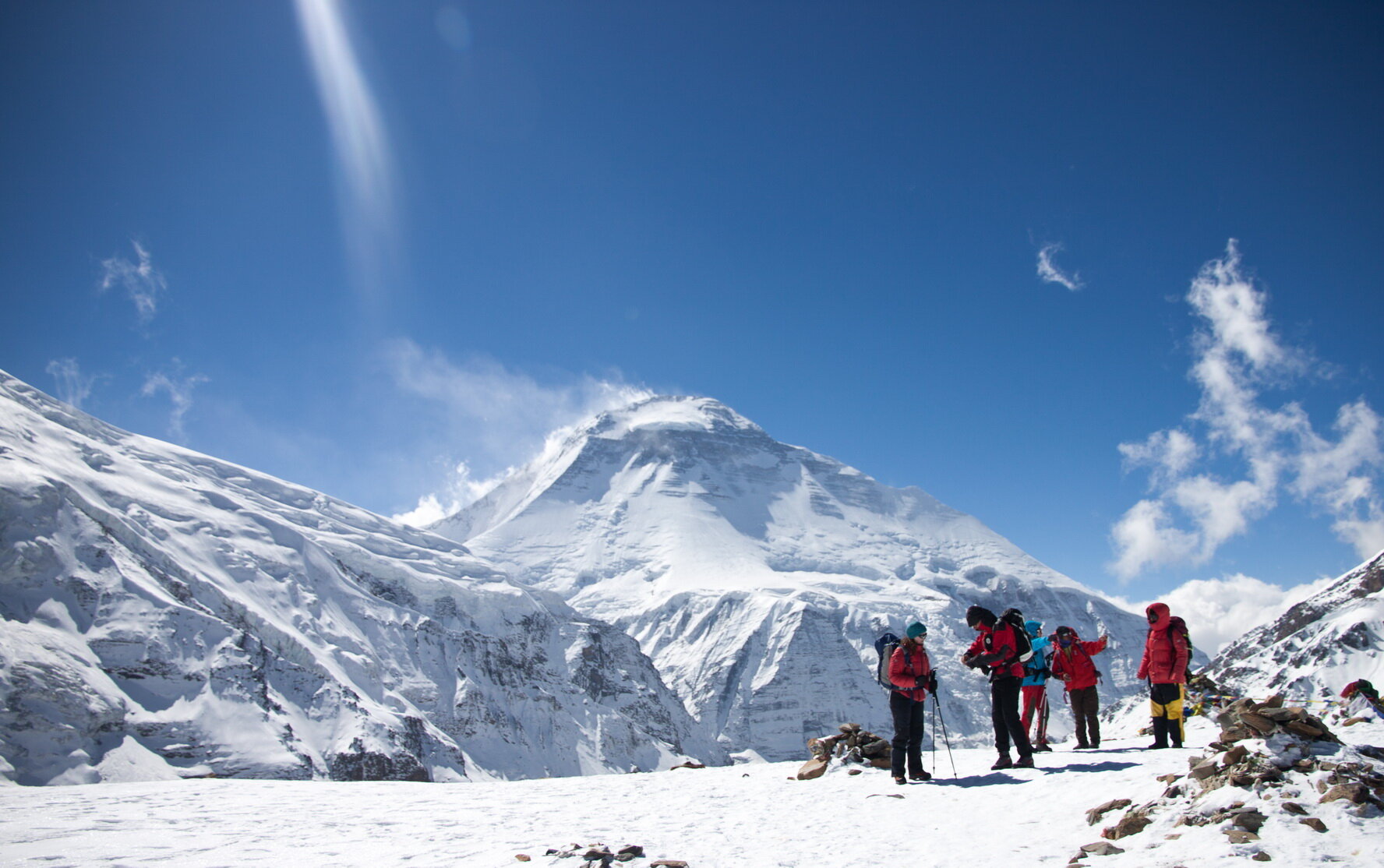
| 7 | Dhaulagiri I | 8,167 m | 26,795 ft | Nepal |
| 8 | Manaslu | 8,163 m | 26,781 ft | Nepal |
| 9 | Nanga Parbat | 8,125 m | 26,660 ft | Pakistan |
| 10 | Annapurna I | 8,091 m | 26,545 ft | Nepal |
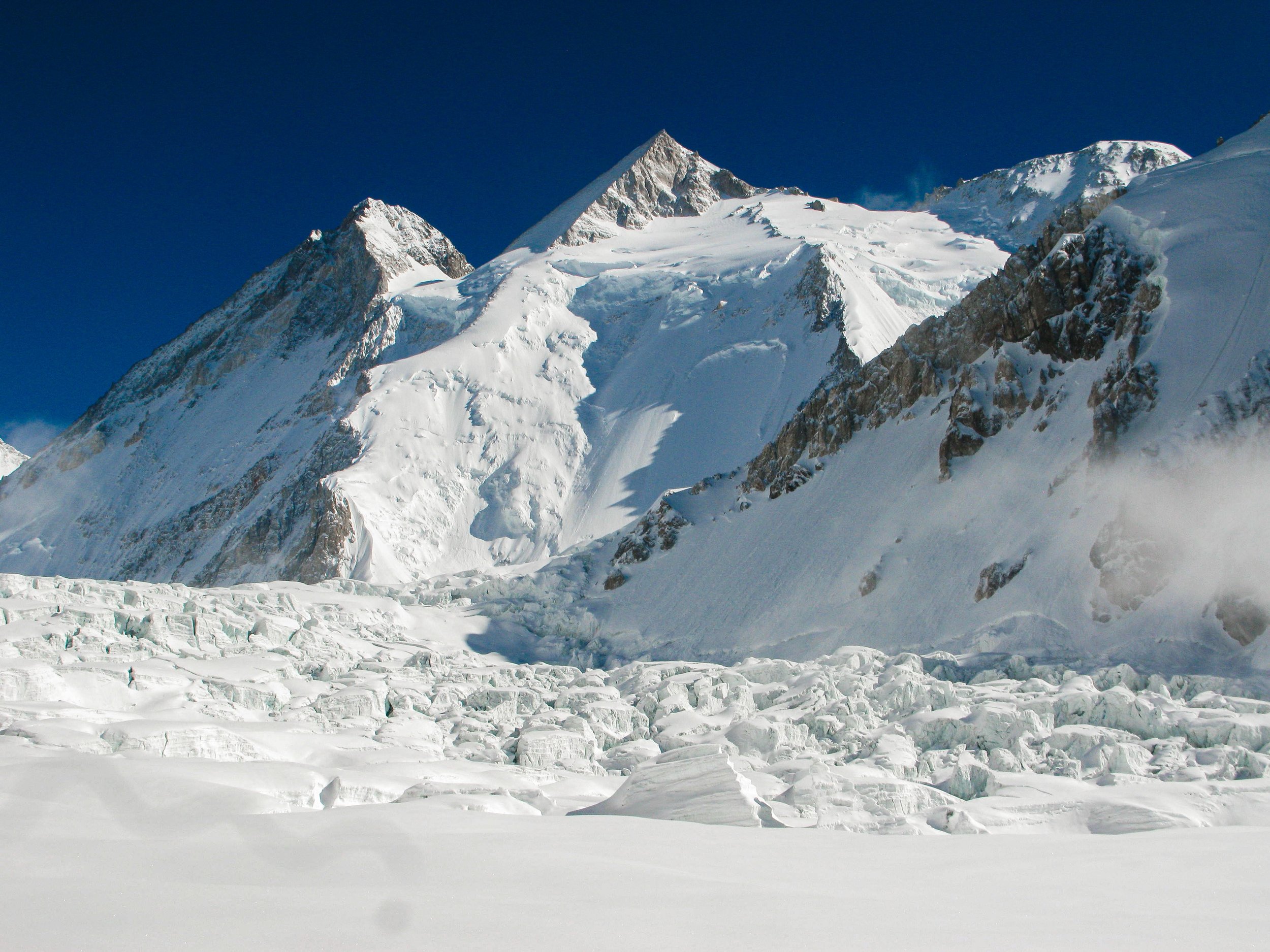
| 11 | Gasherbrum I | 8,080 m | 26,509 ft | Pakistan / China |
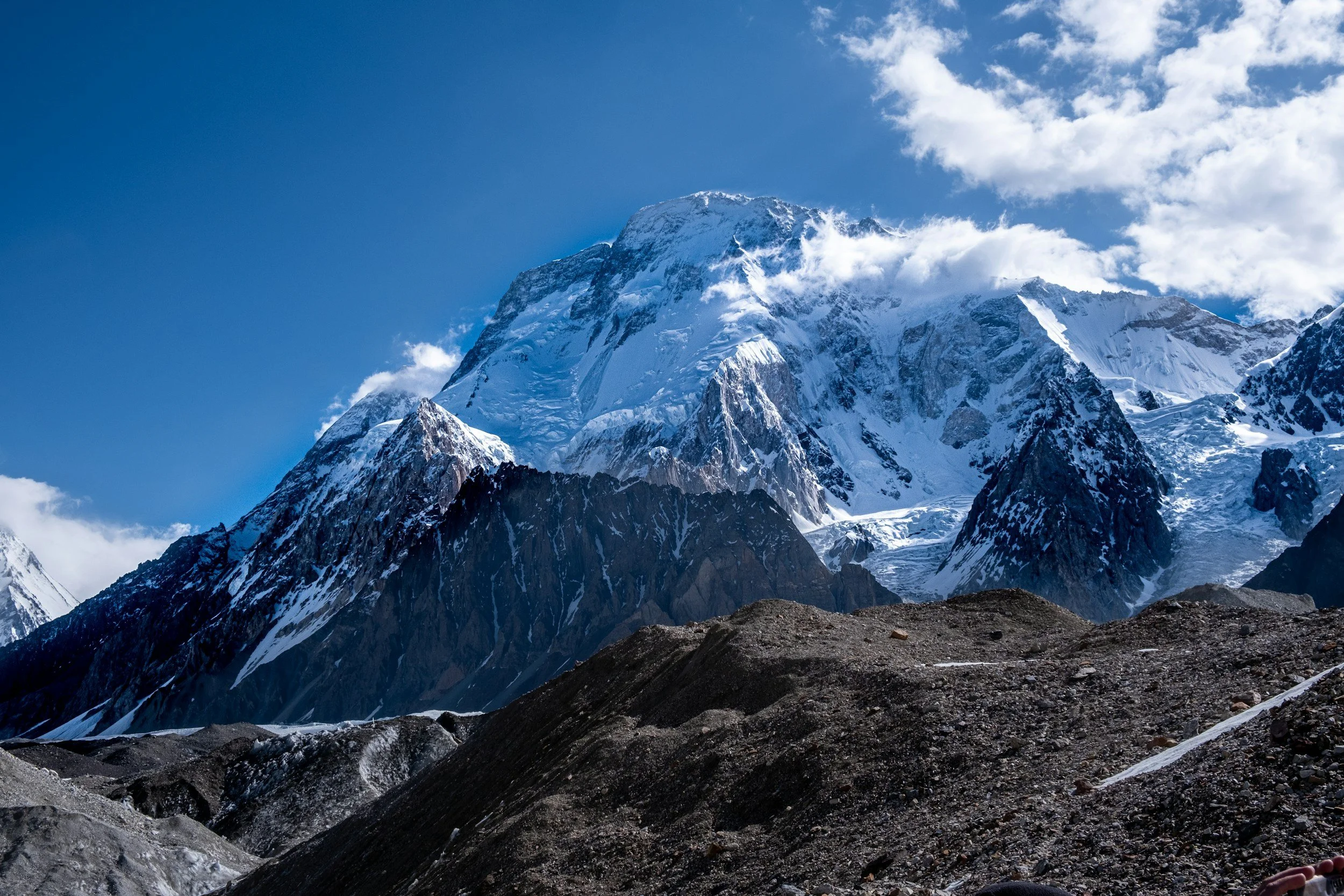
| 12 | Broad Peak | 8,051 m | 26,414 ft | Pakistan / China |
| 13 | Gasherbrum II | 8,035 m | 26,362 ft | Pakistan / China |
| 14 | Shishapangma | 8,027 m | 26,335 ft | China |
Which 8000er Should You Climb First?
If you pick your first 8000er based on ego, you’ll pay for it.
Do you want an 8000m summit, or are you building a 14×8000 career?
Practical first-8000 options (depending on profile)
Manaslu (Nepal): “Full expedition” feel, strong stepping stone to bigger goals.
Cho Oyu (Tibet): Often chosen as a first 8000er because it is generally less technical than many others (still serious).
Gasherbrum II (Pakistan): Often used as an entry to the Karakoram 8000m world.
Not ideal as a first 8000er (unless you’re already experienced)
Annapurna I: high consequence, objective hazard; wrong place to learn judgment.
K2: elite difficulty; you earn K2—K2 does not “give” anything.
Nanga Parbat: This is the Annapurna of Karakoram
Nepal vs Pakistan: What Changes
Nepal Himalayas (Spring/Autumn)
Faster access to infrastructure, bigger operational ecosystem.
Better for building your foundation and repeatable systems.
Pakistan Karakoram (Summer)
Longer approach and higher logistical complexity.
Bigger expedition feel, more remote, and less forgiving if your systems are sloppy.
The 14×8000 Roadmap
There are two smart ways to do 14×8000:
Path A: Foundation-First (highest long-term success)
Build range: Everest/Lhotse / Makalu or Dhaulagiri / Shishapangma
Karakoram entry: Gasherbrum I & G2
Path B: Everest-Centric (if Everest is the anchor goal)
Multiple 6000m peaks + Annapurna IV, 7525M
Everest (with a real system, not a lottery ticket)
Transition into the rest with momentum and team continuity
If you want 14×8000: the real advantage is team continuity + decision rules across multiple seasons—not “motivation.”
NAMAS Standards: How We Operate on 8000m
We do not sell “adventure.” We run high-consequence projects.
Small teams. High standards.
2–8 climbers max on major objectives like K2 and Cho Oyu.
1:1 Sherpa support during summit push on technical 8000m programs (peak dependent).
Structured training support (16-week build) on these programs.
Oxygen is a system, not a crutch
We allocate higher oxygen reserves across our expeditions as part of a deliberate safety system. Supplemental oxygen is available but never enforced—its use is a personal choice.
What we do require is clear, ongoing communication from each climber regarding their preparation progress and real-time condition during the expedition. An emergency backup supply is always carried by the guide, ensuring readiness if conditions change.
8000m in Nepal
-
![]()
Annapurna 1, 8091M
One of the most dangerous 8000er
-
![]()
Dhaulagiri 8167M
The Great White Mountain
-
![]()
Everest 8848M
Sagarmatha. Chomalungma. World’s highest peak
-
![]()
Kangchenjunga 8586M
The Eastern end of 8000er
-
![]()
Lhotse 8516M
The Great Wall
-
![]()
Makalu 8563M
The great pyramid of Nepal
-
![]()
Manaslu 8613M
The mountain of Spirit
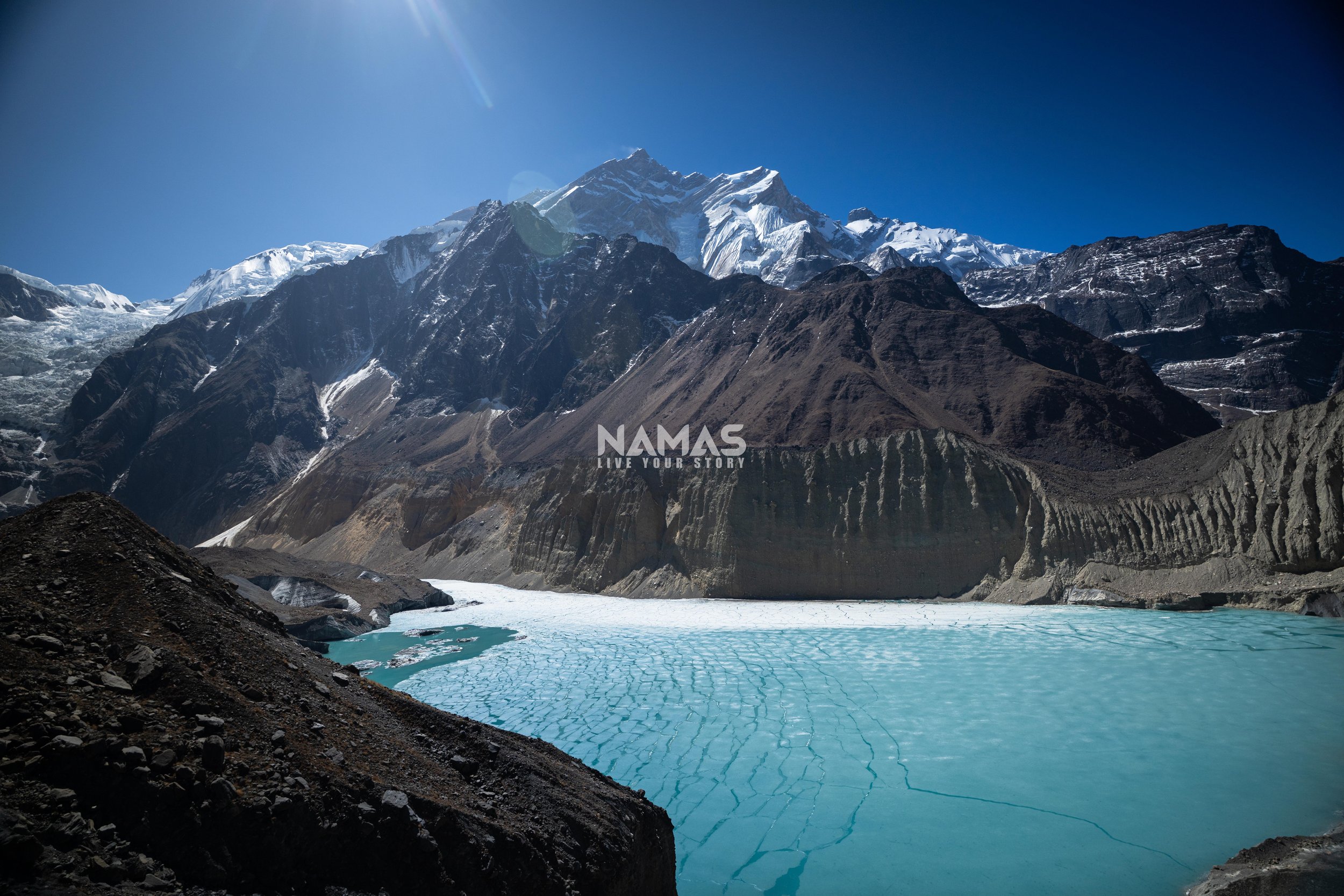



8000m in Pakistan
-
![]()
K2 8611M
The Pyramid. A serious climb
-
![]()
Broad Peak 8051M
A safer 8000er, straight forward and a long climb
-
![]()
Gasherbrum II 8035M , G2
Remoteness and Karakoram’s version of Entry 8000er
-
![]()
Gasherbrum 1, 8080M
A perfect 8000er combo with G2
-
![]()
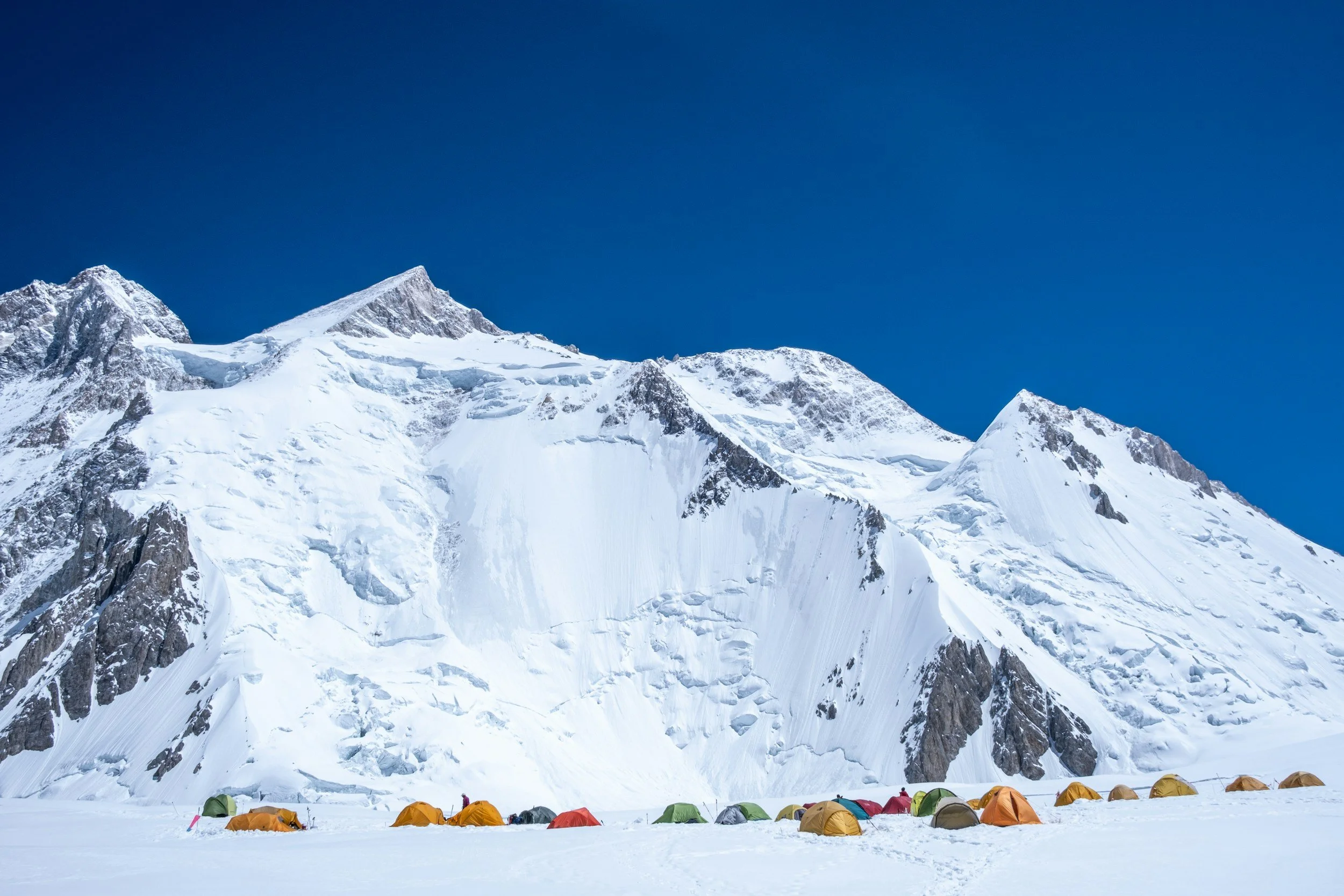
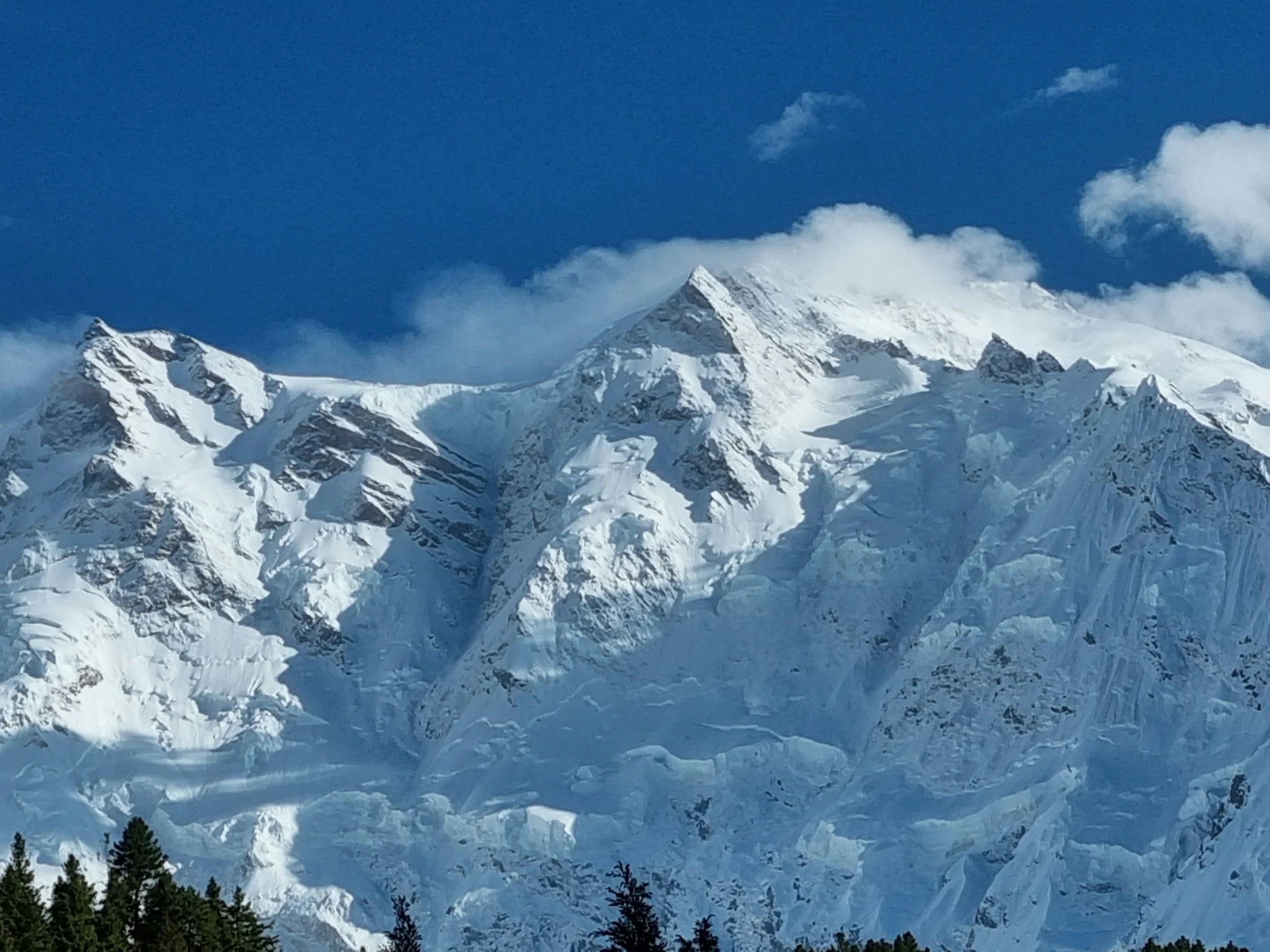
Nanga Parbat 8125M
The most Notorious 8000er

8000m in Tibet/china
-
![]()
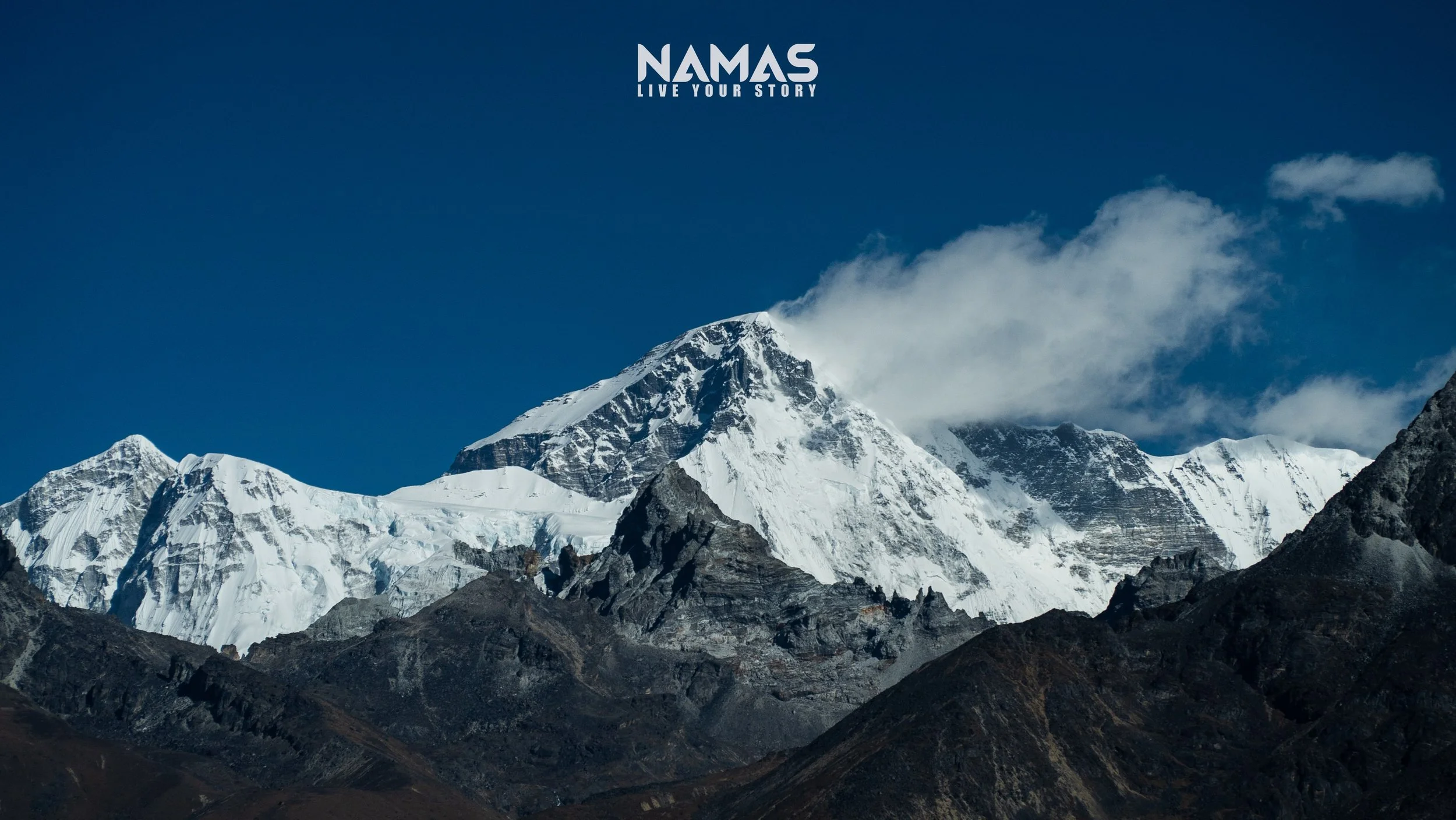
Cho Oyu 8201M
Safest 8000er
-
![]()
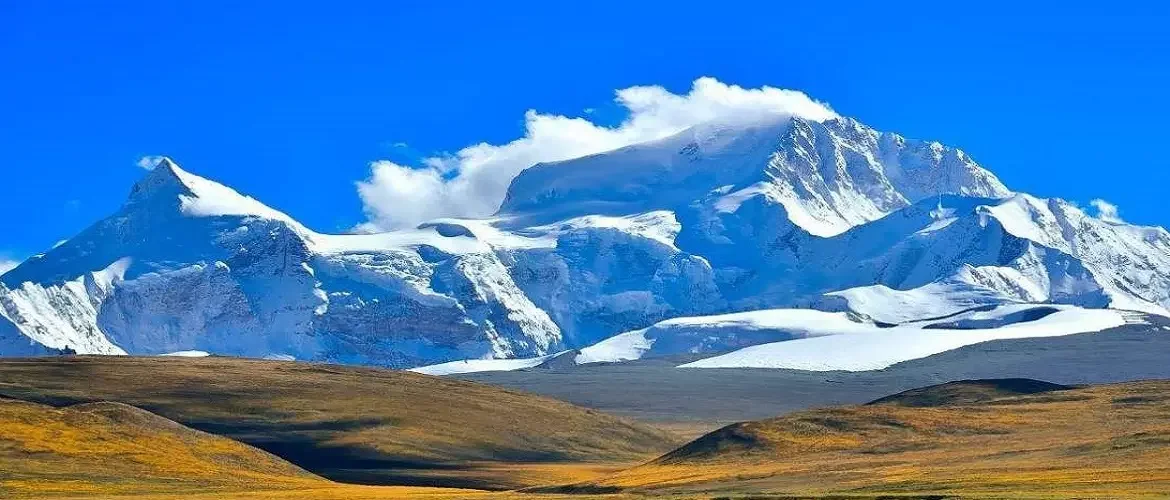
Sisha Pangma 8027M
the 14th & Solely in China
Entry Level 8000M
-
![]()
Manaslu 8163M
The mountain of Spirits. Perfect first 8000er
-
![]()
Manaslu Express
Speed ascent to 8000er in 16 days or less
-
![]()
Cho Oyu 8201M
Safest & straight forward 8000er


Frequently Asked Questions
-
You’re qualified when you’ve proven three things:
You have successful high-altitude experience (ideally 6,000–7,000m --8,000M plus technical competence).
You can move efficiently on fixed lines in cold, wind, and fatigue,
You can manage risk and decision-making under stress,
8000m punishes “fitness-only” & inexperienced climbers.
-
The “best” first 8000er is the one that matches your resume, risk tolerance, and objective hazards. Many climbers start with peaks commonly viewed as more straightforward relative to others (often recommended are: Manaslu , Cho Oyu, G2), but “easier” at 8000m still means high consequence.
Choose based on route character, hazard profile, and your ability to execute.
-
Most standard 8000m expeditions run 6–9 weeks on the mountain (sometimes longer), because acclimatization rotations and weather windows drive the schedule.
With recent developments in hypoxic training and systems, now the express/rapid/flash programs are possible cutting the expedition duration from 2 - 4 weeks.
-
The Death Zone commonly refers to ~8,000m+, where oxygen availability is so low that the body cannot acclimatize effectively for extended periods and deterioration accelerates. Performance drops, judgment worsens, and small errors become fatal.
-
Express Climbing Methods In recent years, "Express Climbing" or "Rapid Ascent" expeditions have become popular, challenging the traditional timeline. These methods do allow you to pre-acclimatize at home, significantly shortening the time needed on the mountain.
This is not "training" in a gym sense; it is simulated exposure using technology:
Hypoxic Tents: Climbers sleep in specialized tents set up over their beds at home for 4–8 weeks before a trip. A generator removes a percentage of oxygen from the tent air, simulating progressively higher altitudes (often up to 18,000+ feet).
Mask-Based Training: Using Intermittent Hypoxic Training (IHT) machines to inhale low-oxygen air during short intervals of exercise or rest.
By using these express methods, climbers arrive at base camp already partially acclimatized, allowing them to skip early rotations and summit mountains like Everest or Aconcagua in significantly less time.
You can train for performance (aerobic base, efficiency, strength-endurance), but acclimatization still requires exposure. The best outcomes come from strong fitness plus a conservative ascent plan. Drugs can assist acclimatization in specific scenarios, but they do not replace it.
-
Express climbing uses pre-acclimatization methods such as hypoxic tents or mask-based hypoxic training before the expedition. This allows climbers to arrive partially acclimatized, reducing time spent on the mountain. It is a tool to optimize timelines—not a substitute for mountain experience, skills, or sound decision-making.
-
Oxygen is a risk-management and performance tool, not a moral issue. Many climbers use it above 8,000m to reduce hypoxia stress and support safer decision-making. What matters is the system (flow strategy, redundancy, mask fit, bailout oxygen), not bravado
-
Yes. Several 8000m peaks have been climbed without supplemental oxygen. However, this requires exceptional acclimatization, experience, discipline, and decision-making. It significantly increases physical and mental demands and is not suitable for all climbers.
-
Yes. Many elite and highly experienced mountaineers have completed no-oxygen ascents. These climbers typically have multiple high-altitude expeditions, strong performance at extreme altitude, and a conservative, well-managed approach.
Climbers with proven performance on 7000m peaks and at least one major expedition-style climb, strong acclimatization history, and the ability to operate safely under extreme fatigue. It is a personal choice, assessed carefully with guides.
-
Climbing without oxygen is more demanding and higher risk than using oxygen. It requires slower movement, stricter turnaround decisions, and greater self-awareness. Safety and readiness always take priority over summit outcomes.
Yes. We support no-oxygen attempts when appropriate, with additional acclimatization strategies and conservative pacing. Supplemental oxygen is always available as part of our safety system, and emergency backup oxygen is carried by the guide.
-
It depends on peak, route, your physiology, and your plan (summit from which camp, expected hours on O₂, flow rate, contingency margin). A serious plan includes summit oxygen + descent margin + emergency reserve, because most disasters happen on the way down.
-
There is no single correct rate—it’s determined by altitude, exertion, symptoms, and system strategy. Good operators treat oxygen like logistics: planned flow ranges per phase, clear changeover points, spares staged, and strict rules for bailout scenarios.
-
They can help some climbers prepare and may reduce shock from abrupt exposure, but results vary and they don’t eliminate the need for proper acclimatization on the mountain. If you use one, treat it as an add-on to a disciplined fitness plan, not a shortcut.
-
The big three: avalanche/serac, rockfall/icefall, and weather/wind. You mitigate with season timing, route choice, movement timing (early starts), conservative turnaround rules, and strong forecasting, plus not lingering in overhead hazard zones.
-
AMS: headache + nausea, fatigue, poor sleep.
HAPE: breathlessness at rest, cough, declining performance.
HACE: ataxia (can’t walk straight), confusion, altered mental status.
Action plan: stop ascending; if severe or worsening, descend and treat per protocol (oxygen/medications as indicated). Descent is the most definitive treatment for severe illness
-
Acetazolamide is commonly used to help acclimatization in certain situations, but it’s not for everyone (side effects, contraindications, sport rules if applicable). The right move is to discuss it with a clinician who understands altitude travel medicine and your health history.
-
Risk rises with rapid ascent, prior HAPE/HACE history, overexertion, dehydration, illness, and poor sleep. Even fit people get sick. The best prevention remains conservative ascent + early symptom response.
-
Frostbite risk is driven by wind + cold + fatigue + slow circulation + bad gloves/boots. Prevention is systems-based: proper high-altitude boots, layered mitt system, disciplined pacing, constant hand/foot checks, and turnaround rules. Once you lose sensation and ignore it, you’re negotiating with permanent damage.
-
At minimum you must be competent at: ascending fixed lines (jumar), descending/rappelling, changeovers, clipping discipline, crampon travel, self-management with mitts, and basic glacier awareness. If you can’t execute these smoothly when exhausted, you are not ready.
-
You need a big aerobic base plus strength-endurance. Practical benchmarks: long days moving steadily uphill, comfortable carrying a pack, and the ability to recover and repeat.
Most failures aren’t “max strength” problems—they’re engine + efficiency + resilience problems.
-
Support ranges from fully supported (more carried for you) to lighter support (you carry more and do more technical work). Ratios vary by operator and peak (e.g., 1:1 vs 1:2).
The question you should ask is not “how much they carry,” but what you must still be able to do if support fails.
-
Turnaround time at most 8000er is 1 - 2pm. This is the pre-decided time you turn back regardless of distance to the summit. It exists because late summits kill people. Final authority should be clearly defined before the climb; strong teams treat it as a safety protocol, not a debate.
-
Top causes: weather, pace too slow, altitude illness, lack of extreme altitude climbs, poor decision-making, logistics failures (oxygen/supplies), and underestimating descent. Fitness matters, but execution and judgment decide outcomes in the Death Zone
-
Costs range from lowest being $16,500 at Manaslu to $100K at Everest express depending on peak and service level.
Price is driven by permits, oxygen volume, Sherpa ratios, camp infrastructure, logistics (helicopters/porters), forecasting, rescue readiness, and contingency planning. If a quote is dramatically cheaper, ask what system is missing.
-
You want policies that explicitly cover:
high-altitude mountaineering to your target altitude,
helicopter/evac,
treatment for altitude illness, and
repatriation.
Most “travel insurance” excludes technical climbing by default—confirm exclusions in writing.
-
Baseline systems: experienced team and support system, sat phone, radios, GPS tracker, weather forecasting support, check-in protocols, medical kit/oxygen protocols, and documented emergency plans. The key is not owning devices—it’s who monitors, who decides, and what the escalation ladder is.
-
If climbing just one 8000m is your goal then we hight recommend renting the gear.
You can often rent some items, but for 8000m the “critical” pieces should be yours and proven: boots, down suit, jummar, harness/helmet fit, Rental is fine for non-critical backups; do not gamble your extremities on convenience.
-
Sequence should build skill + altitude tolerance + judgment while managing seasons and travel reality. Most successful approaches:
start with a lower-consequence 8000er,
add technical/remote peaks gradually,
keep team continuity, and
protect your long-term health (overreaching ends 14×8000 plans fast).