

ANNAPURNA 1 8091M - Summit the most dangerous 8000er
Highlights
Annapurna 1, 8091M Summit. 2027 Application deadline (07.01.2027)
Northwest ridge, route via Dutch rib. Camp 1 - 3 strategy
Alpine / Fitness grading: ED / 5
Small team strategy with a 1:1 guide-to-client ratio (additional support on team size). Max client numbers: 1 to 8 (max).
Training from Training Peaks for 8000 M for 16 weeks
Duration: 35 to 40 days where 26 to 30 days is alpine climbing
Helicopter In/Out Pokhara
Overview
Annapurna I (8091 m/26545 ft) is more than a peak above 8000 m. It is an iconic mountain known as one of the dangerous and toughest 8000ers on earth with the highest rate of fatality. The Annapurna 1 expedition tests a mountaineer's skill, mental and physical endurance, and determination to achieve victory by reaching its summit. While many summitters dream of stepping on the tops, only brave climbers dare to reach the summit in reality.
Annapurna I stands as the tallest mountain as part of the great Annapurna Massif range between Annapurna South (7219 m, 2368 ft) on the southern side and Annapurna III (7555 m, 24787 ft) on the western side. Being the tallest among the Annapurna Massif, Annapurna I also presents the highest level of challenges with a steep northern face, frequent avalanches without warning, rockfalls, and unstable ice walls. The unexpected and changing weather situation of Annapurna I makes it the most hazardous 8000m above sea level mountain in the world.
Prerequisite experience requirements (at least one 6000M and 7000M or 8000M+): Lobuche East & Island Peak, Annapurna 3 peak challenge, Khumbu 3 Peak expeditions, Tilicho peak, Annapurna IV, Ama Dablam, and Everest 8848M . Multi-pitch climb (rock or ice), rock climbing grade up to 6B to 7B+, Ice climbing WI4-5, and Mixed climbing M6-7 grade
Annapurna 1 8091M expedition video
Itinerary - Signature Climb
Day 1 to 2: Arrive in Kathmandu, Transfer to Hotel for expedition briefing.
Day 3: Flight to Pokhara and trek to Forest camp
Day 4: Forest Camp - Mardi High camp
Day 5: Mardi high camp and sleep overnight at 4000M.
Day 6: Pokhara and rest day
Day 7 to 34: Helicopter journey to Annapurna 1 Base Camp, Climbing Period for Annapurna I Summit (8091m) (27 climbing days), Base Camp days, ritual puja ceremony contingency day, training, and preparation for a summit. We aim rotations between Camp 1 and 2 and summit push from camp 3.
Day 35 to 36: Helicopter to Pokhara and rest day
Day 37 to 38: Flight to Pokhara and Kathmandu. Drive to Nagarkot - NAMAS Signature Reset & Recover
Day 39: Kathmandu
Day 40: Departure
ACCOMMODATIONS
Days 1-3 and 33-34 (Hotel)
Days 7-32 (Alpine Camping)
-
Day 1 - 2: Arrival in Kathmandu and transfer to Hotel. Join the expedition briefing with your guide and expert teams.
Day 3: Flight to Pokhara and transfer to the hotel
Day 4: Drive to Tatopani
Day 5: Tatopani to Humkhola
Day 6: Humkhola to Panchakunda
Day 7: Panchakunda - Annapurna 1 BC
Days 8 to 24: Climbing Period for the Annapurna I Summit (8091m) (27 climbing days), Base Camp days, ritual puja ceremony contingency day, training, and preparation for a summit. We aim for rotations between Camp 1 and 2 and a summit push from camp 3.
Day 35 : Heli flight to Pokhara and rest day
Day 36: Rest Day at Pokhara
Day 37: Flight to Kathmandu
Day 38: Departure from Kathmandu
ACCOMMODATIONS
Days 1-3 and 33-34 (Hotel)
Day 7-32 (Alpine Camping)
-
Day 27 - Physical and mental recovery
Arrival: Checking and welcome rituals
Deep tissue recovery massage of 1 hour to 1 hour 30 minutes with a focus on quads, hips, shoulders, lower back, and calves for quick recovery and relief.
Traditional sauna and infrared sessions
Guided breathwork session for 20 to 30 minutes. This helps to shift your body from survival mode to recovery mode.
Day 28 - Rest, Reflect, and Recharge
Wake up and enjoy the breathtaking sunrise view over the Himalayas
Join guided mindfulness and reflection sessions to process your expedition experience and bring meaningful sense of your journey completion
Relax with soothing foot therapy to ease muscle fatigue and rejuvenate your skin.
Guided breathwork session for 20 to 30 minutes to shift your body from survival mode to recovery mode.
Expedition Investment
USD 35,000 per person - Signature Climb
USD 31,950 per person - Classic Climb
Deposit: USD 5,000 per person
All-inclusive. Guaranteed departure. No extra hidden costs. Please inquire about prices in your local currency. We accept payment in £GBP/ €EUROS/ $AUD
-
2027
15th March - 23rd April (8 Spots)
2028
18th March - 26th April (8 Spots)
-
Expert and certified guide and leader from IFMGA/NNMGA
Branded merchandise from NAMAS Adventure(Cap, Buff, Down Jacket)
1:1 Sherpa guide to client ratio (additional guide are available with additional cost)
Training programs from Training peaks upto 16 weeks for 8000M
Support and logistics teams, including the head chef and Kitchen helpers.
Arrival at the hotel. Single room- 5 Star Kathmandu and Pokhara
Post Expedition - Recover with a focused 90 min Massage in Kathmandu (hotel)
Trekking and climbing permits required for expeditions.
Transportation costs to reach the trailhead and return back
Single/expedition tents from certified and reputed brands like Mountain Hardwear, Samaya equipment, and Kailas in base camps and shared tents in higher-altitude camps
Oxygen Bottles: X 4
Porters for 60 kg personal weight limit
Chocolate, energy bars, canned foods, nuts, and biscuits
Expedition equipment and burners
Communication devices like walkie-talkie and satellite phone
Three meals a day, including breakfast, lunch, and dinner on expedition days.
Accommodation and lodging facilities during the trek
Airport pickup and drop facilities
Basic first aid medication
Welcome and farewell dinner
-
Certified guide from Nepal National Mountain Guide Association (NNMGA)
Down jackets, Cap, Buff that are branded by Namas
1:1 client to Sherpa guide ratio. Additional sherpa guides can be allocated with additional charges.
16 weeks training programs from Training peaks for 8000 m climb
Helpers including headchef and kitchen staff
4-star hotel in Kathmandu during arrival and 5-star hotel in Pokhara
All required trekking and expedition permits
Transportation for reaching the trailhead and return to hotel after expedition
Single expedition tents in base camps and shared tents in high-altitude camps. Tents are branded manufactured by Salewa, Mountain Hardwear, Samaya equipment, and Kailas
Oxygen bottles: 3
Porter carrying 60 Kg weight
Chocolate, energy bars, canned foods, nuts, and biscuits
Expedition equipment and burners
Satellite phones and walkie-talkie for communication
Means including breakfast, lunch, and dinner on expedition days
Lodging and accommodation facilities during the trek
Airport pickup and drop services
First aid kit
Welcome and farewell dinner
-
Visa and travel insurance
$1500 successful summit bonus, $500 bonus on camp 1 and camp 2, and $1000 on camps 3 and 4.
Food and entertainment costs in Kathmandu and Pokhara
Bottled and beverage drinks
Cost of evacuation
Tips and service charges paid for services
Supplement charges
Personal transactions, laundry, and phone services
Optional destinations or tours
Any meals and foods beyond breakfast, lunch, and dinner
Delay or cancellation due to natural calamities and disasters
Cost of International flights
Expense of personal gifts, donations, and funding to the community or individual.
-
In the Spring 2025 Annapurna I expedition, we made the difficult decision to turn back at 8,040m upon discovering that the final couloir relied entirely on outdated fixed lines and anchors. Our team prioritized safety over summit ambitions, reflecting our commitment to responsible mountaineering practices in this extreme environment.
Guiding team
The Annapurna I expedition is led by experienced and licensed guides who have been climbing for more than 8 years. The expert professional plans responsible strategy, planning, organization, and ensuring client safety. Namas Adventure team puts first priority on the client's wellbeing. The experience of professional guides in mountains like Mount Everest, Annapurna I, Manaslu, Mount K2, Baruntse, Ama Dablam, and many other global peaks ensures every decision is taken with years of expertise to improve summit success rates.
Namas Adventure guide and team are professionally trained and assessed by the International Federation of Mountain Guides Associations (IFMGA) and Nepal Mountaineering Association (NNMGA). The expert professional ensures even minor issues are not ignored and every dedicated effort is made to protect clients and increase summit success rates. From making effective decisions to keep you safe to providing first-hand experience on the mountain, Namas Adventure works for lifetime memories and your glorious victory by taking you to the top of the summit and returning you to base camp safely. These world-class climbers and guides are kind, helpful, respectful, and proficient in English, ensuring effective communication. Namas Adventure provides a 1:1 Sherpa guide to client ratio to ensure safety and a higher chance of success.
In addition, Namas Adventure also ensures that all expedition members have equal opportunity and dedicated support for safely climbing the summit and returning to the base safely. If you want to take on the challenge of conquering the mighty Annapurna I and seek excellent support and guide teams, Namas Adventure can be an ideal choice for you. However, it is also important to note that climbers are required to have prior experience and proven achievement in mountaineering to qualify for this Annapurna I expedition. For detailed information about expedition experience requirements, itineraries, and any other queries, please feel free to contact us.
-
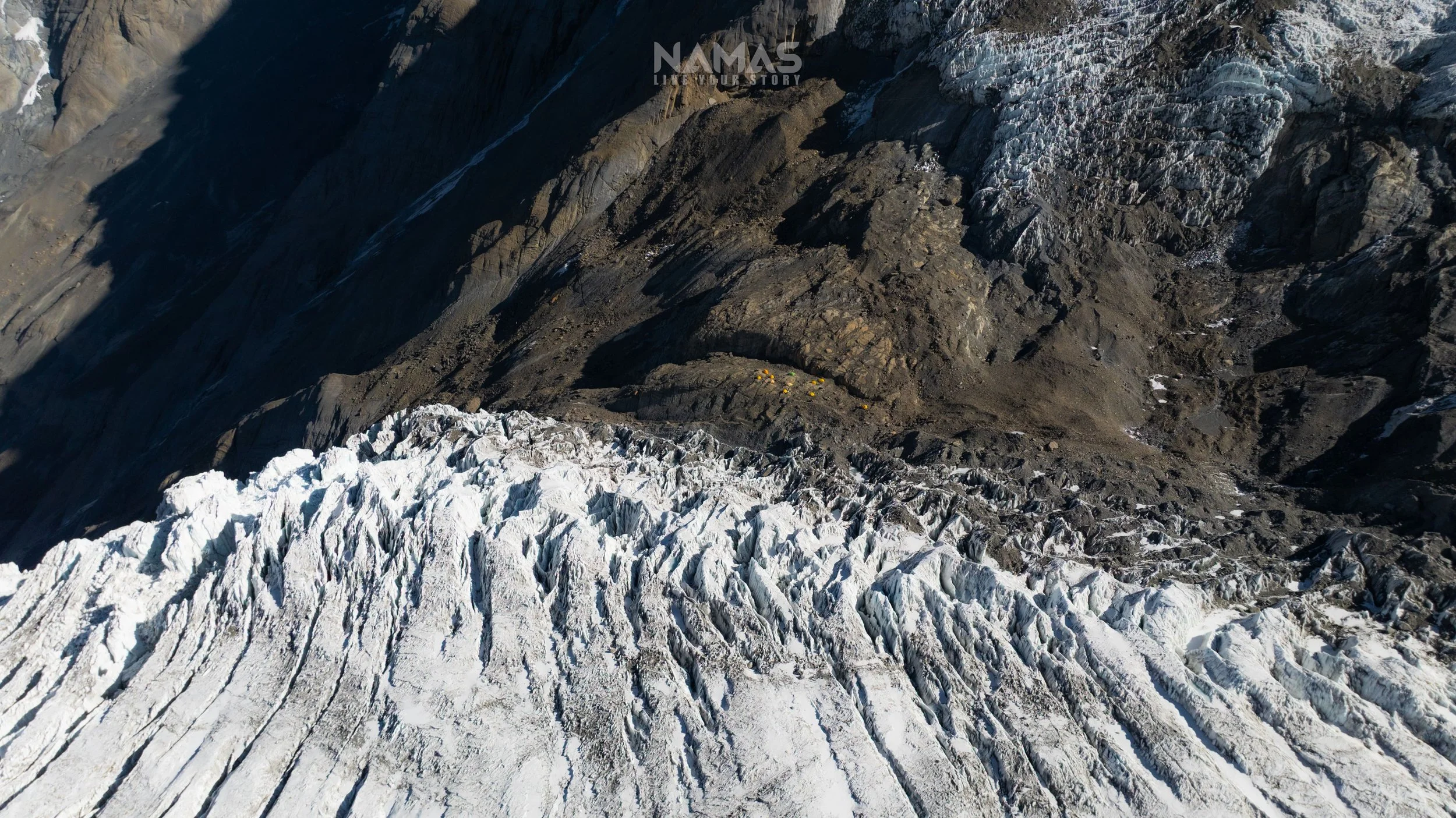
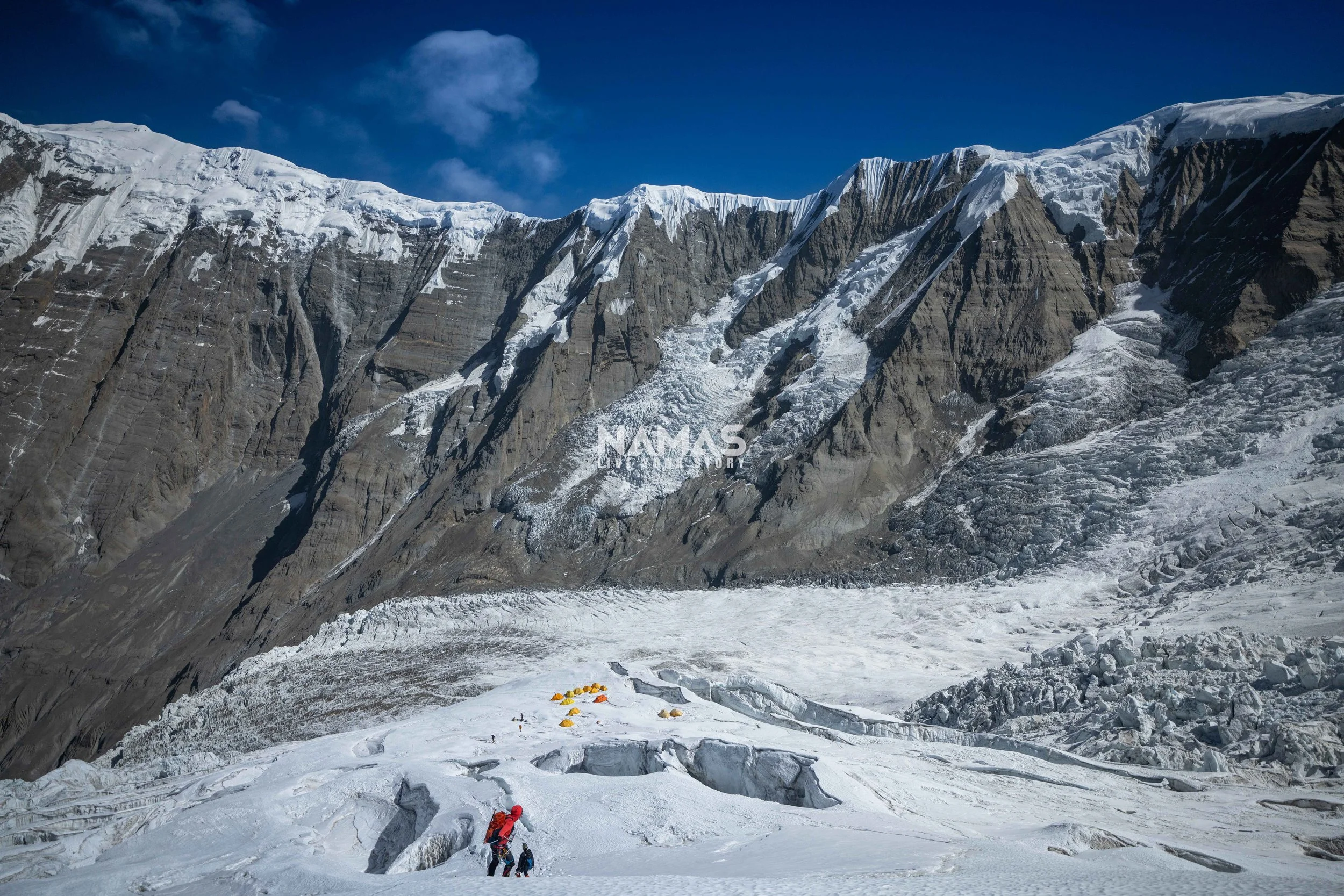
Our Expedition Route - North West Ridge, Nepal.
Base camp (4,190 m/13,747 ft)
Camp I (5,150 m / 16,896 ft)
Camp II (5,700 m/18,700 ft)
Camp III (6,500 m / 21,325 ft)
Camp IV (7,400 m/24,278 ft)
Summit (8,091m/24,278ft)
-
The name "Annapurna" originates from the Sanskrit terms "Anna," symbolizing "food" or "grains," and "Purna," representing "full" or "complete." Revered as a goddess in Nepal, Annapurna holds profound significance and is worshipped with great reverence by Nepalese.
-
Annapurna 1 was successfully climbed by mountaineering legends Maurice Herzog and Louis Lachnanel, who made history with the first ascent in 1950. Namas Expedition does not focus on making expedition teams glamorous and grand, instead, our core focus is on the safety of all climbers, a successful summit, and a safe descent to the base camp.
-
476 Summits
-
Everest:USD 59,500 per person
Lhotse: USD 32,500 per person
Annapurna IV: USD 9,950 per person
Makalu: USD 45,000 per person







HOW DOES IT WORK?
1. Initial Inquiry and Planning
Namas Adventure communicates with you to know about your goals, aspirations, and preferences to provide a tailored experience and recommendation according to your interests. As the perfect plan according to your interests and goals is identified, a deposit is initiated to secure your spot. Following that, the preparation and planning steps are carried out, from gear selection and training to arranging insurance, permits, and logistic management.
2. Preparing for the Journey
As summit days approach, we ensure you are all prepared to be ready for the expedition. This phase involves collection of payment (60 to 90 days prior to your expedition), management of documents, and addressing your queries. Our team is always there to solve your queries via phone calls and emails to ensure you are fully prepared and confident.
3. On-Expedition Support
After preparation of the journey, you arrive in Nepal for an expedition where you are received by our team. You get introduced to guides and the support team and join pre-expedition briefings and gear checks to ensure everything is fine. With proper preparation and addressing required changes, we are committed to making the adventure enjoyable, unforgettable, and memorable.

Frequently Asked Questions
-
Spring season from March to May is the best time for the Annapurna I expedition. The mid april to may is the ideal time among spring months, as this duration provides stable weather, movement of jet storms to the north providing ideal temperature in comparison to other months, and favorable climbing conditions to navigate highly technical and tricky sections of Annapurna I.
-
Annapurna I is considered the world's most dangerous 8000 m peak due to technical climbing difficulties, risk of serac fall, unpredictable climate, probability of avalanche without warning, and snow conditions impacting stability. The steep terrain, rockfall, and harsh weather of the mountain make it a vulnerable event for experts or pro climbers.
-
In terms of climber-to-fatalities ratios, Annapurna I is more dangerous than Everest. Annapurna I has a fatality-to-summit rate of more than 13.42%, while Everest has around 2.5 to 2.7 %. The risk on Everest is influenced by heavy crowds, altitude physiology, and bottlenecks. Meanwhile, risk and fatalities in Annapurna I are influenced by its weather, technical difficulties, and hazardous corridors.
-
The main hazards that Annapurna I presents to climbers include the following:
Avalanches and serac fall exposure, especially on the north-side lines and during warming cycles
Rapid snowpack changes and unstable slabs
High-consequence terrain where retreat options can be limited and slow
-
Namas Adventure always prioritizes safety above summit success. All decisions are taken to ensure no climbers or expedition team members face problems or are exposed to hazardous situations during the summit push. In case the weather and infrastructure are not ideal for climbing, Namas chooses safety first, like in spring 2025, where the summit was halted from 8,040 m due to outdated fixed points and anchors causing a threat for climbers.
-
Annapurna I is one of the challenging 8,000 m mountains in Nepal with steep and vulnerable terrain or weather conditions that are unforgiving and require serious commitment. Our standard plan is to climb via the North West Ridge (Dutch Rib) / West Face variation, depending on conditions in that season. We use a dedicated rope-fixing team to establish fixed lines on the critical sections and build a safe, efficient line of ascent. We operate with a structured 4-camp system:
Base Camp
Camp 1
Camp 2
Camp 3
Summit Push
The core principle is simple: reduce time in the hazard zones. On Annapurna, speed and timing are not “nice to have” but in fact they are part of safety.
-
The days required for an expedition to Annapurna I depend upon the route, weather, traffic, and acclimatization and rest days. A typical day includes 6 to 8 hours of climbs and the summit days require the longest climbing hours as climbers are required to climb and descend down to the camp.
-
Summit day of Annapurna I am challenging the moment, which begins at 7:00 PM from the camp and requires around 10 hours or more to reach the summit. After the summit, the descent is more challenging; it takes more than 4 to 5 hours to reach down to the camps. The summit days require you to prepare for 15 hours or more in the death zone.
-
No, Namas Adventure does not accept beginners or intermediate-level climbers for Annapurna i expeditions. It is because the Annapurna I summit requires prior experience in climbing 8000 m+ peaks, technical peaks, and 7000 m+ peaks, as Annapurna challenges climbers with extreme difficulty, technical skill requirements, and advanced expertise.
-
Namas Adventure rotates between camp 1 and 2 before pushing for camp 3 to minimize time in hazardous corridors. The expert teams build camps and fix lines in required sections to approach the Annapurna summit in a slow but steady strategy. The entire strategy is on smart timing, efficient movement, fast execution, and pushing to the summit in the best weather window.
-
North West Ridge via the Dutch Rib (north side).
-
NAMAS lists a standard ladder of camps (with typical altitudes):
BC 4,190m
C1 5,150m
C2 5,700m
C3 6,500m
Summit 8,091m
-
Rotations between camp 1 and 2. Then we make the push ffrom camp 3. The strategy is to minimize time in hazard corridors. We build camps and fix lines where required, but the winning strategy on Annapurna is not “slow and steady.” It’s smart timing + efficient movement + fast execution when the mountain gives a window.
-
The Namas Adventure itinerary includes enough contingency days to ensure flexibility to push for the summit during ideal season and weather conditions. To adapt to the changing plans and schedule, we request climbers book flexible return flights to calmly complete the expedition even in case of delays.
-
Annapurna I is a challenging 8,000m expedition in Nepal. This isn’t a “bucket list” mountain, but it’s a commitment to high-level preparation, risk management, and disciplined execution.
If you’re unsure where you stand, our team can help you map a realistic progression using our internal grading and roadmap approach, so you choose the right mountain at the right time.
Team, Ratios, Logistics & Training
-
Sherpa to client ratio" means the number of Sherpa guides assigned to individual climbers during the expedition. Namas expedition ensures a small team with one lead guide and each guide for climbers to ensure maximum safety. The lead guide and other guides are IFMGA and NNMGA certified with proficiency in English to provide instructions, communicate, and coordinate with climbers. Namas Adventure also arranges a dedicated personal support team upon request (requires extra costs) to make your expedition more comfortable and managed.
-
The Annapurna I expedition is led by highly skilled Sherpa guides with prior experience and expertise in geography, situations, and knowledge about high-altitude environments. The lead guides are IFMGA and NNMGA certified leadership who support climbers through strategic decisions, leading to safety and the overall success of the expedition.
-
Small-team strategy: 1 to 8 climbers.
-
Tips are an appreciation of the effort and contribution of guides and porter teams in making your summit successful. Your expedition booking includes a $1000 tip pool, which is distributed daily to the team members. In addition to that, upon successful summit, the tip of $1500 is a standard summit bonus that you can pay to your guide as an appreciation for support and effort to make your summit successful.
-
If you are planning for the Annapurna I expedition, you must have prior experience of climbing technical peaks, 7000 m+ peaks, and 8000m +peaks. The previous high-altitude experiences are important as they make you familiar with the environment and climbing conditions. Along with mountaineering discipline, you are required to have the following sets of skills:
Rappelling, Abseiling, and multi-pitch efficiency
Ability to navigate in snowy, icy, rocky, and steep terrain
Ability to use crampon and ice axe for front-pointing, balance, and secure descending
Ability to manage body in high-altitude situation through focus on hydration, appetite, pacing, and sleep
Rock climbing skill benchmark: 6B to 7A+
-
Minimum 2 / Maximum 8.
Small teams move better, make safer decisions, and avoid chaos on a serious face like Annapurna. -
The Annapurna I expedition is for climbers with high-altitude experience, technical expertise, and skills to accept challenging conditions. This expedition is aimed at climbers seeking to experience the challenges and taste the unique achievement provided by Annapurna I.
-
We allow around 60 Kgs of personal weight in the expeditions, which are carried by porters. If you require additional weight options, you need to pay extra costs to manage additional weight.
-
Yes, Namas Expedition provides supplemental oxygen facilities to climbers. Climbers choosing the signature climb are provided 4 oxygen bottles, and one opting for the classic climb is provided 3 oxygen bottles.
-
Evacuation is not included within the cost of the itinerary, as you are required to pay additional charges if you need evacuation. It is suggested to subscribe to appropriate insurance that covers emergency evacuation.
-
Yes, friends or family members can join the trek into the base camp, but for that, prior information and arrangements are required. Contact Namas Adventure if you have a plan to trek with friends and family up to base camp.
-
Yes, Namas Adventure organizes private Annapurna I expeditions in suitable seasons. However, the private expedition requires additional cost due to dedicated logistics, tailored plans, staffing, and custom date selections.
-
As Annapurna I is a challenging and extremely difficult expedition, climbers must be in excellent physical shape and mental state. The required fitness and condition levels for the Annapurna I expedition are mentioned below:
Ability to carry personal kit during rotations
Navigate steep terrains efficiently for hours
Recover quickly and adapt to a high-altitude environment
Ability to deal with extreme weather and manage exhaustion
-
For a successful Annapurna I expedition, you are required to have technical skill and training to cope with high-altitude situations. The technical preparation and training requirement includes the following:
Training to build endurance for long aerobic work
Strength-building training with focus on posterior chain, trunk, and legs
Carrying weight in uphill terrains
Rope climbing session
Ice climbing and using equipments like crampons, ice axes, and rope systems
Practicing navigation in real mountain scenario
-
Your backpack weight averages from 10 to 15 kg during acclimatization or rotation days. To reduce unnecessary weight, gears are managed in camp tents to make navigation easy and efficient.
-
An expedition booking with Namas Expeditions provides you with a 16 weeks training program designed for an 8000 m expedition. The detailed guides and training are provided to ensure you get familiar and have it easy while navigating in the harsh and high-altitude situation of Annapurna I.