

Everest’s First Conquerors: Edmund Hillary and Tenzing Norgay Sherpa
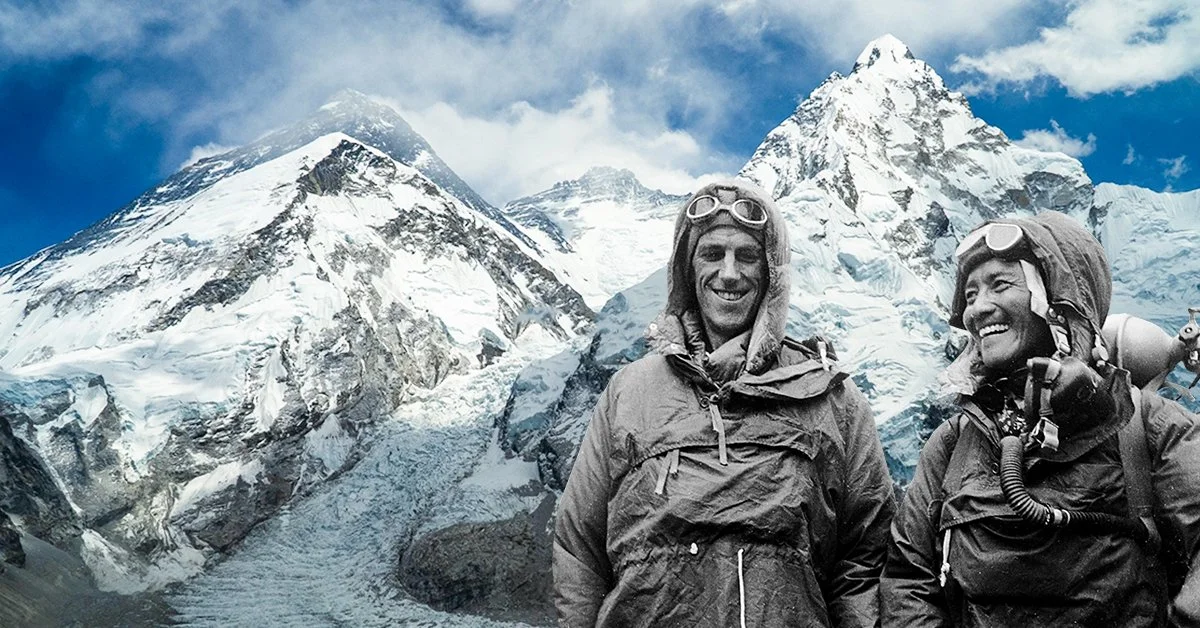
Edmund Hillary and Tenzing Norgay Sherpa
The successful ascent of the world's highest peak, Mount Everest, in the year 1953 is one of the biggest achievements in the history of mountaineering. It was a human exploration of challenging terrain that shows the bravery and strength of Sir Edmund Hillary and Tenzing Norgay Sherpa. Climbing Mount Everest, standing tall at a height of 8840 m in 1953 AD (now measured at 8848.86 m), was not just an achievement of mankind but also a symbol of cross-cultural cooperation, the development of a legacy, and changed mountaineering adventures in Nepal. Hillary and Tenzing set a legacy in the 1953 British Everest expedition led by Colonel John Hunt and inspired global mountaineers to conquer the top of the world.
In this blog, we explore the historic 1953 Everest expedition that changed the mountaineering practice and set a legacy to shape modern adventure. The teamwork and partnership of Hillary and Tenzing, the global significance of a successful Everest summit, and the outcome of the achievement are also explained.
British Mount Everest Expedition 1953
| Category | Details |
|---|---|
| Expedition Name | British Mount Everest Expedition 1953 |
| Leader | Colonel John Hunt (British) |
| Summit Climbers | Edmund Hillary (New Zealand) and Tenzing Norgay Sherpa (Nepali-Indian Sherpa mountaineer) |
| Summit Date | May 29, 1953 |
| Summit Time | 11:30 AM (local time) |
| Mountain | Mount Everest (Sagarmatha / Chomolungma / Peak 15) |
| Height (1953 measurement) | 8,840 meters |
| Current Official Height | 8,848.86 meters |
| Route Taken | South Col Route (via Nepal) |
| Starting Point | Kathmandu to Everest Region (Khumbu) |
| Key Landmarks Crossed | Khumbu Icefall, Western Cwm, Lhotse Face, South Col |
| Oxygen Use | Supplemental oxygen used during summit push |
| Major Obstacle | 40-foot near-vertical rock face on Southeast Ridge (Hillary Step) |
| Time Spent on Summit | Around 15 minutes |
| Descent | Safe return to Camp 4 and base camps |
| Expedition Success | First confirmed ascent of Mount Everest |
The Historic 1953 Everest Expedition
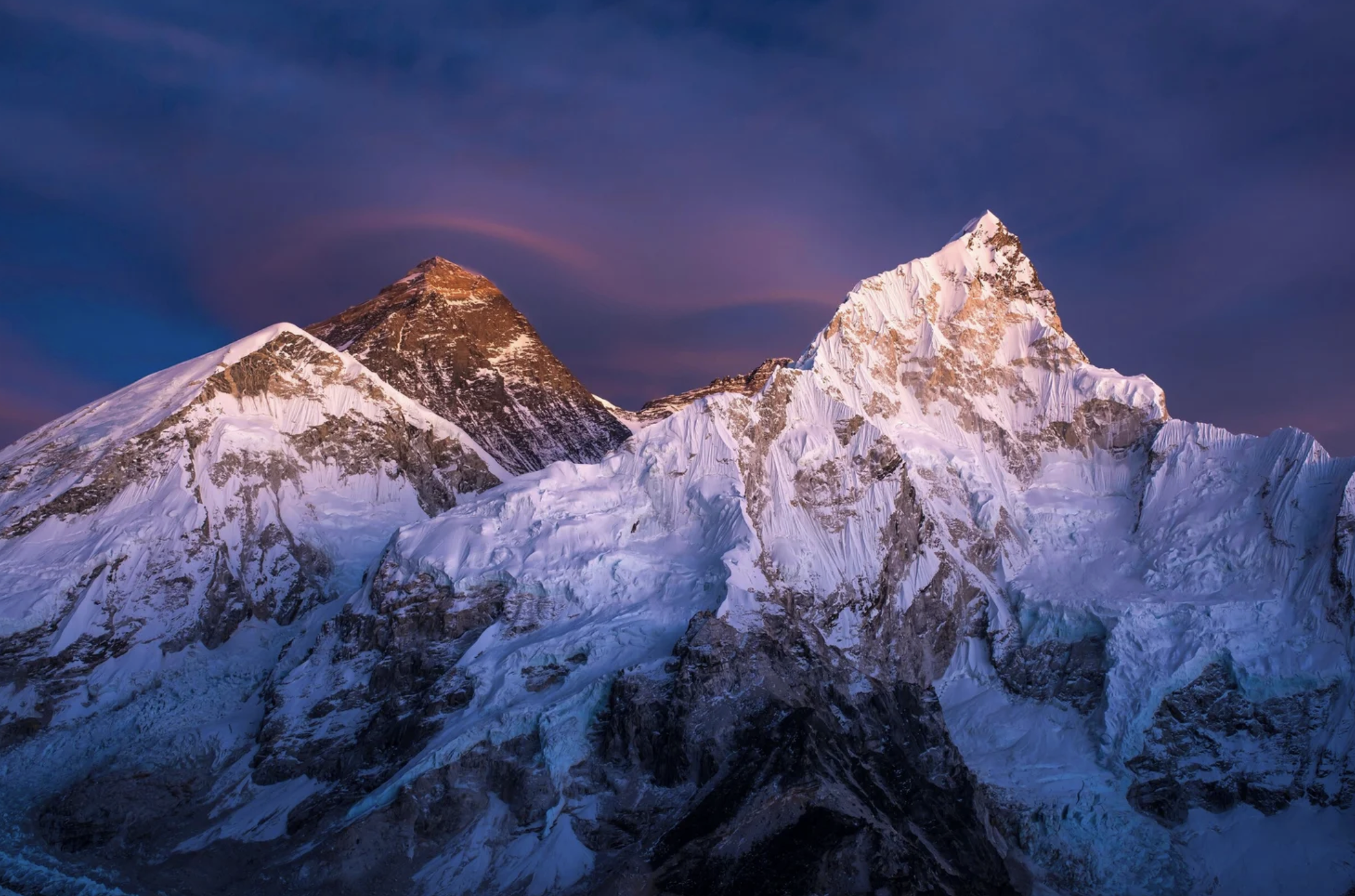
Mount Everest
The historic 1953 Everest expedition was the 9th expedition on Mount Everest led by Colonel John Hunt. This expedition was a well-coordinated mission to conquer the world's highest peak and included experienced mountaineers and Sherpas. The strong mountaineering and sherpa team includes Sir Edmund Hillary and Tenzing Norgay Sherpa. In the 1953 Everest Expedition on Mar 29, the approach was through the Nepal side from the south Col. After several attempts from climbers in the expedition team, the final summit push by Edmund Hillary and Tenzing Norgay Sherpa finally made it to the top of the world.
Upon the first step at the top of Everest, Edmund Hillary and Tenzing Norgay Sherpa spent a historic 15 minutes marking their achievement, taking photographs, and looking around. After spending a few moments, they safely returned to the base camp. Upon reaching the base, Edmund Hillary was full of excitement following the victory. His famous quote upon raw relief and humor, “Well, we knocked the bastard off!” became widely popular.
Teamwork and Partnership
The historical Everest Summit was not just the achievement of conquering the world's highest mountain, but the event marked a remarkable collaboration between Tenzing Norgay Sherpa and Edmund Hillary. While both climbers are from different backgrounds, the partnership and teamwork give the best example of trust, respect, teamwork, and determination.
While Tenzing Norgay Sherpa has experience with high-altitude climbing, Hillary blended technical climbing skills to make a strengthened climbing strategy. Their symbolic handshake becomes a sign of unity, respect, and collaboration to conquer challenging achievements.
Global Significance Of Successful Everest Summit
The successful climbing of Everest in 1953 gave great significance to the world of mountaineering. This success of mankind was regarded as a victory of human strength in exploring challenging terrain with cooperation, trust, and respect.
This was further enhanced by the fact that the achievement coincided with the coronation of Queen Elizabeth II and made the climbers internationally known.
Notably, the Everest expedition further brought into the limelight the value of Sherpas in climbing the Himalayas. The success of Tenzing led to the much-awaited appreciation of the Sherpa community, whose knowledge is still useful in the field of mountaineering. This historical event motivated thousands of climbers and gave a new beginning to adventure tourism.
Outcome of Achievement
The first achievement of the Everest summit by Sir Edmund Hillary and Tenzing Norgay Sherpa changed mountaineering tourism and the perception of human abilities. They helped Nepal to develop its mountaineering tourism and trekking tourism, inspiring adventure seekers globally.
Door for Modern Himalayan Expedition
The first summit achievement established South Col as a viable route for expedition. The techniques, logistics, and strategies developed for the 1953 expedition are still used in present days. The Everest expedition also opened the possibility for expeditions and adventures in major mountains in Nepal.
Improved Trekking Tourism
Nepal has improved trekking tourism, followed by the success of Hillary and Tenzing, who inspired and attracted global adventure seekers in Nepal. Routes such as Everest Base Camp, Kala Patthar Trek, Everest Three High Pass Trek, and others have become popular destinations for trekkers. Such development in the tourism sector has significantly boosted the economy and local communities of the Khumbu region of Nepal.
Their Legacy in Today’s Everest Adventures
The legacy of Edmund Hillary and Tenzing Norgay is a timeless inspiration of teamwork, courage, and the spirit of conquering the highest peak, Everest. Hillary spent his life helping and developing the infrastructure of Nepal via his Himalayan Trust. He worked to develop expedition infrastructure, safety, and local lifestyle by constructing hospitals, schools, and basic infrastructure.
Meanwhile, Tenzing became the pride of the Sherpa, who give recognition to high-altitude workers. Both climbers promoted the region’s tourism with modern Everest expeditions, which climbers practice till today.
Conclusion
The British Everest Expedition of 1953 marks the achievement of mankind as Sir Edmund Hillary and Tenzing Norgay Sherpa conquer the world’s highest mountain, Mount Everest. It is not just an achievement in mountaineering history but also marks an achievement of teamwork, collaboration, and human determination.
The historic moment has marked a significant impact on global mountaineering practice and Nepal’s tourism landscape. The legacy of Edmund Hillary and Tenzing Norgay has inspired thousands of mountaineers and the development of the Everest region. Contact Namas Adventure today if you are planning for the Everest Expedition or exploring the region via trekking. Namas adventure continues the legacy and tradition by organizing expeditions led by expert Sherpa guides and safe mountaineering techniques.
FAQs on Everest’s First Conquerors: Edmund Hillary and Tenzing Norgay Sherpa
Who climbed Everest first, Hillary or Tenzing?
Both Edmund Hillary and Tenzing Norgay Sherpa climbed and reached the summit together. They both are credited as the first climbers who successfully climbed Mount Everest for the first time on May 29, 1953.
From which side did Edmund Hillary and Tenzing Norgay Sherpa climb Everest?
Edmund Hillary and Tenzing Norgay Sherpa climbed Everest through the Nepal side from the south Col. The success of the route made it one of the most popular routes for summits in present days.
Why was the 1953 Everest ascent important?
The 1953 Everest ascent is an important event, as it marked the first successful conquering of the world's highest mountain, Mount Everest. The event symbolizes human strength, ability, determination, and teamwork to conquer challenges.
How long did Hillary and Tenzing stay on the summit?
Tenzing Norgay Sherpa and Edmund Hillary spend around 15 minutes on the summit of Everest. They spend the moment by capturing photographs, marking their success, and looking around from the top of the world.
What happened to Hillary after Everest?
After the Everest expedition in 1953, Hillary continued high-altitude exploration and dedicated most of his life to humanitarian work in Nepal. He helped the Everest region in developing infrastructure such as schools, adventure infrastructure, and hospitals, and he promoted the region. He also led Antarctic Expeditions and several other Expeditions afterwards
