

Everything you need to know about Tilicho Peak 7134M Expedition - Namas Adventure

Tilicho base camp is set on the east side of the Mountain at 4900M
Tilicho Peak (7,134 m/23,406 ft) is one of the major 7000 m mountaineering objectives located in the Annapurna region of Nepal. The Tilicho peak in Nepal is considered an intermediate 7000 m climb with fewer crowds and technical climbs. Experts and mountaineers with previous high-altitude experiences prefer the Tilicho Peak Expedition due to fewer crowds, testing their technical skills, and preparing for the higher 8000 m expedition while also enjoying the scenic view of the region.
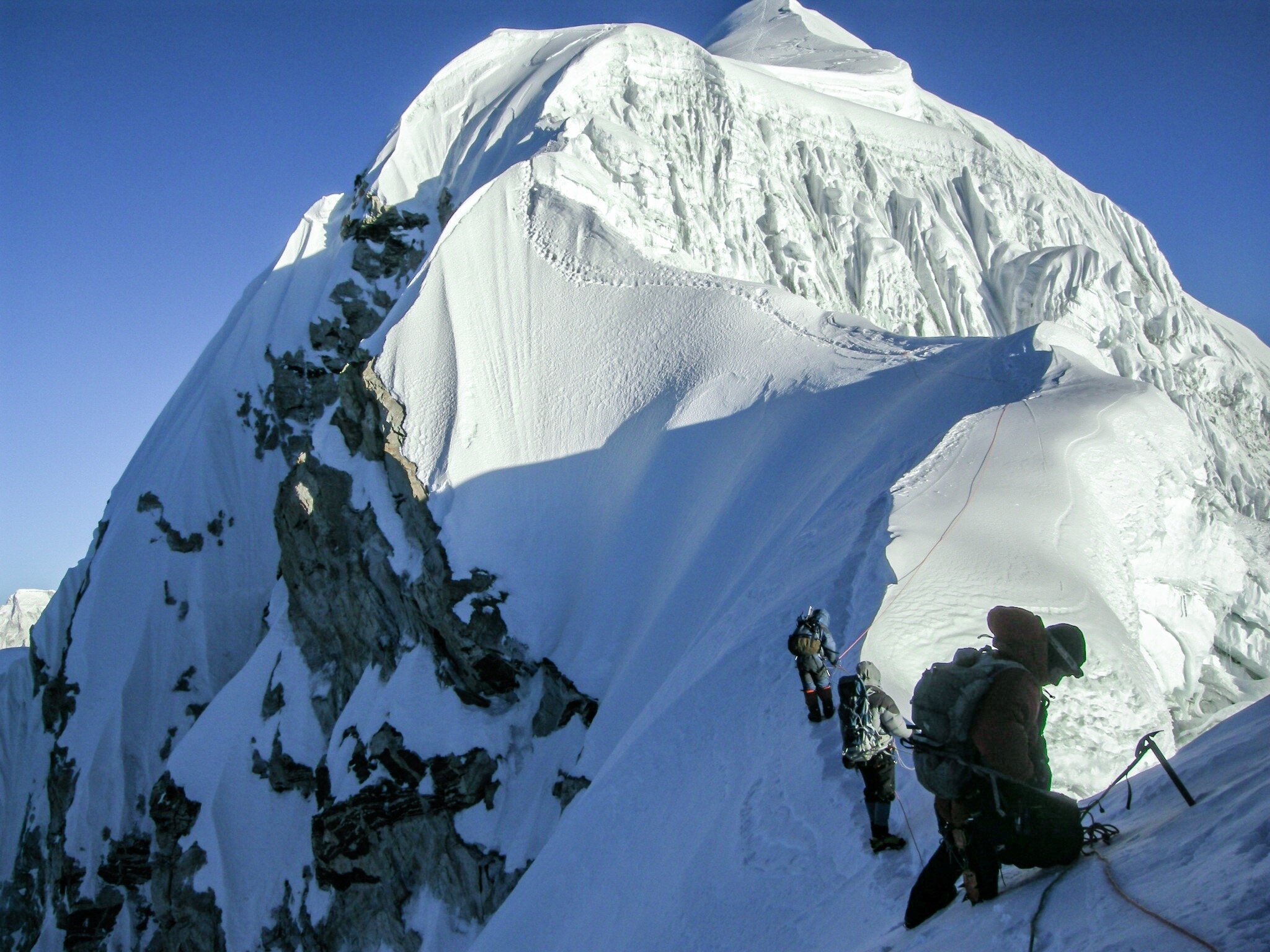
When climbing the Tilicho Peak, climbers start their ascent following the northwest shoulder, combining rocky, snowy, and icy terrain with exposed ridges. Climbing the Tilicho peak requires proper training, physical and mental preparation, acclimatization, and technical skills for success and safety.
In this blog, we provide information about the Tilicho Peak Expedition while highlighting its route and camps, equipment requirements, permits and preparation requirements, best seasons to summit, acclimatization, and its difficulty.
Tilicho Peak Expedition
| Detail | Information |
|---|---|
| Elevation | 7,134 m / 23,406 ft |
| Region | Annapurna Region, Nepal |
| Standard Route | Northwest Shoulder |
| Difficulty | Intermediate/Semi-technical 7000 m climb |
| Alpine/Fitness grading: | D+ / 4 |
| Base Camp | 4,150 m |
| High Camps | Camp 1, Camp 2, and Camp 3 |
| Best Seasons | Spring and Autumn |
| First Ascent | 1978, Emmanuel Schmutz-led French expedition |
| Average expedition days | 27 to 31 days |
Tilicho Peak Expedition Route and Camps
The Tilicho Peak expedition begins with trekking to the Tilicho Base Camp (4,150 m) in the Annapurna region. From base camp, climbers progress towards camp 1, camp 2, and camp 3 following acclimatization rotation before making a summit push.
Approach to Tilicho Base Camp
To reach the Tilicho Base Camp, climbers approach following the Annapurna Circuit route, passing locations like Besisahar (760 m), Humde, Manang, and Tilicho Lake (4,919 m). This gradual ascent to the basecamp allows climbers to acclimatize to increasing altitude. Once you reach the Tilicho Base Camp, you can witness the stunning landscape of the region.
Base Camp to Camp 1
From the Tilicho Base Camp, your journey to the summit continues to the summit of Tilicho Camp 1 (5,800 m). The ascent from Base Camp to camp involves a rocky and steep ascent along the northwest shoulder. This section requires technical skills where you will be using climbing equipment and fixed rope.
Camp 1 to Camp 2 and Camp 3
From camp 1, climbers reach camp 2 at an altitude of 6,200 m and then camp 3 at 6,600 m, from where they get ready for the summit push. The route condition from camp 1 to camp 3 consists of mixed climbing in steep ice and snow slopes with elevations up to 60 degrees. These sections are more technically challenging and challenge climbers with severe cold, high-altitude risks, and objective hazards like avalanches.
Camp 3 to Summit
From Camp 3, the demanding and challenging summit push journey begins. Climbers ascend to the summit of Tilicho Peak, navigating in steep snow and icy terrain using fixed ropes. The summit attempt begins early in the morning to take advantage of calm or the best possible weather conditions and climbing conditions. After a successful summit, climbers descend towards the basecamp or lower camps as per the team strategy and plans.
Acclimatization Strategy for Tilicho Peak
When climbing Tilicho Peak, acclimatization is an important consideration that allows climbers to climb above an altitude of 7000 m. The acclimatization strategy includes progressive climbing instead of immediate ascent to high altitude. In the base camp, climbers are required to take rest and prepare for climbing routes where they advance to higher camps and descend to lower camps to adapt to higher altitude. The summit attempt begins only when climbers are acclimatized and weather or route conditions are favorable.
Best Season for Tilicho Peak Expedition
Spring from March to May and autumn from September to November are considered the best times for Tilicho Expeditions. Autumn provides clearer skies, stable weather conditions, and good visibility for safe climbing. Meanwhile, spring offers milder day temperatures, making high-altitude acclimatization safer and more comfortable. Spring also provides longer daylight hours, making the season ideal for long-day expeditions.
How to Prepare for Tilicho Peak
The preparation for the Tilicho Peak expedition begins from the planning stage. Climbers must be involved in physical training that should include cardiovascular endurance, leg and core strength, uphill hiking, and backpacking with load.
Climbers should have technical skills and have confidence in the use of crampons, ice axes, fixed ropes, steep ascending and descending, and simple climbing and safety systems.
Some previous experience in climbing at high altitude is highly recommended. In addition to the current method of training, Namas Adventure offers a training program for 7000 m expeditions for 16 weeks.
Equipment Checklist for Tilicho Peak
Gears and equipment are important for the Tilicho Peak expedition for safety and success. Some of the important equipment and gear required for the Tilicho Peak expedition include the following:
Mountaineering boots and crampons
Ice axe, harness, and helmet
Ascender/Jumar, descender, and carabiners
Down jacket and insulated clothing
Waterproof jacket and trousers
Mountaineering gloves and warm headwear
Goggles and sunglasses
Sleeping bag suitable for extreme cold
Backpack and expedition duffel
Headlamp and spare batteries
Water bottles or thermos
Trekking poles
Sunscreen and personal medical supplies
Permits and Expedition Logistics
To summit the Tilicho Peak, climbers are required to have a mandatory Tilicho Peak climbing permit, and to trek in the base camp, climbers need to trek via Annapurna Conservation Area, requiring them to have an Annapurna Conservation Area Permit (ACAP).
In addition to permit requirements, the logistic requirements include transportation during the basecamp approach, accommodation, management of base camp, high camp arrangements, fixed ropes management, and contingency planning.
Why Climb Tilicho Peak with Namas Adventure?
If you are planning to summit Tilicho Peak, Namas Adventure can help you with a tailored itinerary, a small and dedicated team strategy with support, a 1:1 guide to client ratio, an acclimatization plan, and technical climbing support. With a focus on safety and success, the expedition by Namas Adventure uses the Northwest Shoulder route with a gradual ascent to camps 1, 2, and 3. Contact Namas Adventure and prepare for a journey to the top of Tilicho Peak.
How Difficult Is Tilicho Peak?
Tilicho Peak expedition is graded at D+/ 4 in difficulty. (Alpine/Fitness grading link).
The Tilicho Peak is an intermediate-level 7000 m peak expedition that requires semi-technical climbing skills, physical and mental fitness, proper acclimatization strategies, and climbing strategies. The peak is graded as a D+/4 level of difficulty, which demands climbers to walk across steep terrain, exposed ridges, and long climbing days in remote regions.
Climbing Tilicho Peak requires previous high-altitude experience with at least one 6000 m expedition and several technical peaks with alpine/mountaineering. Climbers are also required to have good technical and climbing skills with the ability to use crampons and other equipment. One must be proficient in using fixed line to climb on steep and exposed sections, traverse on mountain slopes, and climb through spurs on the route. Experience in using climbing gear and basic rope techniques with physical and mental fitness is critical.
What are the clothing and gears - boots required for Tilicho Peak climb (trekking and mountaineering)? Can I rent gears for this expedition climb?
Choosing the right gear is very important. We advise climbers not to make compromises on the quality of gears and clothing, and to pay attention to layer up comfortably as well. You will depend highly on your clothes to keep you warm enough for the dropping temperatures at nighttime which can go down to -20c /-40c. Please check our equipment blog for recommended clothing and gear.
Renting your gears in Nepal? The simple answer is NO. This is one of the most frequently asked questions mainly by beginner climbers. We have tested and tried several gears in Nepal and frankly, we do not recommend hiring here. We know it might seem like a huge amount of expenses to buy all the gears, but they are well worth it. You can even hire from the city you live in. Make sure they are the original products from well-known adventure gear companies. (North face, Mountain hardware, Kailas, etc.)
Boots for Mount Tilicho peak 7134M Expedition
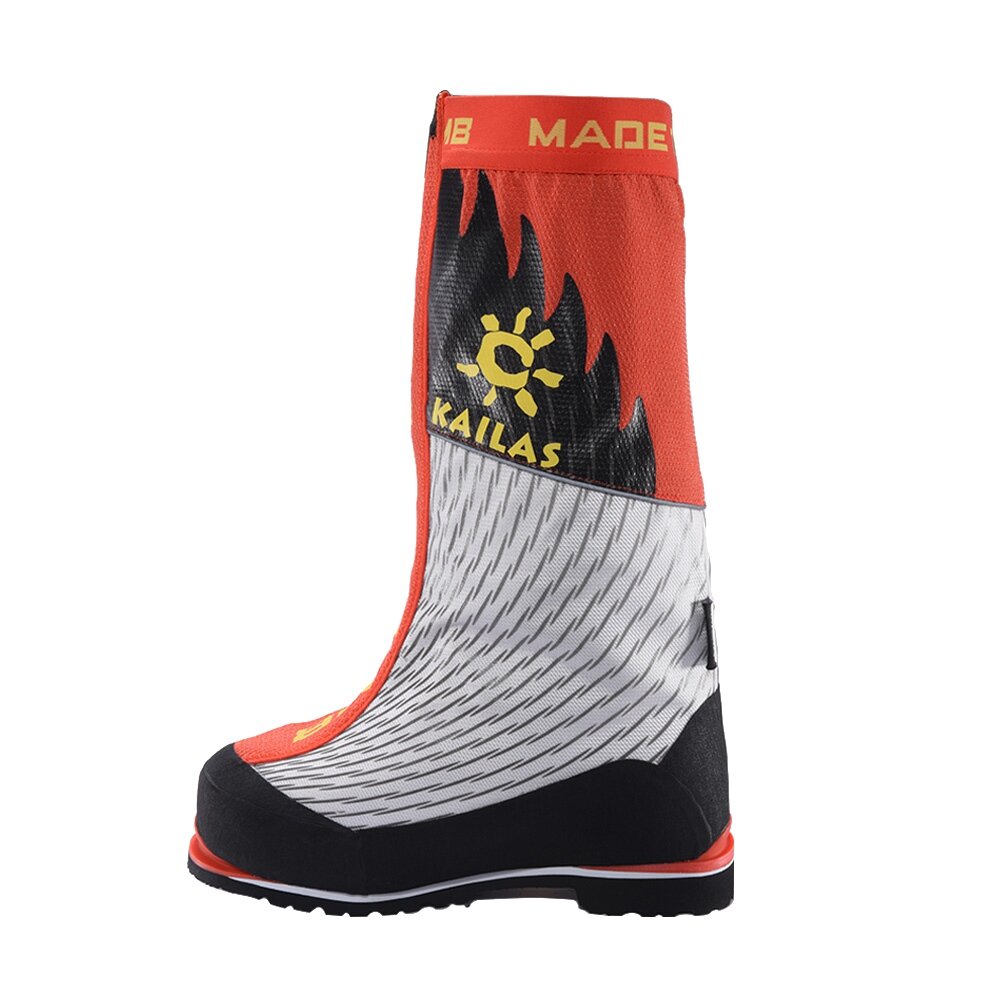
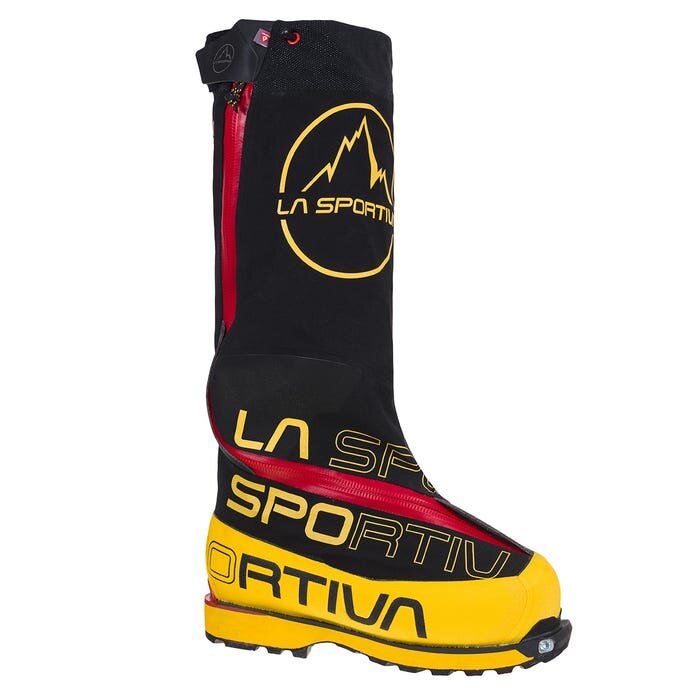
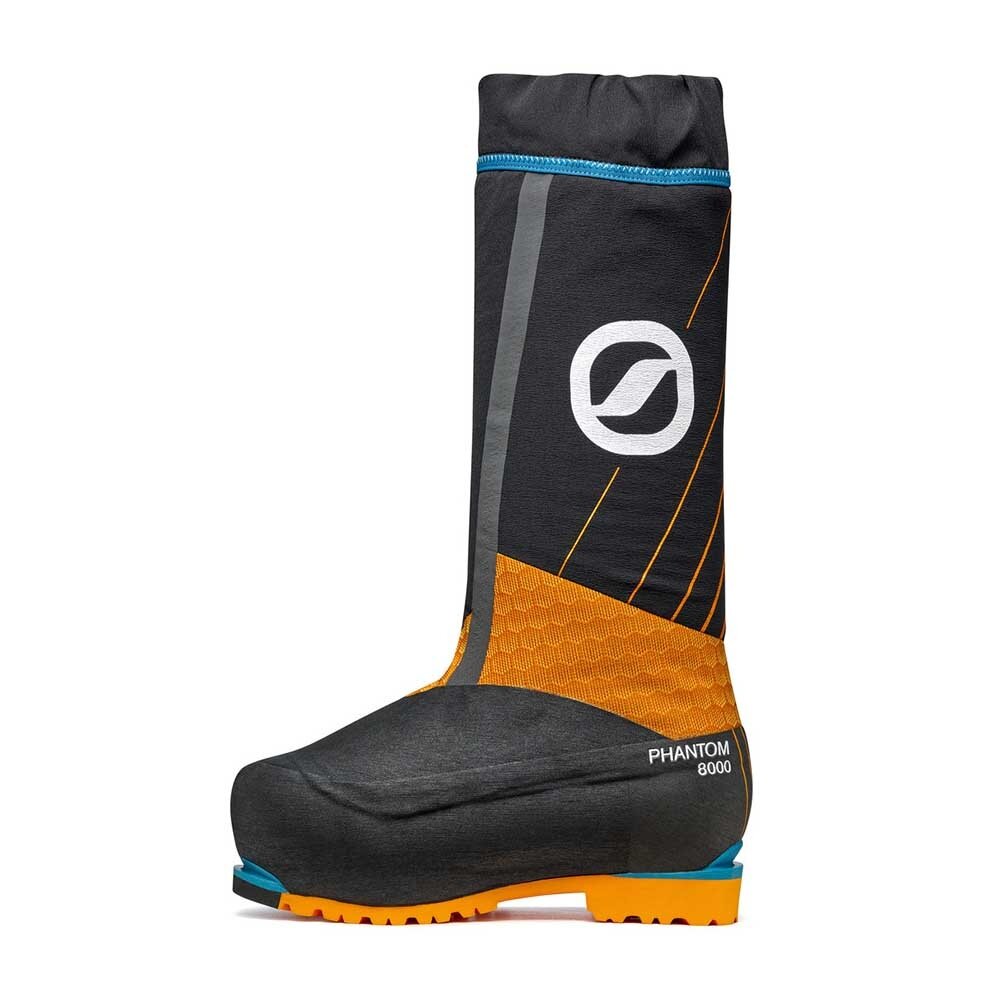
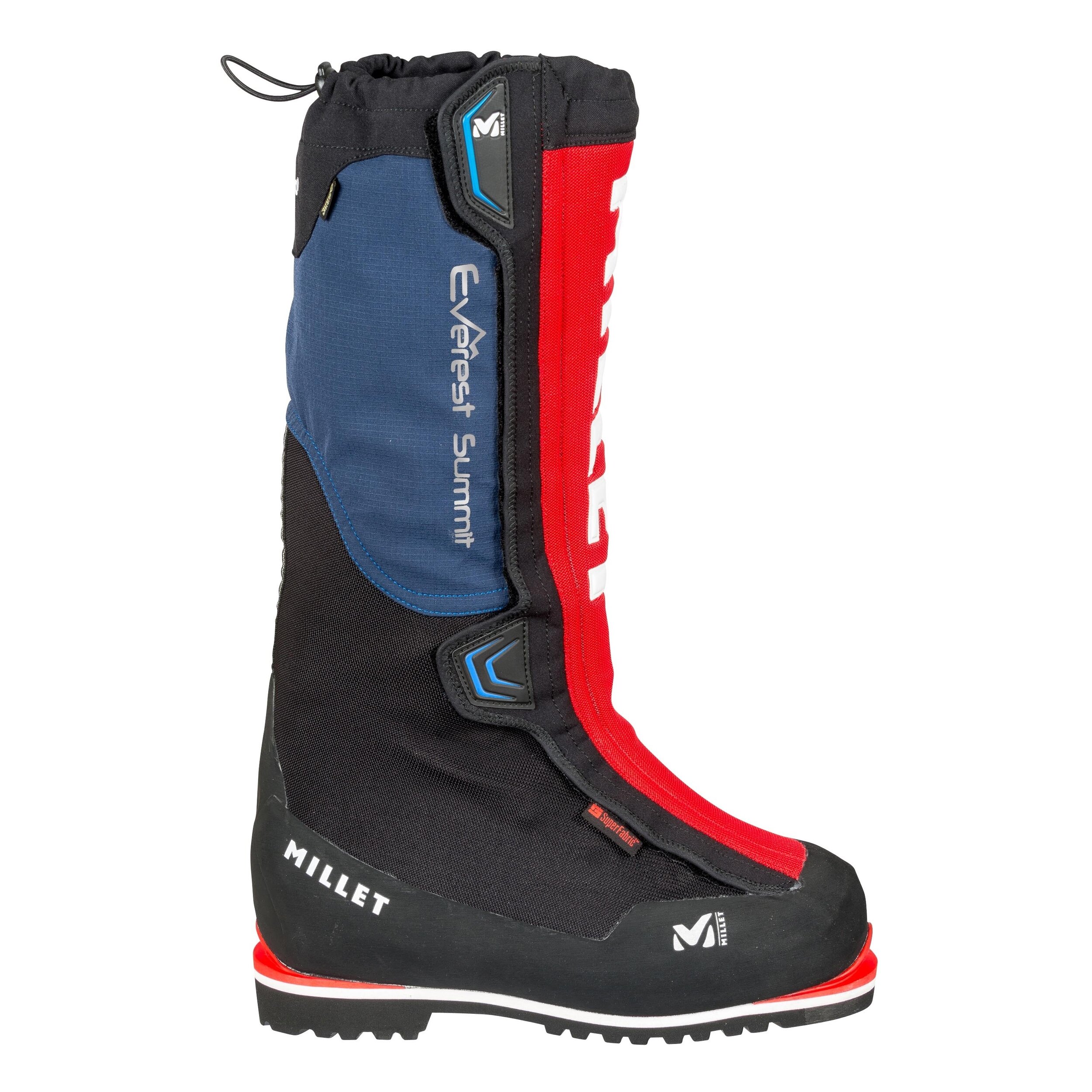
With better technologies, climbing shoes have improved every year. We highly recommend double-layered boots like Kailas Everest 8000M, La Sportiva Olympus Mons Cube, Scarpa 8000 phantom, Millet Everest summit GTX. It is wise to spend on good mountaineering boots, as so with all the gears that we have mentioned in this post above.
More 8000M boots link here (other media article)
What types of foods are available during Tilicho Peak Expedition? Is clean water available and how much water intake is recommended? Hydration and nutrition
On your hike to the base camp, most of the foods are prepared in the tea houses. Once we reach base camp we will have our own base camp station. Our tilicho base camp kitchen will be the best, where our amazing chef will prepare foods that will surprise you with what you can find at that altitude. Throughout your climbing period foods are prepared by our base camp kitchen staff members.
In the high altitudes, as the weather is extremely cold, your body will naturally want to reject food or avoid using energy on anything, which includes eating too. You might have to force yourself with the first few couple of bites and then eventually your body will start accepting the food. We also provide packed dried meals, so that clients have other options should they not want to eat what’s being cooked and served to them. We suggest all our clients to drink 4-6 l of water every day. Staying hydrated will also help you with acclimatizing properly. It’s best to take hydration tablets or filtration bottles with you.
Remember to avoid smoking and any alcohol intake. You might see our guiding leaders smoking or drinking but remember they are professionals and they have adapted very well to these environments compared to the climbers who go there just for adventure holidays.
What trip insurance will I need for this Expedition? Do I need helicopter evacuation to be included in my insurance cover?
No matter how prepared you are, you never know when or how things might go wrong. You might be sick suddenly or not that we wish but there might be some incident, you might suffer from altitude sickness or anything we can’t imagine yet. So, for these reasons, it is always good to have insurance cover. Our recommended Insurance companies (link)
We highly recommend Global Rescue as your insurance provider. Helicopter evacuation is our final emergency option and we do recommend you have one in your insurance, as it is the only means of transport in the Everest region. Our guides will assess your condition and examine if it is a major issue. If not, they will use their experience to motivate and push you through your trip. However, in case of emergency, helicopter evacuation will be called upon.
There is a procedure to follow when calling for emergency evacuation. We will call the insurance company hotline, get approval with your insurance reference number, and only then helicopters are sent to the distress call location. You will have to pay for the evacuation in Nepal from your own pocket but once you are back home you can claim your money back. Make sure you collect helicopter evacuation receipts, certified doctor’s approval letter. The insurance company will ask for this evidence to back up your claim. There was a huge helicopter scam in Nepal during 2018, so insurance companies are taking extra measures to stop this from happening. Our guides and staff members in Kathmandu will also remind you of this process during briefings.
Next climbing goals after Tilicho Peak Expedition climbing
Once you complete your objective of climbing Tilicho Peak you can start to plan further into other technical high altitude peaks that satisfy your climbing objective.
1. Ama Dablam 6819M and Island Peak 6189M climbing expedition


Technically difficult and climbing goal for many mountaineers. Ama Dablam is well renowned as one of the most beautiful and exposed Himalayan mountain in the Everest region. It is one of the most sought mountains to climb by mountaineering enthusiasts. Plan to do it before or after your bigger expedition like Everest as Ama Dablam climb in itself is a mountaineering challenge on its own. Ama Dablam is considered "a must-do" for alpinist and mountaineers.
2. Mera, Baruntse and Makalu (Triple Combo) or Baruntse with Mera Peak

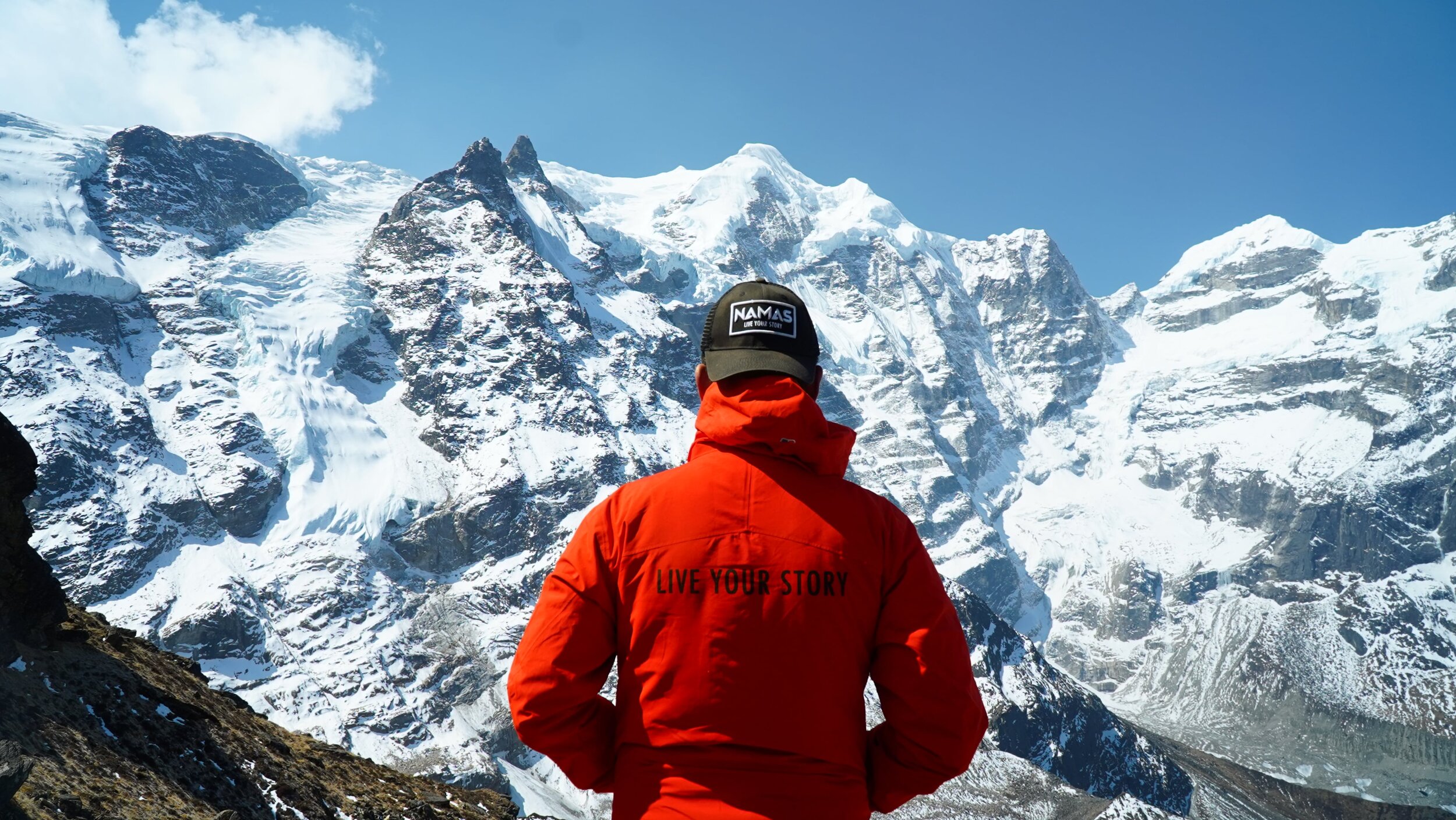
Makalu Triple combo climbing expedition is one of the exciting mountain climbing expedition we organise at Namas Adventure. Climb the 5th highest peak in the world which is technically challenging but with a mix of climbing Mera Peak 6476M as your acclimatisation peak and Baruntse 7129M as your training peak. Mera Peak will be the most comfortable climbing peak helping you acclimatise and then we proceed onto the next 7000M peak objective of climbing Baruntse. The idea is to summit a 6000M+ peaks then to 7000M+ peak and then finally a 8000M peak.
Baruntse peak 7129M is one of the most remote peak sitting between Makalu and Everest/Lhotse. We will use this expedition to acclimatise further and also to train/refresh our climbing skills at higher altitude. Climbing Baruntse peak should further prepare us for taking on our final objective of climbing Makalu. After summiting Baruntse we then proceed towards Makalu base camp descending down via Sherpani col route.
Makalu 8463M will be the ultimate goal for this expedition. A mix of technical climb and extreme altitude this climb does not come easy. This expedition challenge is perfect after Everest expedition. You will need a serious endurance and strength in your fitness tank. Make this part of your climbing how ever it suits you. Some climbers want to climb all 14 X 8000M peaks or just another 8000M peak climbing achievement. What ever your goal Makalu is one of the best expedition to take on before or after Everest expedition.
We hope the information we have provided above will help you decide/prepare in the best way before you embark on your ultiamate dream of climbing Mt. Everest. If you are looking for a great climbing team and want to have an amazing time in Nepal then we would love to have you onboard for our Mt. Everest Expedition. You can be assured that you are provided quality services with our fun-loving yet professional guides who have 5 - 10+ years of taking clients on Everest summit successfully. After all we do aim to be the best adventure specialist in the world and you having a great time, being safe and summiting will always be our priority.
3. Manaslu 8163M Expedition


Want to experience 8000M+ a death zone altitude and gain the right experience for Everest or other higher extreme altitude climb? Manaslu Expedition is for any aspiring mountaineers who are considering climbing an 8,000m peak or higher. Manaslu has to be one of the preferred options if you are looking to climb the 8000M peaks and is also a necessary option to get that 8000M experience before attempting to climb Mount Everest. The expedition begins with trek to Manaslu trails passing through the village at the foot of the mountain where then arrive at Manaslu Base Camp to begin the climb.
4. Mt. Everest 8848M Expedition, Nepal


Your ultiamte expedition climbing to the Roof of the world. Mt. Everest Expedition.
If you do have any more questions, please ask us below in the comment section or you can email us at bookings@namasadventure.com and our team will get back to you as soon as they can. Stay well. Challenge yourself. Dare great things and live your story.
