

How Long Does It Take to Climb Mount Everest
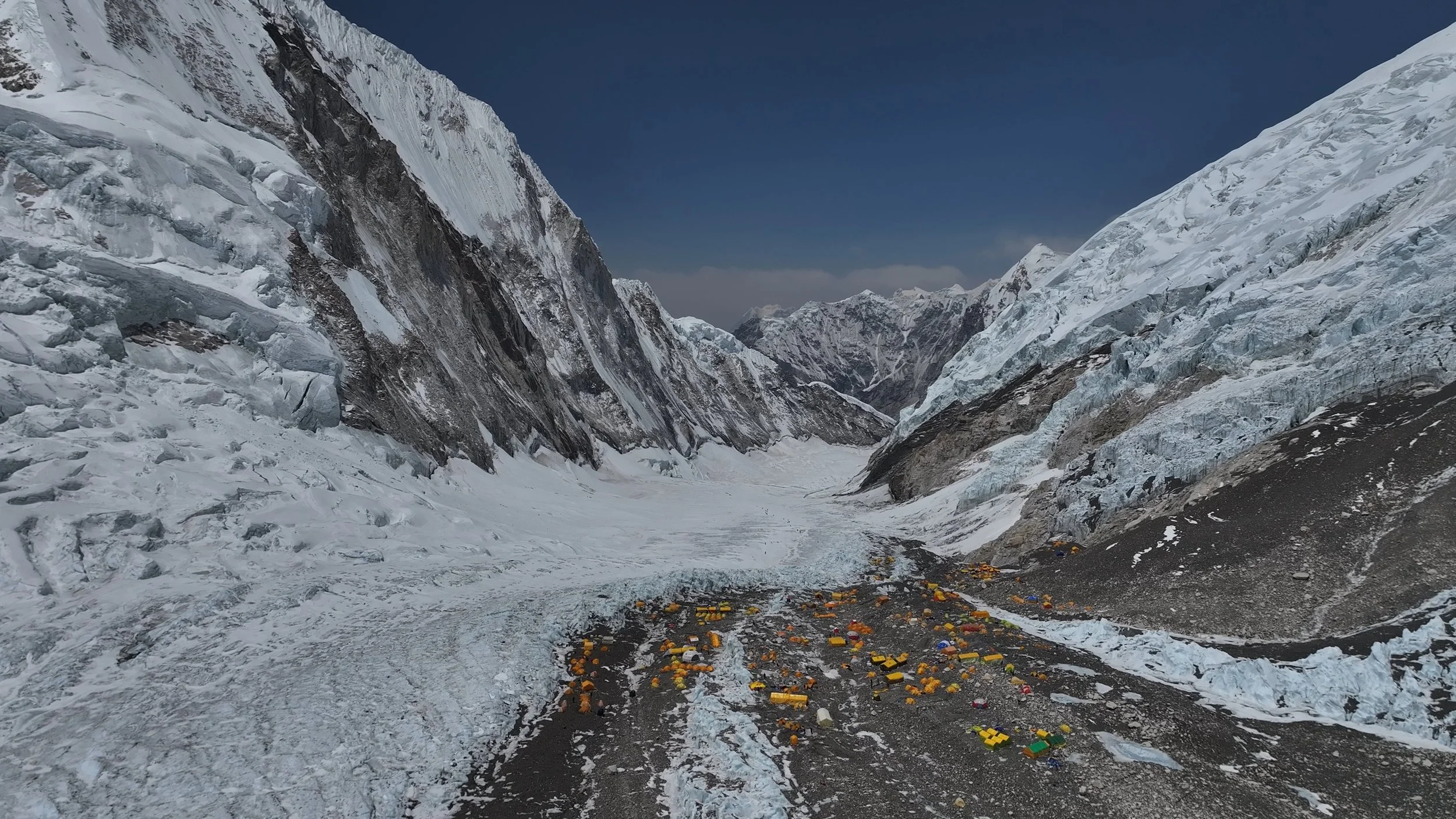
Climbing the world's highest mountain, Mount Everest (8848.86 m), is a bucket list for high-altitude adventurers and mountaineers. But reaching the summit of Everest, or the top of the world, is equally challenging and demanding. Climbers are required to spend several days to reach the base camp, spend time acclimatizing, wait for a weather window, and return to base after pushing for the final summit. While the most common route to summit Mount Everest is the South Col route from Nepal, the overall Everest expedition takes an average of 40 to 55 days. The expedition takes an average of 54 to 60 days if climbers are planning to summit Everest from the North Col route in China (Tibet). These days are average estimated days and can vary according to weather condition, traffic, route condition, and many more.
In this blog, we explain how long it takes to climb Mount Everest from the South Col route in Nepal. The Everest expedition timeline, breakdown of time to reach camps, requirement of acclimatization, and factors that affect the climb duration are explained.
| Feature | Details |
|---|---|
| Mountain | Mount Everest (also known as Sagarmatha in Nepal and Chomolungma in Tibet). |
| Elevation | 8,848.86 m (29,031.7 ft) |
| Location | Nepal–China (Tibet) Border |
| Popular Route | South Col Route (Nepal) |
| Alternative Route | North Col Route (Tibet) |
| Typical Expedition Duration |
60–70 days via the South Col Route (Nepal) 54–60 days via the North Col Route (Tibet/China) The total expedition duration may vary depending on weather conditions, route traffic, acclimatization schedule, and expedition package. |
| Base Camp Altitude | 5,364 m (Everest Base Camp) |
| Highest Camp | Camp IV (South Col): 7,900–7,950 m |
| Summit Altitude | 8,848.86 m |
| Difficulty | Extremely Challenging (High-altitude technical expedition) |
| Best Climbing Season | Spring (April–May) |
| Permit Requirements | Everest Climbing Royalty, Sagarmatha National Park Entry Permit, and Khumbu Pasang Lhamu Rural Municipality Permit. |
| Key Challenges | Extreme altitude, severe weather, the Khumbu Icefall, and the Death Zone above 8,000 m. |
The Average Time Required to Climb Mount Everest
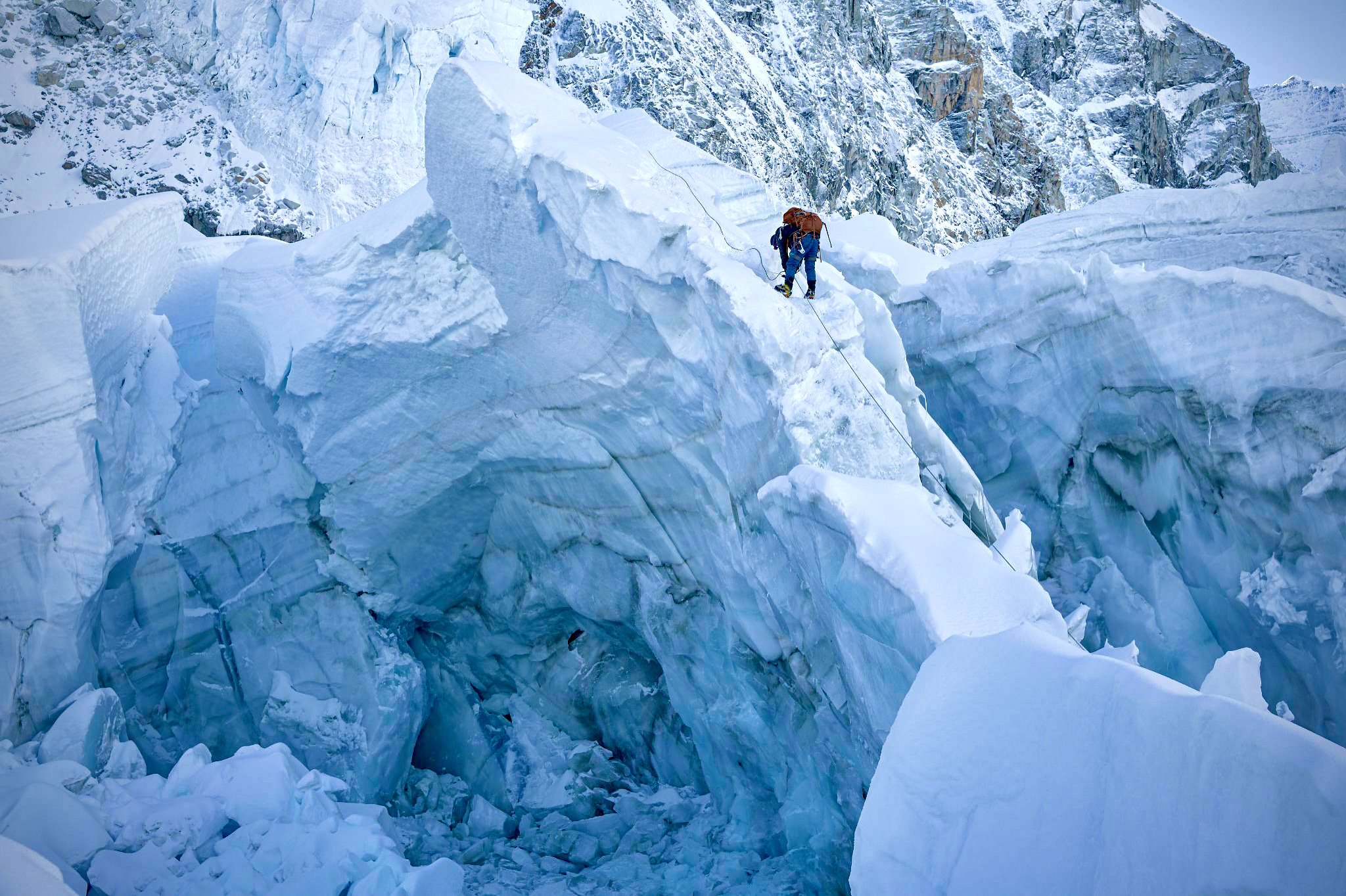
The time required for a successful summit of Mount Everest depends on the weather, route selected, traffic, season of climbing, and expedition package. The summit from North Col from China takes an average of around 50 to 60 days, as climbers can reach the base camp easily in comparison to the South Col Route. Although the climbing days are short from the North Col route, the strict and unpredictable political closure to the route, technical difficulty, and lack of a fast rescue option make it less preferred than the South Col route.
Meanwhile, climbing Everest from the South Col route in Nepal takes an average of 60 to 70 days. Climbers are required to trek from Lukla (2,860 m), the gateway to the Everest region, taking several days to reach base camps.
Regardless of route, the factors determining the climbing days are influenced by acclimatization requirements, weather delays, traffic of climbers, route condition, and pace of climbers, influencing the number of required days for an expedition. Also, the expedition package also influences the day required for climbing, as the express climb package provided by leading expedition companies like Namas Adventure completes the overall expedition within 21 days.
Complete Everest Expedition Timeline
The Everest Expedition follows a structured timeline that includes trekking days, acclimatization days, weather delays, recovery periods, and return to Kathmandu. While the schedules are fixed, the schedule may vary due to factors like weather delays, route conditions, acclimatization progress, and traffic conditions on the route. The expected timeline for Everest Expedition from South Col route from Nepal are provided below:
| Expedition Stage | Average Days | Details |
|---|---|---|
| Arrival in Kathmandu | 2–3 Days | Arrival, expedition briefing, permit processing, equipment inspection, and final preparations before departure. |
| Trek to Everest Base Camp | 8–10 Days | Flight from Kathmandu to Lukla followed by a gradual trek to Everest Base Camp with proper acclimatization. |
| Base Camp Preparation | 2–4 Days | Puja ceremony, Khumbu Icefall training, equipment organization, and final expedition planning. |
| Acclimatization Rotation 1 | Several Days | Rotations through Camps I, II, and III with scheduled rest, contingency days, and high-altitude training. |
| Weather Window | 1–2 Weeks | Monitoring weather forecasts while waiting for a stable summit window with favorable wind and snow conditions. |
| Final Summit Push | 5–7 Days | Climb from Base Camp to the summit of Mount Everest via Camp IV (South Col), followed by a safe descent back to Base Camp. |
| Return to Kathmandu | 4–6 Days | Trek back to Lukla, flight to Kathmandu, rest, expedition debriefing, and departure preparations. |
How Long Does It Take to Climb from Base Camp to the Summit?
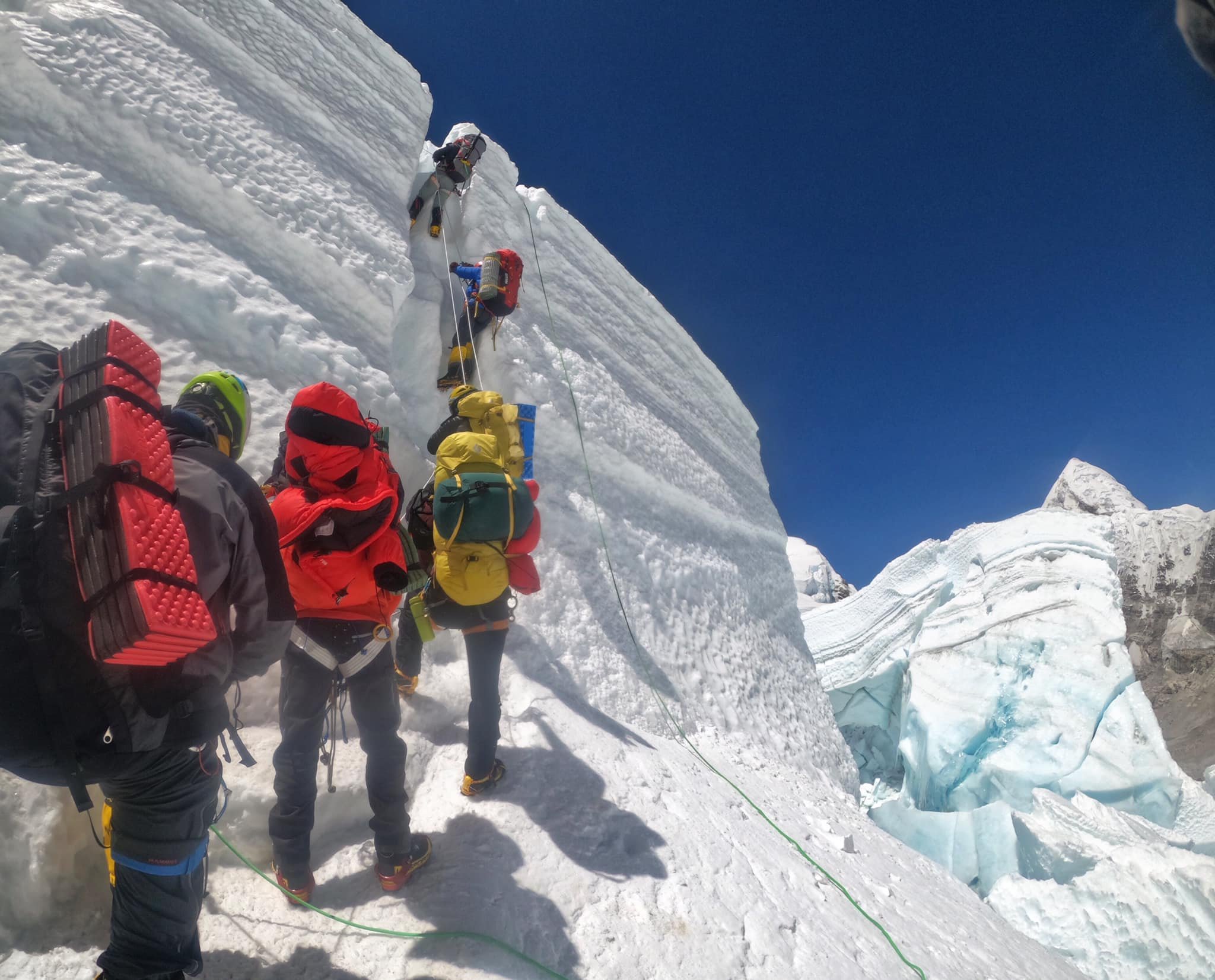
After successful acclimatization, climbing rotation, and clear weather forecasts, climbers begin their final push from Everest Base Camp to reach the summit and return successfully to the base again. The climbers reach the summit following several stages, reaching high camps. taking rests and conserving energy while also adapting to the severe condition of the Everest Death Zone.
Base Camp to Camp I
The journey from Everest Base Camp to Camp I begins with crossing the extremely dangerous section of Khumbu Icefall. The Khumbu Icefall is one of the technically challenging sections that requires climbers to navigate through ladders over deep crevasses. The total time to reach Camp I from Everest Base Camp (EBC) takes around 6 to 8 hours on average.
Camp I to Camp II
From Camp I, the time to reach Everest Camp II takes an average of 4 to 7 hours. Climbers are required to travel across the Western Cwm, a glacial valley surrounded by Nuptse, Lhotse, and Everest. These sections challenge climbers with high altitude and intense reflection of sunlight, although the terrain is less technical.
Camp II to Camp III
From Camp II the route to Camp III ascends towards the Lhotse Face, where climbers are required to navigate climbing over hard blue ice sections. CLimbers are required to use a fixed rope to reach Camp III (7,200 m), where they acclimatize for several days before ascending to camp IV. The average duration from Camp II to Camp III takes around 4 to 7 hours.
Camp III to Camp IV
The Camp III to Camp IV (7,950 m) journey takes an average duration of 5 to 8 hours. To reach Camp IV, climbers cross the Yellow Band and Geneva Spur to reach the beginning point of Everest's Death Zone, where the oxygen level is critically low and climbers require supplemental oxygen.
Camp IV to the Summit
From Camp IV, the climbers begin their climb journey at 10:00 PM or midnight to reach the summit after sunrise and descend before afternoon. The ascent from Camp IV to reach the Everest summit takes around 10 to 14 hours, passing sections like the Balcony and the iconic Hillary Step. Upon reaching the summit, climbers spend around 10 to 15 minutes at the top taking photographs and reflecting on their journey.
Climbers reaching the summit is an achievement, but it is only a half part of the journey, as they still require putting effort to safely return to the base camp.
Why Climbers Spend Weeks Acclimatizing
Acclimatization is the key to a successful Everest expedition, as it helps climbers to adapt and adjust to the high-altitude atmosphere and deal with decreasing oxygen levels. One of the reasons that the Everest Expedition takes a longer duration is the requirement of acclimatization, as without it, the risk of altitude-related illnesses like acute mountain sickness (mild/moderate), High-Altitude Cerebral Edema (HACE), and High-Altitude Pulmonary Edema (HAPE) is significant.
Preventing Altitude Sickness: Acclimatizing is significant to avoid altitude-related sickness, as in situations where climbers face the symptoms of altitude sickness, their expedition may be canceled or halted.
Building Red Blood Cell Count: Climbing rotation trains the body to adapt and acclimatize to high-altitude atmosphere by letting the body produce more red blood cells to transport oxygen to the body. These reduce sickness in the climbers and increase their high-altitude performance.
Learning Technical Sections Before Summit Day: Performing climbing rotation as part of acclimatization helps climbers to learn about technical sections. Getting informed about the technical section helps climbers to navigate technical terrains during the climb.
Conserving Energy for the Weather Window: Acclimatization also involves rest days and waiting for weather windows. Upon the appropriate weather, climbers are energized and get adapted to the high-altitude environment, which helps them to navigate properly and complete their expedition.
Fastest Mount Everest Ascents
While the commercial expedition takes averages of two months or more, elite climbers around the world have achieved remarkable records by reaching the summit in lesser durations. Experienced and elite mountaineers have completed their Everest ascents in a few days from Base Camp following proper acclimatization, waiting for a weather window, and getting support with specialized logistics.
On May 28, 2026, Tyler C. Andrews from the United States set a record for the fastest ascent from Everest Base Camp from South Col with supplemental oxygen. On May 24, 1996, Italian climber Hans Kammerlander summited Everest from North Col Base Camp, taking 16 hours and 45 minutes without supplemental oxygen, setting a record for the fastest Everest summit without supplemental oxygen. Phunjo Jhangmu Lama from Nepal is the fastest woman climber to climb Everest within the duration of 14 hours 31 Minutes.
However, these achievements must be considered as mountaineering records. In a commercial expedition, the condition differs as the overall success and safety of climbers are a priority rather than keeping a record.
Conclusion
Climbing Mount Everest is not just about reaching the summit, it requires careful planning, waiting for a weather window, and long days of acclimatization for safety and overall summit success. Among many factors affecting summit days, acclimatization is a key factor that requires more time and is the most crucial requirement for adapting to the high altitude. atmosphere. When planning for a summit, one must prepare for delays by ensuring contingency days in their itinerary, as high-altitude weather is unexpected.
If you are preparing and planning to climb Mount Everest, Namas Adventure provides professionally guided expeditions providing well-planned itineraries, including enough acclimatization, rest, weather windows, and contingency days. By providing climbing training, guide support, and logistical support and focusing on safety, Namas Adventure ensures the overall success of your Everest Expedition
