


Frontier Series : API HIMAL Expedition 7132M
Remote, rarely climbed, and built for mountaineers who want more than a crowded standard route
Highlights
2027 Application deadline (01/08/2027)
Only 23 have been successful to date.
One of the least-climbed or under-explored mountaineering objectives (one–two departures/year max)
1:1 Climbing support with a small team strategy and max client count of 4 to 10 members.
Training programmes for 7000 m mountains from Training Peaks for 16 weeks.
Camp 1 & 2 strategy. Heated dining tent and solo tent at base camp
Embark on the Extraordinary: Discover Our Frontier Expeditions
Welcome to the Frontier Expeditions series by NAMAS Adventure, where we invite you to explore the world's most uncharted and rarely climbed peaks. Each of these expeditions is a rare opportunity, offered just once or twice a year. We run each unique adventure for a limited time, perhaps a year or two before moving on to uncover new frontiers. This ensures that every journey remains exclusive, filled with the spirit of true exploration, and reserved for those who seek the extraordinary.
Api Himal 7132m - Year 2027/28
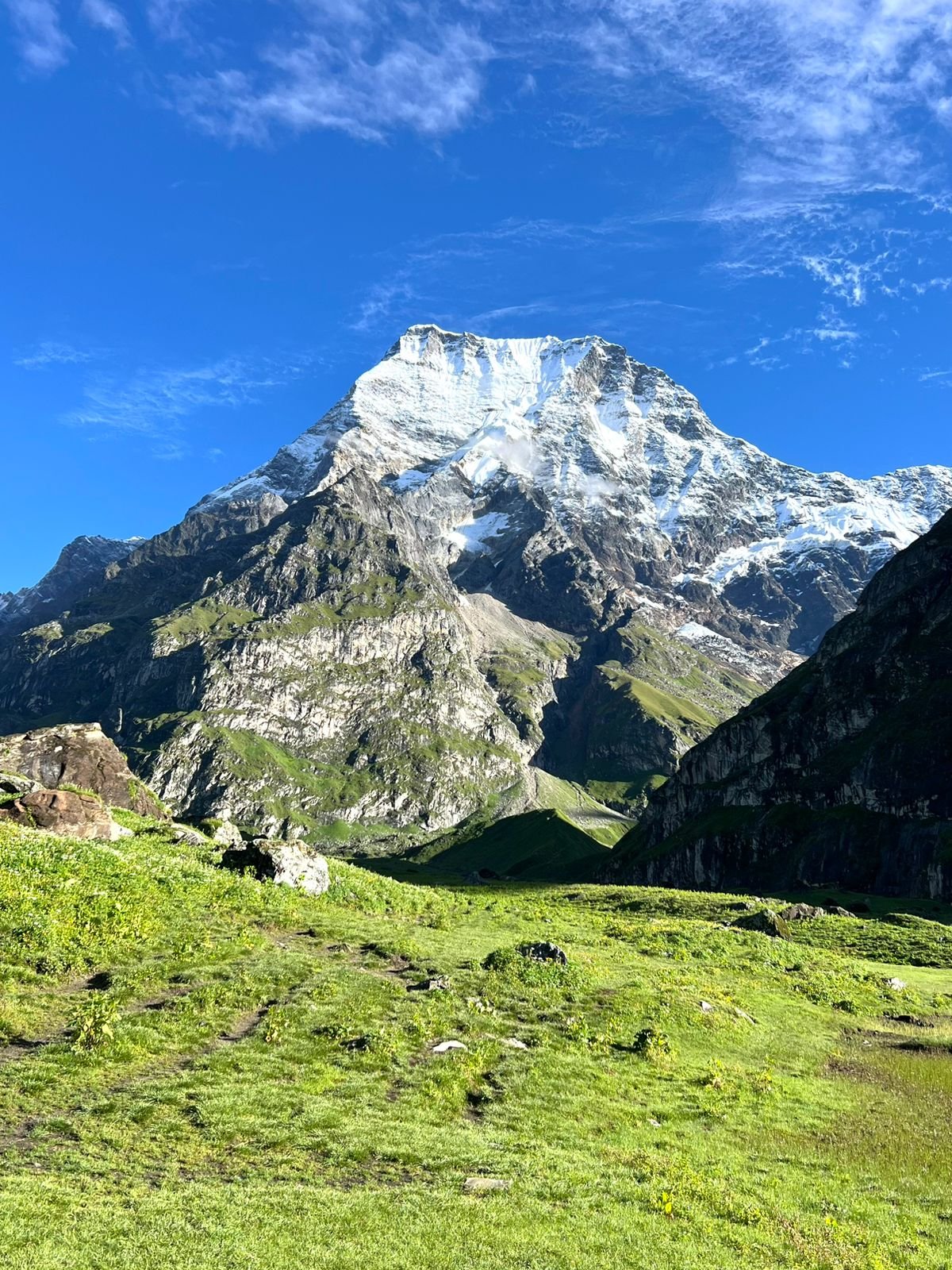
Api Himal, standing 7,132 metres tall in Nepal’s far-western Darchula District, is one of the least climbed peaks in the country. It lies in the Gurans Himal range (Yoka Pahar section), close to the borders of India and Tibet, and is known for its wild beauty and peaceful surroundings. Api Himal was first climbed on May 10, 1960, by a Japanese team led by K. Hirabayashi with Gyaltsen Norbu Sherpa. Since then, only 23 successful climbs have been recorded, and notably, no female climber has ever summited Api Himal, making it one of Nepal’s most untouched and unexplored 7,000-metre peaks.
Recently, the government has listed Api Himal as a “permit-free” peak to encourage climbers to visit lesser-known regions. Its long approach through remote valleys, lack of infrastructure, and tranquil environment make it an ideal destination for those seeking true adventure. With its steep slopes, impressive height, and isolation, Api Himal offers a rare and rewarding experience for experienced mountaineers eager to explore the hidden side of the Himalayas.
Pre-requisite requirements (two or more): Annapurna 5X Summit, Alpamayo, Khumbu 3 Peak expeditions (similar semi-technical 6000 m peaks or higher), Ama Dablam or higher, multi-pitch climb (rock or ice), and rock climbing grade up to 5.9+/- to 5.10 a, b, and c.
Why Api Himal?
Api Himal takes you back to an era of the 70s or 80s when Himalayan climbing was raw, uncertain, and earned. Remote, rarely attempted, and untouched by mass commercial expeditions, it demands commitment over comfort. This is not a mountain of convenience but of consequence, patience, and true exploration.
Routes are not polished, information is limited, and decisions are made in real time. Progress here depends on judgement, resilience, and respect for the mountain. For those who seek the spirit of the early pioneers, Api Himal remains one of the last true frontiers.
Itinerary
Day 1-2 Arrive in Kathmandu, Transfer to Hotel for expedition briefing.
Day 3 Fly from Kathmandu to Dhangadi (1 hour) and drive to Gokuleshowr (8 hours)
Day 4 Drive to Makarigaad (4 hours)
Day 5 Trek to Siti
Day 6 Trek to Simar
Day 7 Trek trek to Api base camp 3584M
Day 8 - 22 Climbing Period for Api Himal Summit (7,123M) (15 Days of climbing, Base Camp. Puja ritual ceremony, contingency day, Training, and preparation for a summit bid. We will aim 1 rotations between Camp 1 & 2)
Day 23 Trek to Siti
Day 24 Trek to Makarigaad
Day 25 Drive Dhangadi
Day 26 Flight to Kathmandu
Day 27 Rest and relax day in Kathmandu
Day 28 Departure
Who this expedition is for
The Api Himal expedition is for climbers planning for a serious high-altitude adventure, including. It’s for climbers who:
Have solid 6,000 m experience and are building toward major 7,000 m - 8,000 m objectives
Are efficient on fixed lines (jumper/rappel), comfortable on steep snow/ice, and able to move in exposed terrain
Want a small, serious team, not a caravan
Value privacy, high standards, and strong leadership over the affordable quote
Note - We will be conducting a screening on interested applications before accepting the member.
Frontier Series promise (what makes these “special edition”)
Most companies sell what’s easy to sell. The Frontier Series is built around what’s hard to execute:
Rarity: Least-climbed or underexplored objectives (one-two departures/year max)
Small-team strategy: Typically 4-8 climbers (max 10)
Premium logistics: Strong comms, quality camp systems, proper contingency planning
Strong leadership: Certified Sherpa Nepali mountain leadership; IFMGA or NMA certified
Preparation built-in: structured training support, kit planning, and altitude strategy
Route and climbing strategy
Final route selection depends on conditions, but the expedition is planned around:
Establishing a well-organised base camp
Progressive load carries and acclimatisation
One to two rotations (conditions-dependent)
A tight summit push window with conservative turnaround rules
Non-negotiable: We prioritise decision-making quality over summit pressure.
Expedition Investment
USD 16,750 per person
Deposit required: USD 1,500 Per person
All-inclusive. Guaranteed departure. No additional hidden fees. Kindly request what the pricing is in your local currency. We accept payments in £GBP, €EUR, and $AUD.
-
Autumn 2027
1st-28th November: Namas Founder Bisesh to Lead the Expedition
-
IFMGA or NMA certified guides
Namas branded merchandise that includes down jackets, buffs, caps, etc.
1:1 Sherpa to client ratio. Additional Sherpa guide support is available with applicable extra charges.
Training programmes from Training Peaks for 16 weeks
Head chef and 2 kitchen helpers (the ratio of helpers is based on the count of team members)
Supplemental oxygen for emergency use (a personal oxygen system can be arranged with an additional cost of $550 per person with 1 bottle and 1 regulator system)
Single-room hotel accommodation in Kathmandu (2 nights before and 1 day after the expedition). Clients must return in time from the expedition and are responsible for extra payment for stays beyond the booking.
Trekking and climbing permits
Internal transportation to reach the trailhead and return to Kathmandu.
Solo tent at basecamp and 2 people sharing a tent at high camps
Personal weight limits up to 40 kg. Extra weights require hiring additional porters (USD $1000 for 27 to 28 days)
Three meals, including breakfast, lunch, and dinner, during camping days. (Meals include chicken, mushrooms, vegan options, etc.)
Burners and expeditions equipment
Communication devices like walkie-talkies and satellite phones
Accommodation in a lodge during the trek
Pick and drop off during arrival and departure
Internal flights
First aid kit
Welcome or farewell leave dinner
-
Cost of visa and travel insurance
Summit bonus of $1000 per member
Personal expenses for entertainment and food in Kathmandu
Evacuation expenses (in case of emergency evacuation requirements)
Cost of communication services, laundry, and expenditure transactions
Cost of optional trips and destinations.
Cost of international flight booking and ticket
Extra expenses due to delay and cancellations
Expense due to purchase of chocolates, tea, and other snacks besides breakfast and lunch and dinner.
-
23 Summits
-
Api (also known as Api Himal) was first climbed on 10 May 1960 by a Japanese expedition with Gyaltsen Norbu Sherpa via the Northwest Face route.
The region sits within/adjacent to the Api Nampa Conservation Area, established to protect biodiversity and culture in Nepal’s far west.
-
Shuhan 🇨🇳(2025 Annaprna IV 7525M)
It took me over a month to finally sit down and write the review, as I’ve been reflecting on the reason I was drawn to Annapurna IV in the first place. The more I climbed, the more I realized what truly matters to me in any expedition — not just altitude or adrenaline, but the sense of exploration and adventure, both outwardly and inwardly. It’s about raw, intact nature, vast landscapes, and the rare chance to explore less “popular” peaks with a small group of people who genuinely adore the mountains.
NAMAS is really unique in this regard, as they are probably the only operator I’ve come across with that true explorer mindset, organizing expeditions on rarely-climbed 7,000-meter peaks, running small teams, trailblazing rather than following others’ steps, and having a team of Sherpas who are highly competent, caring, and really know what they are doing when it comes to the mountains they operate on — which makes all the difference when you venture onto peaks like Annapurna IV.
I’ve always been less interested in chasing summits for sheer numbers. What I value is the solitude, the ability to fully enjoy the experience, and hopefully to climb in slightly better style every single time. Annapurna IV, which is a technically demanding, rarely-climbed 7,500-meter peak, seemed to perfectly fit that profile, being challenging but not overcrowded, offering stunning views, where I could try pushing my limits a little bit further without supplemental oxygen.
If your ideal expedition is similar (to climb with purpose, explore places very few people have been to, and share good vibes with like-minded people who respect the mountains and local culture), Annapurna IV is definitely worth considering, and NAMAS is absolutely the team to go with.
Of course, I cannot leave the review without mentioning the impressive setup at base camp, the delicious food thanks to the effort of the kitchen crew (I will come back for more scrambled eggs and momos!), the kindness and professionalism of our climbing Sherpas, and the extremely well-organised logistics. I had the pleasure of meeting Bisesh in person in London to discuss my experiences, so didn’t have much exchange with Sushmita prior to booking, but trust me, if here is anything you are unsure about, she is the best and most responsive!
Simply a 10/10 experience with amazing people. Thank you NAMAS team for making it happen!Dr. Ronald Pieters 🇬🇧 🇳🇱 (2023 Annapurna IV)
Another great expedition! This was my third time with Namas and it exceeded expectations.
The kindness, skill, and unity of the Namas team was palpable all the time. They again proved to be super-efficient, resourceful, always with a smile, and radiating great team spirit. The sherpas were outstanding. Kind and helpful, with great skill and insight and a good sense of humor. A lot of them knew each other, it had a family feel to it.
Paljor who helped me last year on Himlung Himal is such a great chap. Rental gear was good, a warm comfy Kailash sleeping bag, Black Diamond crampons, and Harness and helmet. Basecamp set up was excellent and well organised. A nice roomy tent for each and a great communal-dining tent in stunning location.
We pushed up high quite fast because of a short favourable weather window and finished the expedition a week ahead of schedule! A tough but very interesting mountain. Recommended. I especially got to appreciate and love ‘the wall’, between basecamp and camp 1.
It was great to have Bisesh as a team member! Looking forward to my next expedition with Namas.
-
23 Summits




HOW DOES IT WORK?
1. Initial Inquiry and Planning
Namas Adventure begins by understanding the requirements, preferences, and goals of every climber. From the initial conversation with the expert team, Namas provides tailored recommendations and suggestions meeting the preferences and interests of the climbers. Upon meeting the requirements, the deposits are collected to secure the spot. Following deposit, Namas works closely with you to plan and prepare for the adventure, from selecting gear and training to arranging insurance, permits, and logistics.
2. Preparing for the Journey
Upon approaching the expedition date, we help you in preparing all requirements. This involves collecting the final balance 60 to 90 days before the trip, checking all required documents, and addressing remaining concerns or questions. Namas experts' team are available via emails and phone calls to ensure you are fully prepared and confident for the coming adventure.
3. On-Expedition Support
You arrive at the destination as the expedition days approach. Join the pre-expedition briefings and gear checks to ensure you get valuable advice on gears and equipment to support you during the expeditions. If you have any changes or personal requirements, we provide flexibility to adapt possible changes to make your adventure enjoyable, successful, and memorable.

Frequently Asked Questions
-
Api Himal is located in the remote Darchula District of far-western Nepal, near the borders of India and Tibet. It lies within the Gurans Himal range and is known for its untouched beauty, isolation, and peaceful surroundings.
-
Autumn (late September - November) is the recommended season for climbing the Api Himal. This post-monsoon period offers clear skies, provides great visibility, and provides favourable climbing conditions.
-
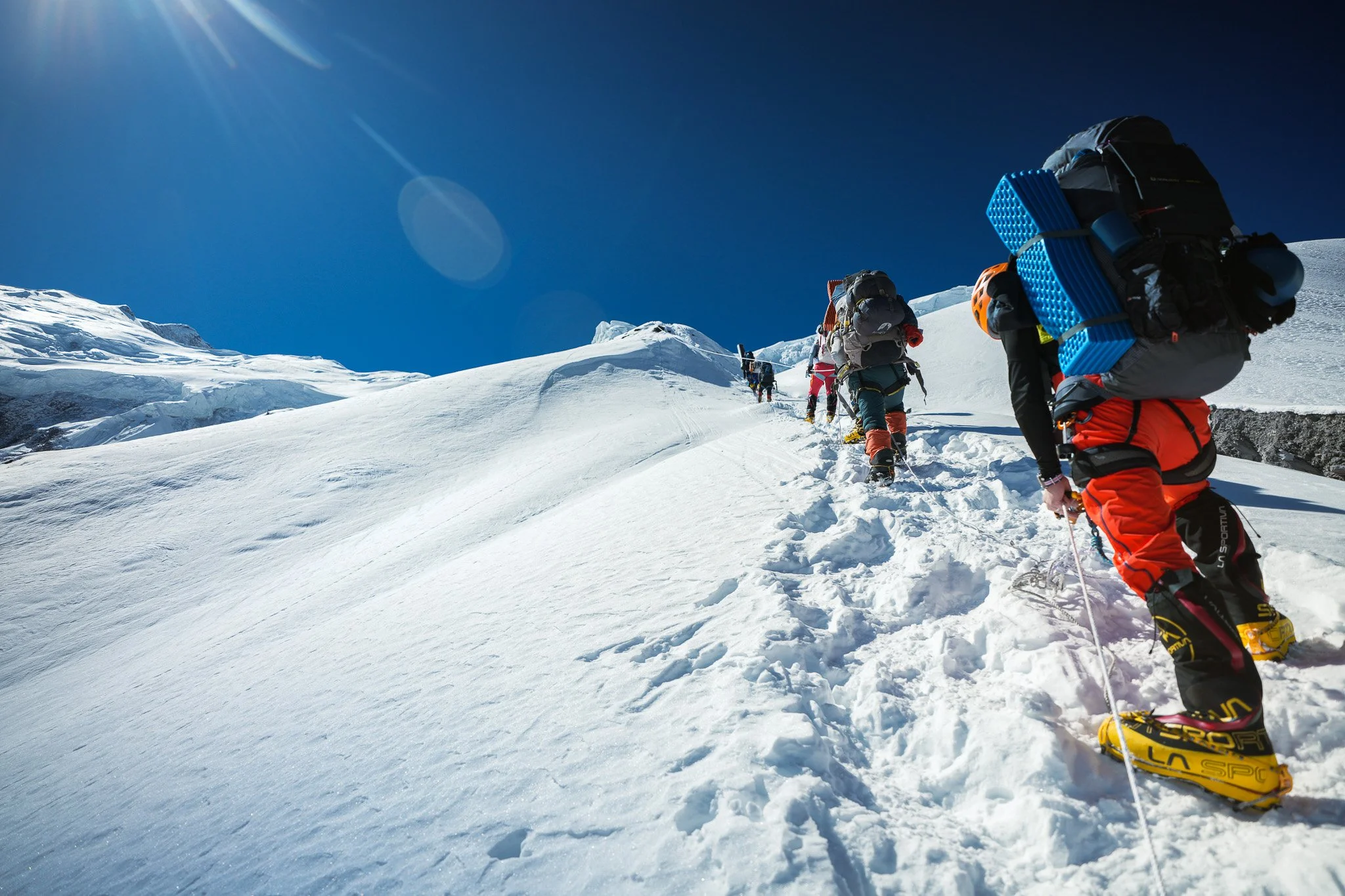
Namas Adventures takes the approach route to Api Himal from Api Himal Base Camp (3,584 m). The team sets up bases at camp 1 and camp 2 for acclimatisation rotations and prepares for technical sections using the fixed rope where required. The experienced Sherpa guides and expedition leaders chose the safest feasible route based on the condition of snow, weather, terrain stability, and challenges. The use of fixed lines, flexible summit timing, suitable gear, and equipment is done to manage the risk of steep and exposed mountain terrain.
-
Api is considered an advanced 7000m expedition and is graded TD+ (Technical Difficile Plus), alpine grade 4. Climbing Api Himal is a serious but achievable challenge for intermediate mountaineers. Fixed lines are placed on technical sections, but climbers must be proficient in:
Rock and mixed climbing
Using crampons and jumars
Climbing in deep snow and cold conditions
Rappelling and ascending fixed lines efficiently
Traversing exposed, technical alpine terrain
This is not a “guided walk-up". Mount Api demands solid Alpine experience, strong physical fitness, and mental resilience in high-altitude conditions.
-
Climbing Api Himal is a serious but achievable challenge for intermediate mountaineers. You’ll need to be comfortable using crampons, ascending with a jumar, and descending with a 10–15kg pack.
Experiences - Preprations - Team
-
The Frontier Expedition Series is for climbers drawn to exploration over popularity. These are remote, unpredictable expeditions where outcomes are not guaranteed and decision-making matters as much as physical strength. Participation is by submitting an application only. We screen for experience, adaptability, and mindset to ensure each team is prepared for true exploratory climbing. If you value uncertainty, self-reliance, and the spirit of early Himalayan expeditions, this may be the right expedition for you.
-
Api Himal is suited for climbers with prior high-altitude expedition experience, ideally above 5,000 m - 7,000 m. You should be comfortable on multi-week expeditions in remote environments with limited infrastructure, variable conditions, and non-standard routes. Experience on lesser-known or logistically complex peaks is a strong advantage.
-
This is a serious 7000M climb, so you need to have good physical and mental fitness. Expect long days (8-12 hours) at high altitude with a 10-15 kg pack. Focus on endurance (e.g., 5–6 hour hikes), strength training (e.g., squats, deadlifts), and high-intensity intervals (e.g., VO2 max sessions).
You need a high level of aerobic endurance, strength, and recovery capacity. Expect long carries, extended summit pushes, and sustained effort at altitude with minimal external support. You should be able to move efficiently for 8-12 hours on consecutive days, tolerate prolonged cold, and recover well between hard efforts. Mental fitness, patience, resilience, and decision-making under fatigue are equally important.
-
Yes, you need to have technical climbing skills for Api Himal, as it involves moderate technical climbing (TD+/4 grade), including rock climbing, glacier routes, and steep snow/ice ridges (up to 50°). You should be comfortable with fixed ropes, jumaring, and basic ice climbing. If you’ve climbed 6000M peaks in Nepal and other technical peaks around the world, you’re on the right track. Our IFMGA/NNMGA-certified guides will lead the way and provide refresher training at base camp. The technical climbing skills requirement for Api Himal includes:
Rock climbing grade 5.7 - 5.9
Commitment to regular endurance and strengthening training.
Climbing with crampons on and understanding the nature of physical demands that the mountain requires.
Ascending with a jumar and descending on a fixed rope
-
Once you book with us, we provide a 16-week training programme from Training Peak. Begin training at least 16 weeks before departure. Key areas include:
Cardio: Run, cycle, or hike 4 to 5 times weekly to build endurance.
Strength: Focus on legs, core, and upper body with exercises like lunges and pull-ups.
Altitude Preparation: Practice hikes at elevation or use a hypoxic tent.
Technical Skills: Brush up on rope work
-
On this expedition we aim to have a maximum of 10 climbers, including an IMFGA or NMA-certified main guide. Nepalese certified guides are capable and have an excellent level of English. We are committed to responsible tourism and want to enhance and prioritise local Nepalese leaders first, but if the clients request a Western guide personally, then we can have that arranged. We provide a 1:1 ratio of guides to climbers, and an additional guide requires extra charges.
-
We recommend an additional summit tip of USD $1,000 per climber for your personal climbing guide. This amount is separate from the expedition package and recognises your guide's dedication, hard work, and support throughout the climb.
-
You don’t need to set up high-cam tents and prepare your own meals and water, as we take care of high-camp logistics, tent setup, and preparing basic meals. This allows you to focus on climbing, resting, and recovering for summit preparations.