

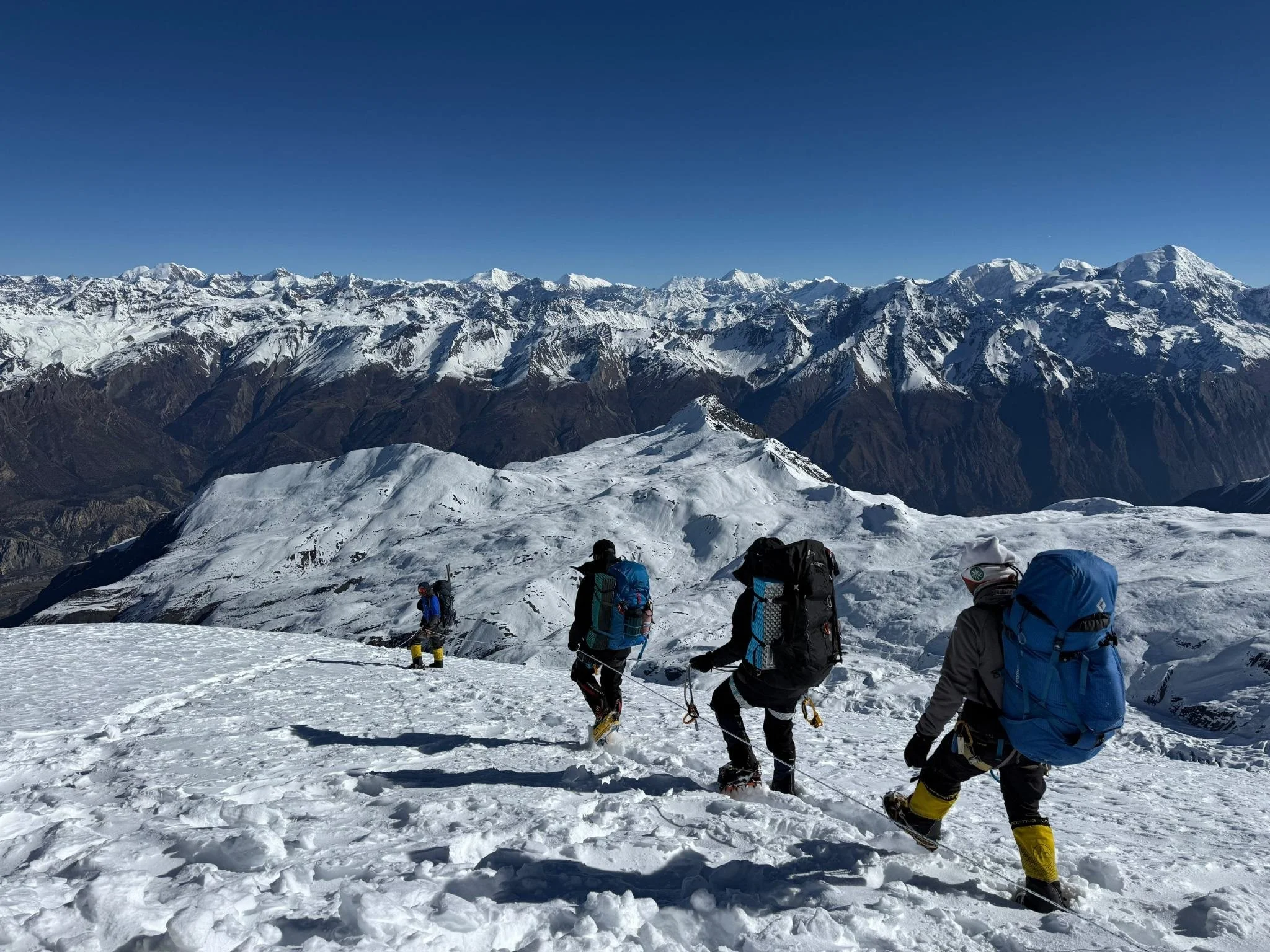
Annapurna IV (7,525 m) is one of the challenging 7,000 m mountaineering objectives that requires previous climbing experience, technical experience, and proper preparations. The preparation involves mountaineering training, physical and mental fitness, mountaineering skills, and preparation of mountaineering gear and equipment.
Although climbers with previous 6000 m experience have gear that suits a 6000 m climb, the Annapurna IV expedition requires more specific gear than a standard down jacket, trekking boot, and basic climbing layers. While climbers can use their previous compatible 6000 m expedition gear, climbers must upgrade their equipment, insulated clothes, and sleeping systems to accommodate the harsh weather conditions of Annapurna IV.
This blog provides information on the Annapurna IV gear list while explaining what to upgrade from the existing 6000 m kit. The details about what to pack beyond expedition gear and the final gear checklist are also provided.
Why Your 6000m Gear Kit Needs an Upgrade
The 6000 m gear kit is primarily designed for short exposure to high-altitude conditions. If you are on a 7000 m expedition like Annapurna IV, climbers require updated gear to stay warm during high-camp rotation and withstand extreme high-altitude climate conditions. As the Annapurna IV expedition requires climbers to face sub-zero temperatures reaching -35°C to -45°C along with strong wind, the gear and clothing must provide insulation and protection.
The 6000 m expedition gear cannot give proper thermal protection, cold-weather durability, and technical capability above 7,000 m. Therefore, climbers require gear, equipment, and kits that are designed for prolonged exposure to severe sub-zero temperature, extreme winds, and challenging technical terrain.
Annapurna IV Gear List: What to Upgrade
If you are climbing Annapurna IV, then it is a mandatory requirement that you have previous climbing experience of at least one or two 6,000 m or higher peaks. And you can use your previous climbing kits or equipment while upgrading necessary gear and equipment for Annapurna IV.
Expedition Down Suit or High-Altitude Insulation
For a 7000 m expedition like Annapurna IV, a lightweight down jacket or suit used on a 6000 m expedition may not provide enough warmth or insulation. You should upgrade your expedition jacket or suit with 700 to 900 fill power down, a large insulated hood, adjustable cuffs, and a longer cut that covers the hips. The higher fill power indicates better loft for the same weight, but the total amount of down and the jacket's construction also determine warmth. You can use a down suit or combine a heavy expedition parka with insulated down trousers with full-length zips to put them over climbing boots and other layers.
High-Altitude Mountaineering Boots
Your standard 6000 m generally are lighter double boots built for short exposure to cold and agility. And for the Annapurna IV expedition, you require upgrading to 8,000 m rated double or triple boots to prevent frostbite during prolonged exposure and high camp pushes above 6,000 m. Your boots for the Annapurna IV expedition must be stiff enough for front-pointing and securing crampon attachments. Climbers must also avoid boots with tight fittings with normal socks, as it may lead to restricted circulation and make feet colder.
Sleeping Bag and Sleeping System
The Annapurna IV expedition requires a four-season goose-down sleeping bag that can handle temperatures below -40°C. Climbers must upgrade the sleeping bag with a properly insulated hood, draft collar, and full-length insulated zip baffle. Check whether the temperature rating is a comfort rating or a lower-limit rating while avoiding bag selection based on its advertised extreme temperature.
Also, for a sleeping mat, a climber must consider a high-insulation system suitable for snow camping. Combining an insulated inflatable mat with a closed-cell foam mat provides additional insulation and backup protection if the inflatable mat is damaged.
Gloves and Hand Protection
For 7,000ers like Annapurna IV, you may require upgrading your gloves for enhanced hand protection during expeditions. Bring liner gloves and climbing gloves with lightweight merino wool or synthetic fabric for moisture management, and insulate gloves with a durable palm and dexterity for handling ropes and carabiners. Expedition mitts with thick, down- or synthetic insulation with a windproof, water-resistant outer shell.
Technical Climbing Equipment
Technical climbing equipment is important to support climbers navigating in technical sections. It is important that climbers choose 12-point mountaineering crampons with secure binding compatible with boots. Mountaineering ice axes with a suitable shaft length and reliable steel head, climbing helmets certified for mountaineering, alpine harnesses, locking carabiners, ascenders and descenders are also important during the expedition.
Gear You Can Usually Keep from Your 6000m Kit
Base Layers and Mid-Layers
Your existing base layers and mid-layers may be suitable for the Annapurna IV expedition if they are in good quality and have quick-dry features. Layers with merino wool or synthetic thermal layers around 150-250 GSM are suitable for 7000 m expeditions. Bring a lightweight and midweight set for active climbing and a heavier thermal set for cold conditions. For mid-layers, use a fleece jacket or breathable synthetic insulation.
Personal Climbing Accessories
Keep your existing headlamp, sunglasses, goggles, trekking poles, and water bottles if they are reliable. Use glacier sunglasses with string UV protection and carry ski goggles for windy or snowy conditions. The headlamp should have enough battery capacity for a long summit day, with spare batteries or a backup light. It is important that climbers replace their damaged accessories rather than carrying them simply as they worked on a previous climb.
What to Pack for Annapurna IV Beyond Climbing Gear
In addition to the Annapurna IV gear list, climbers must also pack non-climbing gear during the Annapurna IV expedition, which involves the following:
Clothing & Footwear (Non-Climbing): Base layers, trekking and shell pants, insulation and rain protection, head, hand and foot protection, and travel and camp clothes.
Bags and sleeping gear: Duffel and daypack (25 - 40 L) with hip/chest straps and rain cover for daily approach hikes and essentials. Sub-freezing sleeping bag (10°C to -15°C or lower depending on season/camp).
Hydration, Electronics & Camp Extras: Water bottles, power and navigation tools such as power banks, solar chargers, altimeters and GPS, offline maps, a camera, and extra batteries.
Health and Hygiene: First aid and altitude medication, personal medication, sun and personal care like high-SPF sunscreen, UV lip balm, moisturiser, toilet paper, biodegradable wipes, earplugs, and personal hygiene items.
Documents and cash: Passport, Nepal visa, climbing and trekking permits, insurance, and cash (NPR and USD).
Final Gear Check Before Annapurna IV
Before leaving for Annapurna IV Base Camp, climbers should inspect their climbing gear and equipment to make sure it is in good working condition. A final gear check helps identify damaged, missing, or unsuitable equipment before the expedition begins. Climbers must pay attention to the following gear list:
Insulated Clothing: Check down suit or expedition parka for damaged zips, loose stitching, and down leakage. Ensure insulated trousers, a shell jacket, and pants fit comfortably over other layers.
Mountaineering Boots: Check the boot soles, insulation, laces, and crampon compatibility. Test crampons with the actual boots to ensure a secure fit.
Climbing Hardware: Inspect ice axes, crampons, harnesses, carabiners, ascenders, and descenders for damage, corrosion, or worn parts. Check that all locking mechanisms work properly.
Sleeping System: Test the sleeping bag's zips, hood, and insulation. Check sleeping mats for leaks and make sure they provide sufficient insulation for snow camping.
Gloves and Head Protection: Carry all glove layers, expedition mitts, balaclavas, goggles, and a mountaineering helmet.
Electronics and Safety Equipment: Test headlamp, GPS, communication devices, and spare batteries. Check whether your emergency and first-aid supplies are complete.
Personal Essentials: Confirm permits, passport, insurance documents, personal medication, and sufficient cash.
Conclusion
Climbing Annapurna IV requires climbers to prepare for prolonged exposure to extreme cold, high-altitude conditions, and technical climbing sections. Before departure, climbers must upgrade their expedition boots, down suit, sleeping bag, gloves, crampons, and other essential equipment. Climbers can also reuse their 6000 m gears and kits if they meet the demand and condition of Annapurna IV.
If you have previous 6000 m or 7000 m expedition experience and want to climb Annapurna IV, contact Namas Adventure for a personalised itinerary, support, and guidance for a safe and successful expedition. At Namas Adventure, you can confirm the required personal gear and group equipment with the expedition team before departure to avoid missing items or carrying unnecessary gear.
