

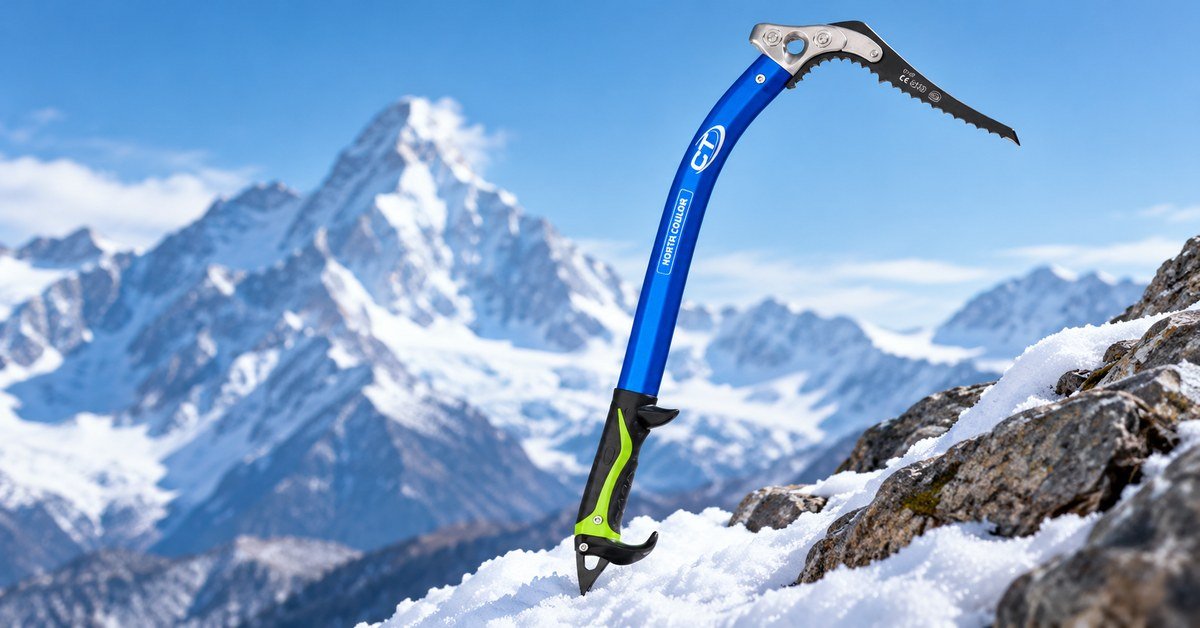
Mountaineering gear and equipment are an important part of high-altitude expeditions. Among various pieces of gear and equipment, the ice axe is a fundamental and iconic tool that is a must for 7000 m peak expeditions. As climbers require navigating in steep snowy routes, hard ice, exposed ridges, and challenging terrain, an ice axe helps in maintaining balance and stability and performing essential mountaineering techniques.
But ice axes come in various types, which are categorised according to its uses, length, and types such as mountaineering axe, hybrid mountaineering or alpine axe, and technical axe. And choosing the appropriate axe is important, as not every type is suitable for every 7000 m expedition. The suitability of various ice axe types depends upon the terrain type, route conditions, and technical difficulty of the peak.
In this blog, we provide information about the suitability of various types of ice axes for different 7000 m expeditions. The lengths of axes, weight, shaft design, shapes, and ideal axes to consider based on mountain and mountaineering styles are also explained.
Why Does the Right Ice Axe Matter on a 7000m Peak?
Your mountaineering gear and equipment must match with the mountain, terrain type, and your climbing styles. The effectiveness of your ice axe completely depends on your using techniques, terrain, snow and ice condition, and type of ice axe you use. A classic mountaineering axe can be useful for glacier travel, but for steep sections, a technical axe can be valuable. Meanwhile, for long stretches of easy walking, the technical axes can be less practical. Therefore, choosing the right ice axe is important according to route and terrain conditions.
Mountaineering vs Technical Ice Axes: Which Type Do You Need?
| Type | Shaft Design (Features) | Most Suitable Terrain |
|---|---|---|
| Classic Mountaineering Axe | Straight or slightly curved shaft, adze, and spike | Glacier travel, moderate snow slopes of around 30° to 45°, non-technical alpine terrain, and walking with the axe for support |
| Hybrid or Semi-Technical Axe | Moderately curved shaft, a more aggressive pick, and often a handrest to improve performance on steeper snow or moderate ice | Alpine routes with snow and occasional steeper sections |
| Technical Ice Tool | Short, curved shaft, ergonomic grip, and aggressive pick. Optimized for secure placement in vertical or near-vertical ice sections. | Sustained steep ice, gullies, and mixed climbing; often used in pairs |
For routes that require long walks on glacial terrain and walking with axe support, a classic mountaineering axe is a suitable option. Meanwhile, for summits that involve both long walks and technical sections, a hybrid or semitechnical axe can be the best option. Meanwhile, for technical routes, technical ice tools are important to increase stability and secure placements.
What Is the Best Ice Axe Length for 7000m Peaks?
The best ice axe length for 7000 m peaks is influenced by various factors, including the arm reach and techniques of climbers, slope angle, and terrain types. But in generally, the
An alpine ice axe with a length of 65 to 70 cm can be ideal for 7000 m peaks with non-technical or moderate snow slopes. Similarly, for peaks with steeper or technical routes, ice axes with 50 to 60 cm length can be ideal due to their easy swing ability, reduced shoulder fatigue on steep pitches, and stability. Ice axes with a length shorter than 50 cm are best for 7000 m mountains with steep ice faces, technical rock, and vertical ice.
| Approximate Length | Typical Application |
|---|---|
| 60 to 70 cm | General mountaineering and moderate snow slopes |
| 50 to 60 cm | Steeper snow and versatile alpine climbing |
| Shorter than 50 cm | Technical ice tools for steep ice and mixed terrain |
Ice axes with a long length offer a higher reach while providing a walking aid, whereas shorter axes give better manoeuvrability and control to the climber. For better suitability of ice axes, it is recommended to check the manufacturer’s recommendation and consult with expert guides before choosing appropriate axes in the expeditions.
Key Factors to Consider Before Buying an Ice Axe
Before buying the suitable ice axe for climbing 7000 m peaks, climbers must consider the following important factors, which include:
1. Weight and Materials
A lighter axe will conserve energy over long approaches and summit days. But they tend to underperform in hard ice sections. Aluminium shafts are lightweight, but most steel picks are more resistant to wear and have better penetration ability. In comparison, the 60cm Petzl Glacier has a weight of 345g, while the Petzl Quark technical ice axe/tool is 550g in its standard adze/hammer configuration. The difference is not just a quality but is due to the variation in their intended uses.
2. Shaft Design and Grip
A straight or slightly curved shaft is useful for planting in snow and carrying the axe. More distinct curves provide hand protection and help for making placements on ice with steep curves. Adjustable handrests and textured grips can help to ensure a good grip but should not be difficult to grip with bulky high-altitude gloves or mittens.
3. Pick Shape and Strength
Traditional curved picks are used for general snow travel and in self-arrest techniques. While technical and reverse-curved picks are used to hold on to steep ice. Check if the pick can be replaced and if its shape adheres to the terrain it will be used on. The strength of the axe is specified in its EN 13089 / UIAA 152 rating: type 1 (basic) and type 2 (technical) require different strength. Check the shaft of the product in question and the pick markings as opposed to assuming that all parts are rated the same.
4. Adze, Spike and Leash
An adze can be used to clear snow or to cut steps, and a spike can be used to prop the axe up on moderate ground. There are technical tools that can provide options for hammering for specific tasks of climbing. A leash or tether can help avoid dropping the axe but can limit mobility. Use a leash or tether only as directed by your guide and never as a replacement for a rope or belay system.
Best Ice Axes for 7000m Peaks: Top Picks
| Model | Type / Length | Why Consider It |
|---|---|---|
| Black Diamond Raven | Classic ice axe. Available in multiple lengths, including 65 and 70 cm. | A durable walking axe for glacier travel and moderate snow slopes. |
| Petzl Glacier | Classic ice axe. Available in 50, 60, 68, and 75 cm lengths. | A lightweight axe with a steel pick for traditional alpine travel. |
| Blue Ice Blackbird | Classic ice axe. Available in 49, 54, 60, and 67 cm lengths. | A straight-shaft option for glacier approaches and mountaineering. |
| Petzl Sum'Tec | Hybrid or technical ice axe, with a 52 cm length. | A curved shaft and adjustable handrest offer versatility across different alpine terrain. |
| Petzl Quark | Technical ice tool with a 50 cm length. | Modular picks and grips for demanding ice routes. |
| Black Diamond Cobra | Technical ice tool with a 50 cm length. | Designed for steep technical climbing and typically used as a pair. |
Do You Need One Ice Axe or Two?
For moderate snow routes, one classic ice axe with crampons and other equipment can be enough. But for technical climbs with steep icy sections, two technical ice tools or axes are required to secure placements. Climbers are required to assume that fixed ropes do not remove the need for ice axe skills and require proper training and expertise in using the tools effectively and efficiently. It is important that climbers confirm their setup with expedition leaders and guides before departure.
Ice Axe Safety Checklist Before a 7000m Climb
The ice axe safety checklist before a 7000 m climb involves the following:
Practising self-arrest and safe handling with a qualified instructor
Check the pick, head, shaft, and spike of the ice axes for damage
Test the chosen axe grip while wearing gloves and confirm compatibility with climbing techniques
Protect the exposed picks and spikes of the axe when packing and transporting
Ensure the adze and hammer are tightly secured with the ice axe head
Check the material of the ice axe, such as aluminium or steel, and inspect for dents, bends, coating conditions, and grip.
Conclusion
Choosing the right ice axe for a 7000m expedition is crucial to a safe and efficient climb. The technical difficulty of the route, snow and ice conditions, length of axe, weight of the axe, type of the shaft and type of the pick must be considered when choosing the appropriate equipment to climb with. Classic mountaineering axes work well on moderate snow slopes and are suitable for glacier travel, whereas technical ice axes are suitable for steep and challenging snow and ice conditions.
Planning for the 7000m climb? Contact Namas Adventure and join our 7000m expeditions. Meet with our experienced team of mountaineers to learn about route-specific needs, equipment, and preparation.
