

Comparing 7000M Peaks: Which One is Right for Your Next Expedition?

Annapurna IV 7525M summit seen in the middle with Annapurna 2 on the left.
Perhaps you have completed several 4,000m to 6,000m summit expeditions and are now seeking a greater challenge. You might be exploring 7,000m mountains to enhance your high-altitude mountaineering experience, with aspirations of climbing Everest or one of the other 8,000m peaks. Alternatively, you may simply wish to immerse yourself in the pure exploration and remoteness that these high-altitude adventures offer.
Unsure on which 7000M peak to choose? In this blog post, we compare five prominent 7,000m mountain expeditions—Annapurna IV 7525M, Baruntse 7129M, Tilicho Peak 7134M, Himlung Himal 7126M, and Lenin Peak 7134M—to help you make an informed decision for your high-altitude journey.
Practical Comparison of 7000M Peaks
Before describing detailed information about the 7000 m mountain, the practical comparison based on important factors is provided below:
| Peak | Altitude | Difficulty | Technical Climbing | Approx. Duration | Experience Required | Ideal Climber Profile |
|---|---|---|---|---|---|---|
| Himlung Himal | 7,126m | Entry-level | Mimimum to Moderate | 27 to 30 days | Previous high-altitude climbing and basic mountaineering skills | Climbers attempting their first 7000m expedition |
| Lenin Peak | 7,134m | Entry-level to Moderate | Minimum to Moderate | 21 to 25 days | Previous high-altitude experience and glacier/fixed-rope skills | Climbers seeking an accessible 7000m expedition |
| Baruntse | 7,129m | Intermediate Level | Moderate to High | 22 to 24 days | Good technical and high-altitude experience | Climbers preparing for more demanding 7000m or 8000m objectives |
| Tilicho Peak | 7,134m | Intermediate Level | Moderate to High | 28 to 30 days | Strong mountaineering and high-altitude experience | Experienced climbers who want to test and gain technical climbing experience |
| Annapurna IV | 7,525m | Advanced Level | High | Around 29 to 31 days | Extensive technical and high-altitude experience | Advanced mountaineers preparing for technical 8000m expeditions |
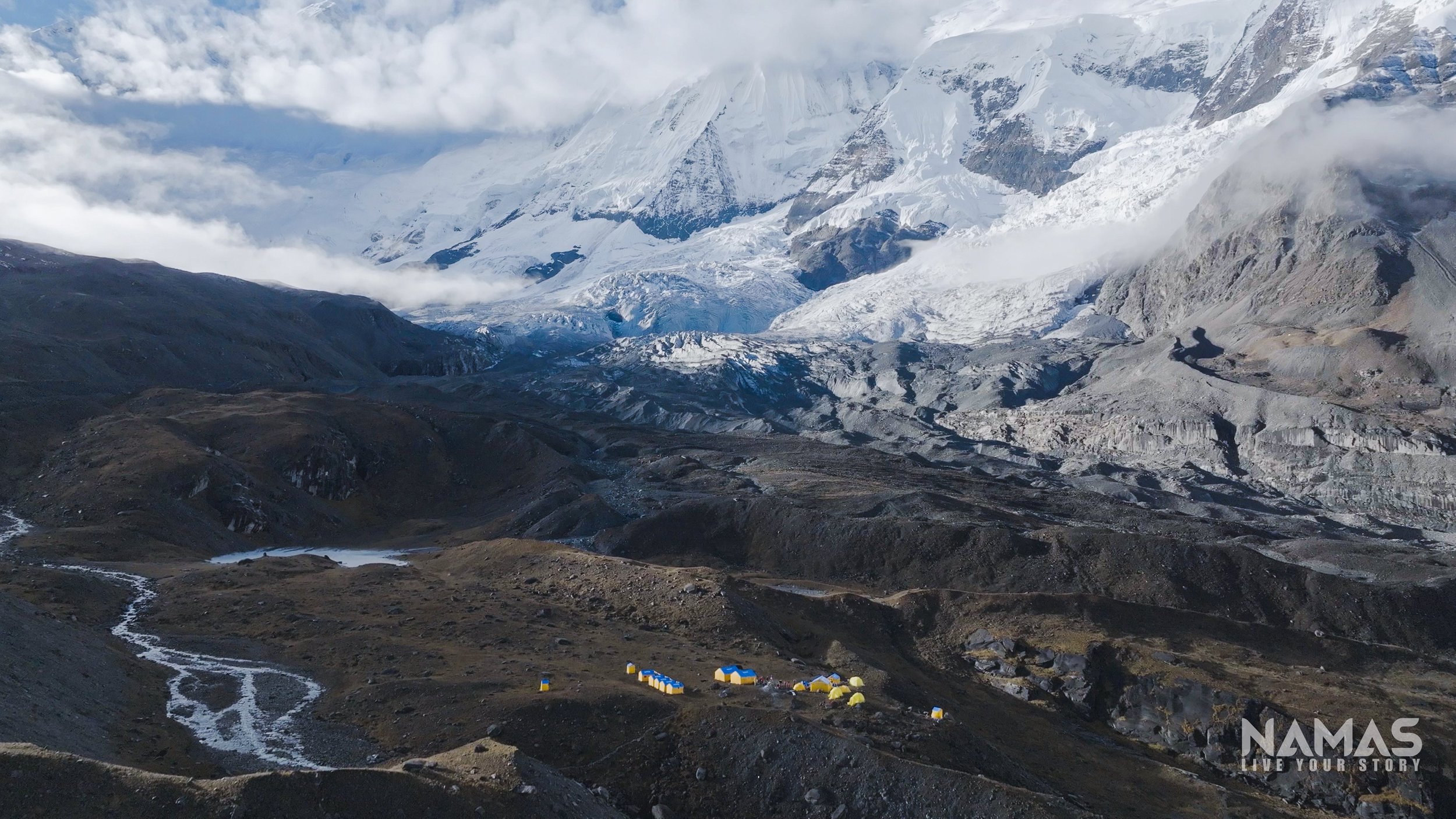
Annapurna 4 base camp 4850M
Location: Annapurna Range, Nepal
Level: Advanced level
Technical Difficulty: High
Best Time to Climb: Spring (April-May) and Autumn (September-October)
Duration: 30 days
Key Features: Annapurna IV is a remote and lesser-climbed peak in the Annapurna range, known for its technical challenges. Climbers must have advanced skills in rock and ice climbing, as the route includes steep sections, exposed ridges, and deep snow. The peak's isolation offers a more immersive and adventurous experience, but it also demands excellent logistical planning. With only about 150 people ever reaching the summit, Annapurna IV is ideal for seasoned mountaineers seeking a quieter climb.
P.s. - Annapurna IV can be your expedition to prepare for Everest, Annapurna 1 or K2 expeditions.
Pros: Quieter, remote, and ideal as preparation for Everest or technical 8000m peaks.
Cons: Avalanche risk, technical sections, and steep terrain make it unsuitable for beginners.
2. Baruntse (7,129m)
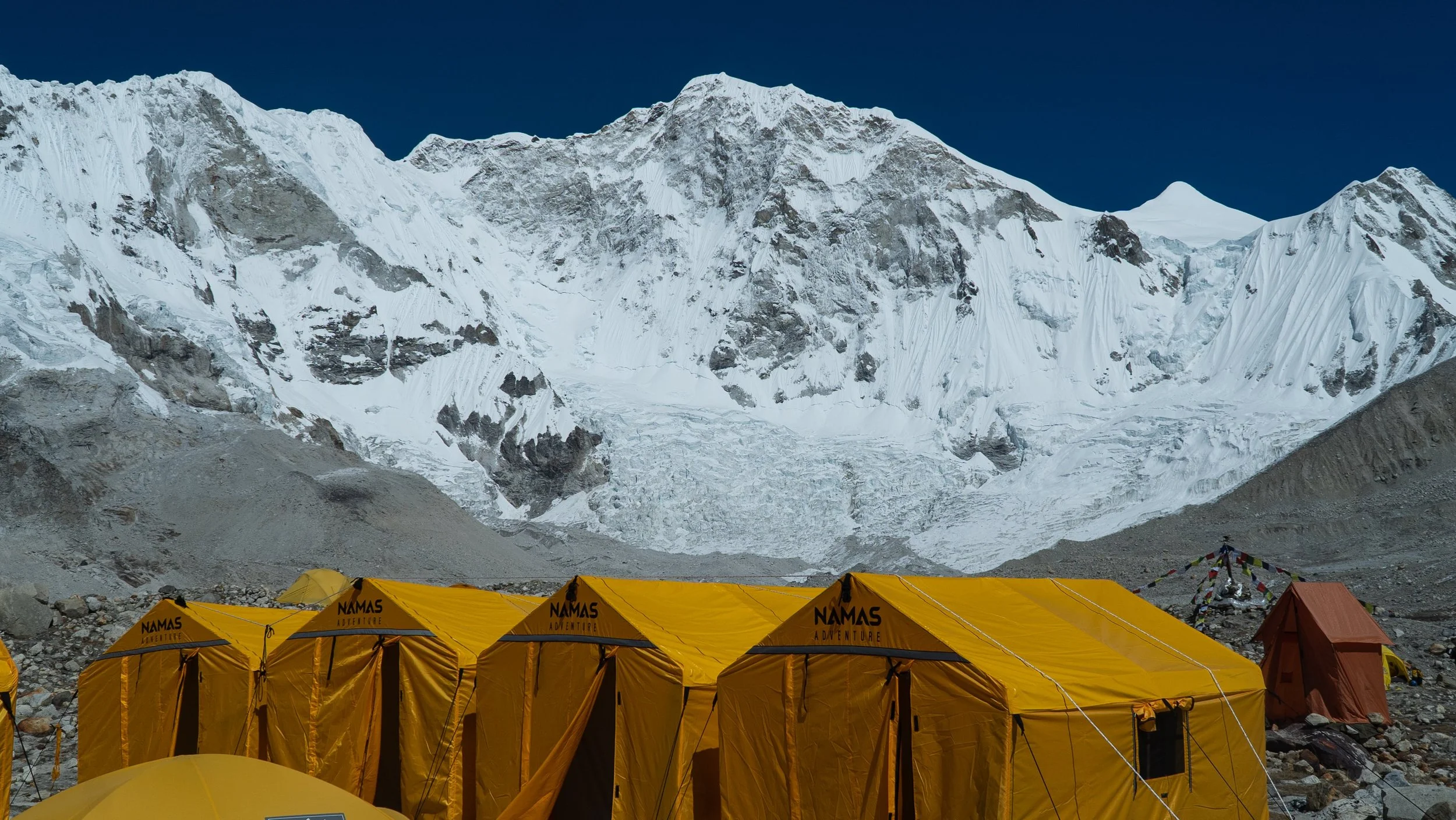
Baruntse (7,129 m) is another 7000 m peak located in the Barun Region of Nepal and is categorised as an intermediate peak in terms of difficulty. The Baruntse peak provides balance between altitude and technical climbing. The peak challenges climbers with demanding physical fitness in higher sections, exposed summit ridges, high altitude, and weather. Climbing Baruntse is ideal for one who wants to develop their mountaineering skills before attempting 8000 m expeditions.
Location: Barun Region, Nepal
Level: Intermedaite level
Technical Difficulty: Moderate to High
Best Time to Climb: Autumn (October-November)
Duration: 24 days
Key Features: Baruntse sits between the Everest and Makalu ranges, offering breathtaking views of both. It is popular among climbers preparing for lower 8000m peaks like Manaslu 8163M or Cho Oyu 8201M. The ascent becomes more technical after 6900m, particularly along the exposed summit ridge, which requires climbers to stay focused under challenging conditions. It’s a solid test for intermediate climbers who are ready for more demanding expeditions.
Pros: A great option for climbers seeking a moderate technical challenge before moving to 8000m peaks.
Cons: Exposed summit ridge demands advanced skills and leaves little room for error.
3. Tilicho Peak (7,134m)

Tilicho Peak 7134M on the left
Tilicho Peak (7,134 m) is another intermediate-level 7,000 m peak located in the Annapurna Region of Nepal. Being part of the Annapurna Massif, Tilicho Peak is one of the remote, technically challenging, and less crowded options in the Himalayas. Climbers are required to climb in steep terrain, snow and icy sections, perform rock scrambling, and challenge high-altitude sections in Tilicho Peak. The climbers are required to have strong physical endurance and mountaineering skills to safely summit the peak. Tilicho Peak is ideal for climbers who want to experience technically challenging routes to prepare for high-altitude adventures.
Location: Annapurna Range, Nepal
Level: Intermedaite level
Technical Difficulty: High
Best Time to Climb: Spring (April-May) and Autumn (October-November)
Duration: 25-30 days
Key Features: Tilicho Peak offers a dramatic climb above Tilicho Lake, the highest lake in the world at 4900m. Though less famous than other Annapurna peaks, Tilicho is a technically demanding climb with steep rock scrambling, snow, and ice conditions at higher altitudes. This peak is for experienced climbers who have strong mountaineering skills and the endurance to navigate long, steep sections. Due to its remoteness, logistical planning is crucial, and only experienced teams should attempt this climb.
Pros: Stunning, remote, and less crowded with incredible views.
Cons: Requires advanced technical skills and careful planning due to the isolation.
4. Himlung Himal (7,126m)

Himlung Himal camp 1
Himlung Himal (7,126 m) is one of the beginner-friendly entry-level 7,000 m peaks located in Nepal’s Himalaya. Although the peak is categorised as an entry-level mountain, this mountain challenges mountaineers with serious altitude and physical demands. While the technical difficulty is lower than other 7000 mpeaks like Annapurna IV, climbers are required to navigate crossing snow slopes, glacier travel, and crevasses, which require proper focus, training, fitness, and skills.
5. Lenin Peak (7,134m)
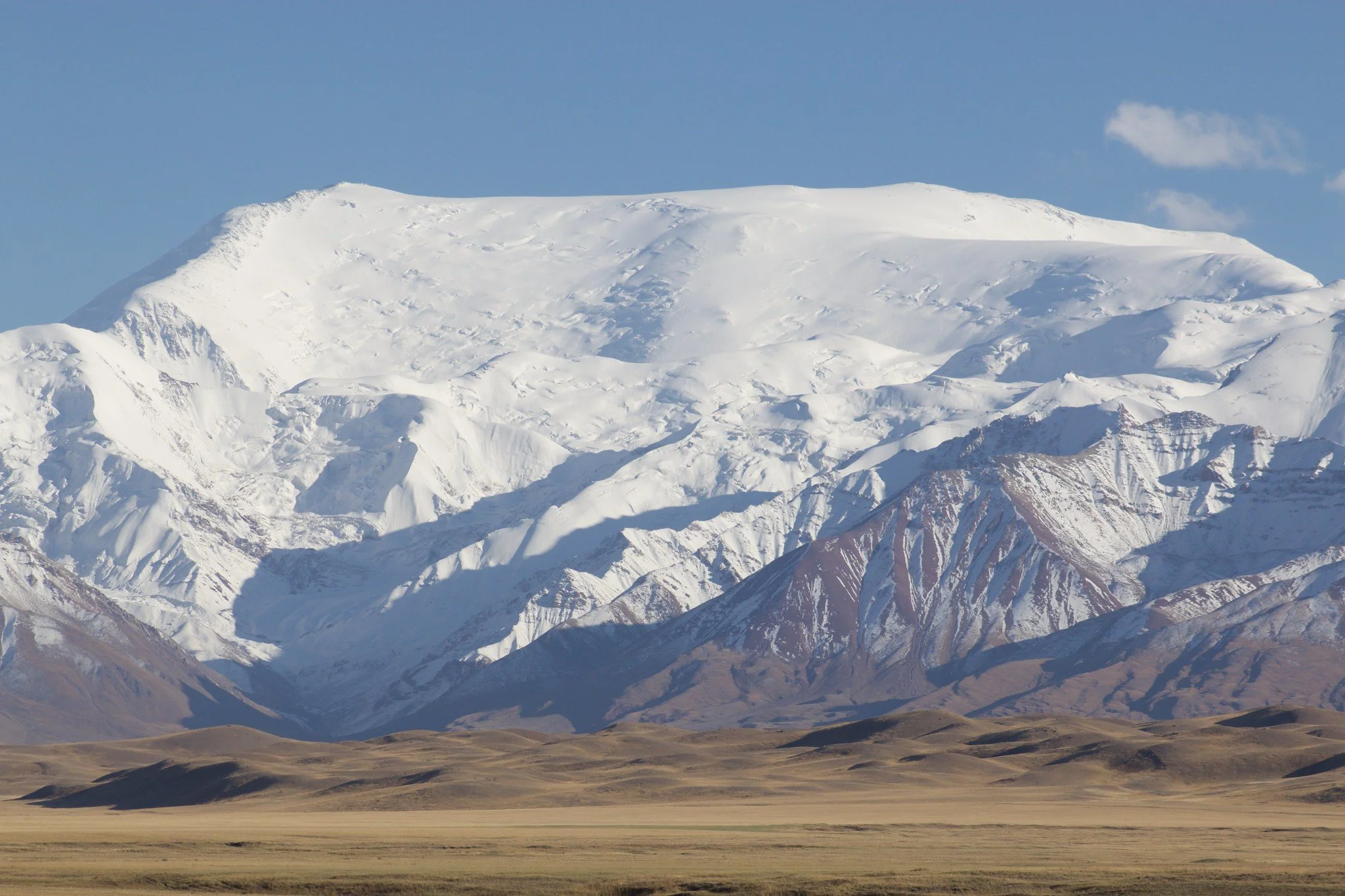
Lenin Peak
Lenin Peak (7,134 m) is also one of the accessible 7,000 m peaks located in the Pamir region of the Kyrgyzstan-Tajikistan border. It is one of the most popular 7000 m peaks for climbers who want to experience high-altitude challenges and prepare for higher climbs in the future. Lenin Peak has become the prime choice for climbers due to its non-technical slope and long glaciated slopes. Although it is categorised as an entry-level peak, the mountain must not be underestimated. Its high altitude, long summit push requirement, rapid weather change, and strong wind make it challenging and physically demanding.
Which 7000M Peak Is Right for You?
The right 7000 m peak for you depends upon your mountaineering skill, experience, physical fitness, preparation, and future climbing goals.
Himlung Himal: For the First 7000 m Climb
If you have previous experience climbing 5000m or 6000 m peaks and are planning to summit 7000 m peaks for the first time, Himlung Himal is the right peak for you. Himlung allows you to take high-altitude experience without technical difficulties and serious challenges that peaks like Annapurna IV or Tilicho Peak possess.
Lenin Peak: For Accessibility
If you want to experience an entry-level expedition in an accessible 7000 m peak, Lenin Peak can be the right choice for you. The routes are comparatively less technical and straightforward and provide you with a high-altitude experience to prepare for 8000 m climbs.
Baruntse: For Technical Progression
If you already have high-altitude and technical climbing experience, Baruntse offers a useful progression. The upper sections of Baruntse provide a greater technical challenge and can help climbers prepare for more demanding objectives.
Tilicho Peak: A Technical Himalayan Challenge
If you are seeking a moderate to high level of challenge, summiting the intermediate level of the 7000 m peak, Tilicho is one of the good options for you. Tilicho Peak provides high altitude, remote, and experience of challenging Himalayan terrain.
Annapurna IV: For Advanced Mountaineers
If you are already an experienced mountaineer and want a demanding 7000m objective that can serve as preparation for technically challenging 8000m peaks, Annapurna IV stands out among these options.
Why Climb 7000M Peak First?
Climbing the 7000 m peak before attempting the 8000 m mountains is important for every climber. It is because climbing 7000 m peaks first allows climbers to get exposure to high-altitude weather, terrain conditions, acclimatisation arrangements, camp routines and summit day strategies. Climbers get an opportunity to test their skills in using gears, tools, and equipment before directly exposing them to 8000 m terrain. This is why climbers must carefully choose the 7000 m peak based on the experience they want to gain, develop skills, and build endurance required for the 8000 m expedition.
Conclusion
The right 7000 m peak for you depends on your mountaineering skill, preference, fitness, and future expedition goals. If you are summiting your first 7000 m peak to prepare for challenging 7000 m peaks and gradually adapt to an 8000 m climb, peaks like Himlung Himal and Lenin Peak can be the right option.
Meanwhile, if you want technical progression and test technical skills, Baruntse and Tilicho can be the right choice. But if you are experienced mountaineering planning to attempt an 8000 m summit like Everest, Annapurna, and others, Annapurna IV can be the best peak to test your skills and preparation level.
If you are planning for 7000 m expeditions of your preference, contact Namas Adventure. Namas Adventure offers the best recommendation for you based on your skill, experience, preference, and future goals. You also get assistance from expert guides, expedition teams, logistic support, and overall arrangements to ensure your expedition is safe and successful.
