

Everest Garbage Problem
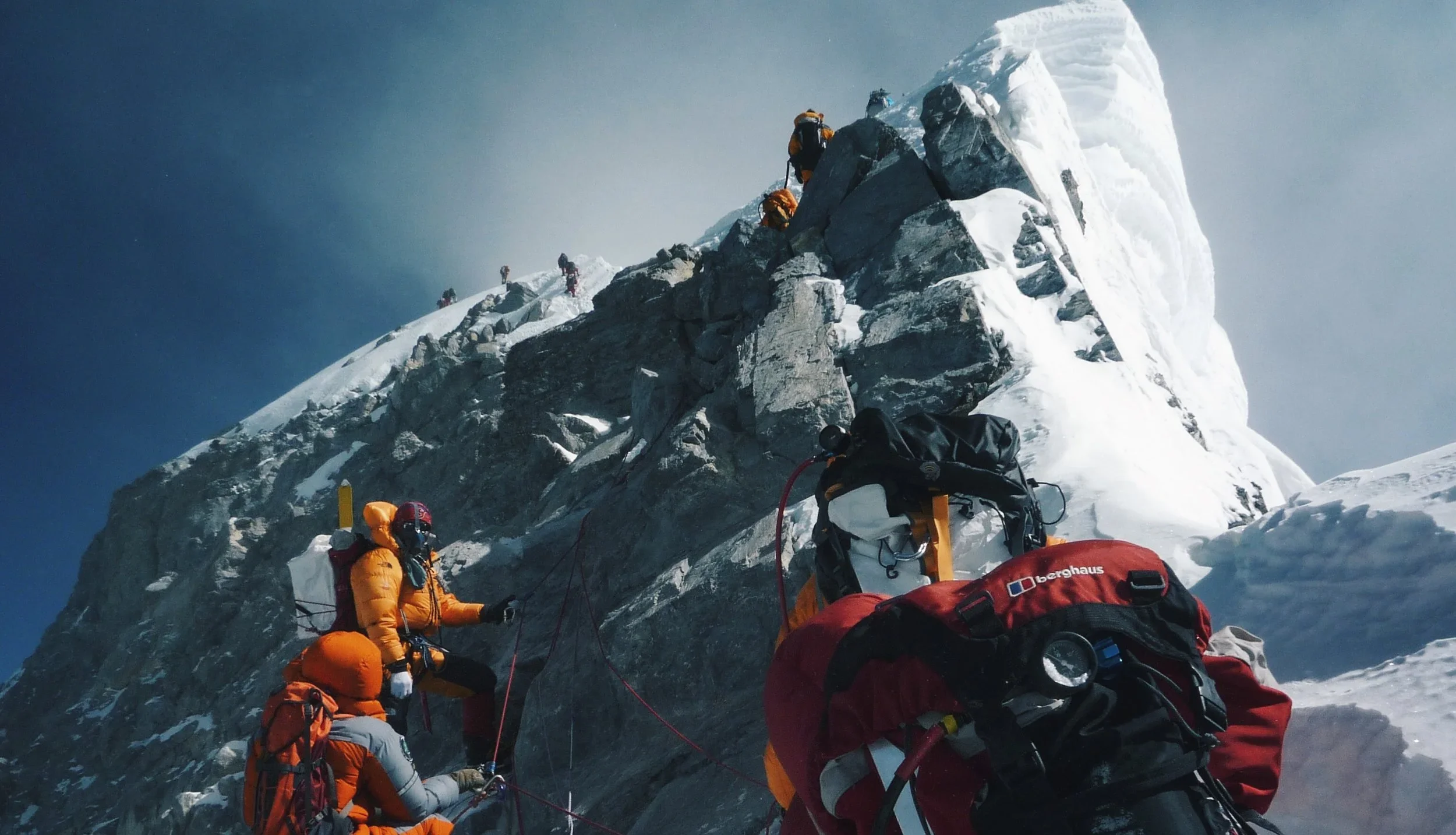
Mount Everest (8848.86 m), the highest point on earth, is the ultimate destination for global mountaineers to achieve their highest ambitions. Mountaineering adventures in Everest have been carried out commercially since Everest's first summit in 1953. But with growing commercialization and an increased number of summits each year, the environmental issue of waste or garbage management in Everest has become a serious concern. Climbing expeditions over the years have filled Everest with huge quantities of discarded materials and garbage. Climbers have created an environmental heritage, a waste yard, which includes discarded oxygen tanks, tents, and human remains that have damaged the delicate Himalayan ecosystem.
In this blog, we describe Everest's garbage problem, explaining how the mighty mountain became a dumping ground. We explain data and statistics of cleaning efforts and initiatives carried out in The challenges of waste extraction, the cleaning initiative carried out, and the requirement for cleaning effectiveness at Everest are also provided.
Mount Everest Trash Cleanup Statistics
| Statistic | Details |
|---|---|
| Total Trash Removed (2019–2024) | Around 119,000 kg (119 tonnes) removed from Everest |
| SPCC Cleanup (Spring 2024) | 85 tonnes of waste collected from Everest Base Camp area |
| Nepali Army Cleanup (2024) | 11 tonnes removed, including 4 bodies and 1 skeleton recovered |
| Everest Cleaning Campaign (2019) | Around 10,000 kg of trash collected, including 4 body recoveries |
| Estimated Trash Still Remaining | Approximately 50 tonnes still on the mountain |
| Garbage Deposit Rule | Since 2014, climbers must deposit $4,000, refunded only if they bring back at least 8 kg of waste |
Although continuous efforts for cleaning the trash and waste are carried out on Mount Everest, there still remains numerous waste. The waste in high camps, everest slopes, and high-altitude sections is challenging to recover.
How Everest Became a Dumping Ground
Himalayan exploration in the early days lacked awareness of environmental issues. The expeditions dedicated all their efforts toward reaching the Everest summit without attention to their environmental impact. The 1990s and 2000s commercial climbing expansion increased both climber numbers and waste on Everest.
Climbers frequently abandoned essential equipment such as empty oxygen canisters, high-wind-damaged tents, and food packaging. At extreme altitudes proper waste disposal becomes extremely challenging because many people choose to throw waste materials along the path. The mountain slopes accumulated trash over time, which now represents the environmental damage that has spread throughout Everest.
What’s Piling Up: The Scale of the Problem
Mount Everest contains more waste materials than just small pieces of trash. The piling waste has a high environmental impact that degrades the ecosystem and beauty of Everest. Everest waste comprises the following:
Oxygen Canisters: The trail from Base Camp to South Col contains thousands of discarded empty cylinders, which remain abandoned. The metal canisters at altitudes above 8,000 meters stay abandoned for multiple years.
Tents and Gear: When climbers create temporary camps on the mountain slopes, they leave behind abandoned tents, ropes, and equipment.
Human Waste: The accumulation of human waste at campsites happens because there is no proper waste disposal system. The snow and ice contain dozens of tons of human waste, which scientists believe exists in hidden areas.
The waste in Everest is further visible when snow melts and garbage piles up below the snow are clearly visible.
The Challenge of Removing Waste at Extreme Altitudes
While many cleaning and waste collection initiatives are carried out in Everest, the human efforts in completely managing garbage pile-ups are still a challenge. The high altitude, severe weather, limited physical capabilities, limited oxygen, and limited resources or infrastructure made the waste recovery challenging.
Thin Air and Altitude Sickness: Carrying heavy bags loaded with trash at high altitude is extremely challenging due to exhaustion and lack of body strength.
Weather Extremes: Sudden storms with high winds create conditions that turn a cleanup operation into a dangerous emergency.
Logistical Hurdles: Waste removal from dangerous icefalls and steep slopes requires extended time periods, a dedicated workforce, and a detailed operational strategy.
Limited Infrastructure: The mountain has only a small number of waste collection and disposal facilities. Most of what is gathered has to be carried down by hand.
Cleanup Initiatives and Progress
Despite challenges and difficulties, some significant improvement has been achieved. The cleanup initiatives by various organizations and campaigns have been able to progress in trash collection.
SPCC Cleanup Campaigns: The Sagarmatha Pollution Control Committee is the most important body in the conservation of Everest, which organizes spring cleanup campaigns to recruit volunteers to clean Base Camp and the higher camps.
Government and Military Support: The Nepali Army and Government of Nepal have actively participated in mass operations, clearing out a huge amount of waste and even retrieving the lost bodies of previous expeditions. A single campaign by the Nepali Army cleanup in 2024 cleared 11 tons of waste from Everest.
Garbage Deposit Rule Enforcement: This policy, established in 2014, states that climbers must leave a deposit of 4,000 USD, which can be refunded only with at least 8 kg of personal waste being removed, which has proved to have an effect.
These efforts demonstrate how cleanup operations on Everest can be successful when government, local people, and climbers are on the same page.
What Still Needs to Change
Although there are many initiatives and cleaning campaigns organized in Everest, further changes and improvements are essential. Some of the key change requirements to preserve the mountain’s environment and ecosystem include the following:
Strict actions: Waste-deposit regulations and fines should be applied and enforced with increased responsibility.
Improved infrastructure: An increase in the number of toilets and waste collection points at high camps would go a long way in minimizing the environmental pollution.
Climber awareness: Each expedition must have specifications on low-impact climbing guidelines. Leave No Trace should be an obligatory aspect of climb preparation.
Eco-Friendly Policies: NGOs and international climbing organizations should collaborate with the Nepalese government to establish standardized and enforceable environmental policies.
Conclusion
The Everest garbage problem has become a serious issue that impacts the beauty and ecosystem of Mount Everest and the Himalayas. Although removal campaigns have assisted in reclaiming vast areas of the mountain, millions of kilograms of trash and waste are still left behind. Formulation of strict policies, initiatives, and awareness programs on a regular basis is strictly the need today for a cleaner and better Everest. Expedition companies like Namas Adventure focus on responsible expeditions by contributing to and supporting Everest cleanup initiatives. Every adventure with NAMAS Adventures ensures the Himalayas are preserved to be enjoyed by future generations.
FAQs On Everest Garbage Problem
What is the garbage deposit policy of Everest climbers?
The garbage deposit policy makes Everest climbers deposit USD 4,000 prior to the expedition. Money is refunded when the climber carries at least 8 kg of waste back down the mountain. The rule, which was introduced in 2014, is designed to decrease littering and promote responsible disposal of trash by climbers. It assists in managing the increasing waste issue with oxygen bottles, tents, and packaging discarded on the mountain.
What can trekking and expedition companies do to minimize Everest waste?
By implementing strict cleanup regulations and making sure that all the trekkers and explorers bring their own rubbish, Trekking and expedition companies can minimize the amount of waste left on Everest. They help in increasing the use of trash bags, install proper toilets, cut down on the use of plastics, and patrol camps to prevent dumping. They can also educate guides, porters, and climbers on environmentally friendly activities and contribute to clean-up events in collaboration with the local communities.
What can climbers do to make Everest less harmful to the environment?
Climbers can help decrease the environmental impact of Everest by taking all of the trash, wrappers, bottles, batteries, and empty oxygen canisters down. It is also important to follow the principles of Leave No Trace and select responsible expedition companies
