

Manaslu 8163M vs Cho Oyu 8201M vs G2 8035M - Namas Adventure
Which 8,000m Peak Makes the Best First 8000er?
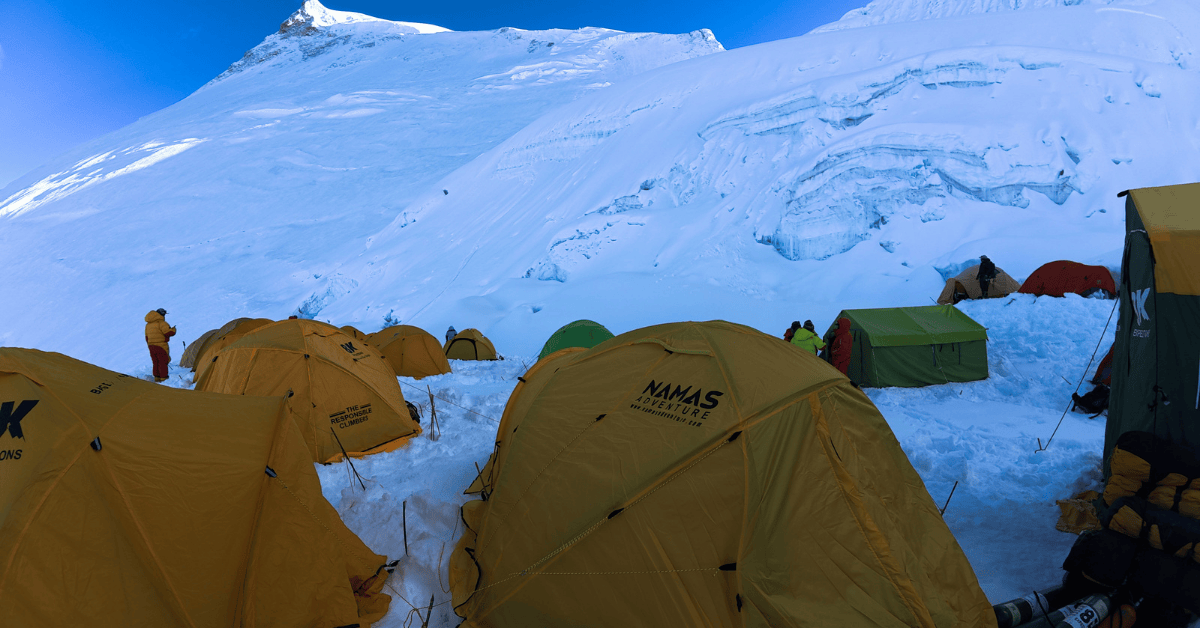


Stepping into the world of 8,000m mountaineering is a different game altogether. Above 8,000 metres, every decision matters more, recovery is slower, weather windows feel shorter, and mistakes get punished harder. So when we talk about “entry-level” 8,000ers, let’s be very clear: we only mean entry-level compared to the other 8,000m peaks. None of these mountains are easy. None should be underestimated.
That said, if you are looking for your first 8,000er, or a smart stepping stone before bigger objectives like Everest, Lhotse, K2, Annapurna 1, three 8000m peaks usually stand out: Manaslu (8,163m) in Nepal, Cho Oyu (8,188m) on the Nepal-Tibet border, and Gasherbrum II (8,035m) in Pakistan. All three are more accessible than the harder 8,000ers, but they offer very different kinds of challenge.
Manaslu (8,163m)
The most accessible 8,000er in Nepal
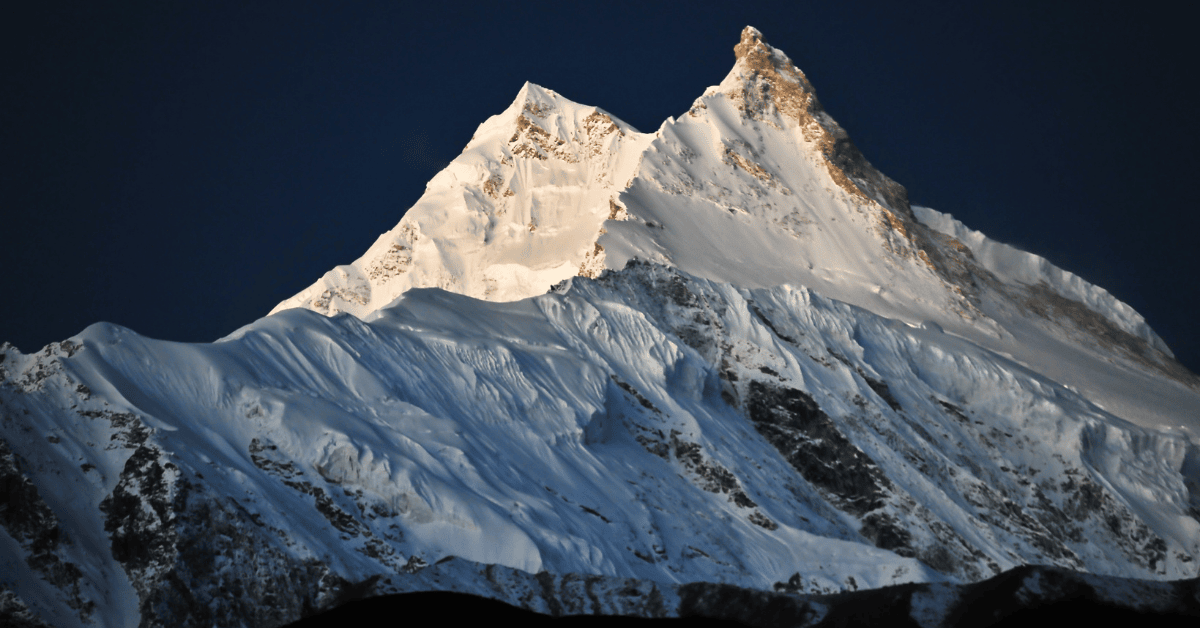
Mt. Manaslu 8163m
Known as the Mountain of the Spirit, Manaslu is climbed mainly in autumn, usually from September to October, in Nepal’s Manaslu region. It has become one of the most popular first 8,000ers because Nepal offers a mature support structure, strong Sherpa support depth, flexible logistics, and, compared with Tibet or Pakistan, fewer bureaucratic unknowns. Historically, it also sits on the safer side of the Himalayan 8,000ers, though still with real objective danger.
Pros
Manaslu is usually the most affordable of the three when comparing fully guided commercial expeditions. Nepal also offers the deepest expedition infrastructure: stronger Sherpa bench strength, more established logistics, easier emergency coordination, and proven helicopter (transport and rescue) capability in the region. That makes Manaslu attractive for climbers who want a serious 8,000m objective without the same level of border or permit volatility you see in Tibet.
Another major advantage is flexibility. Manaslu can be climbed in a more traditional expedition format, but for highly acclimatized climbers using hypoxic prep and aggressive logistics, shortened programs are possible. Nepal’s operational ecosystem simply gives outfitters more options than Tibet or Pakistan.
Cons
The downside is obvious: crowding. In recent years, Manaslu has often felt more commercial and busier than the other two options, especially on summit pushes. That increases traffic risk, slows climbers down, and can create bottlenecks on critical terrain.
Weather is another issue. Because the season is tied to Nepal’s post-monsoon period, early September can still be wet, unstable, and frustrating, and in prolonged monsoon years the route and approach can both become problematic.
There is also a point many blogs ignore: Manaslu has had a long-running true summit controversy. A lot of climbers historically stopped short on a fore-summit. That matters if you care about honest mountaineering standards and not just a summit certificate.
Best for: climbers who want the strongest support system, more operational flexibility, and a Nepal-based route into the 8,000m world.
Cho Oyu (8,188m)
The most straightforward 8,000er — when Tibet is open
Mt. Cho Oyu 8188m
Cho Oyu has long been regarded as the most straightforward 8,000m peak on its standard Tibet-side route. Its broad slopes and less technical normal line are why many mountaineers still see it as the best first 8,000er. It also has one of the lowest fatality rates among the Himalayan 8,000ers. But that is only half the story. The other half is access: if Tibet permits, visas, and approvals do not fall into place, none of that matters.
Pros
On the mountain itself, Cho Oyu is hard to beat as a first 8,000er. The standard northwest ridge from Tibet is generally considered less technical and more straightforward than Manaslu or the bigger Karakoram peaks. Logistics are also efficient once access is granted: teams can typically drive to Chinese Base Camp and move loads higher with yak caravan support.
Another advantage is the tighter regulatory framework. Tibet’s authorities and the CTMA impose stricter controls than Nepal: medical documentation, climbing résumé (7000m summits, Aconcagua ✅), previous high-altitude experience, mandatory guide oversight, and oxygen rules above 7,000m. In practice, that filters out some of the totally underprepared climbers you may still see elsewhere.
Cons
The biggest problem is simple: China can still be unpredictable. Permits, visas, and approvals can change late, and operators do not always get a clear explanation. That makes Cho Oyu a strong mountain but a weaker business case if you need certainty on timing.
The second weakness is rescue and flexibility. Tibet does not offer the same 🚁 ❌ helicopter ecosystem or rapid improvisation Nepal does. So even though the route itself may be more straightforward, your expedition logistics are usually more rigid. Also, because permits and staff approvals must be locked in earlier, you do not get the same easy depth of extra Sherpa reinforcement that Nepal-based peaks can provide.
One more nuance: when people say Cho Oyu is “easy,” they almost always mean the Tibet side. Attempts from Nepal are a very different story and far more serious.
Best for: climbers who want the cleanest standard route and strongest historical case for a first 8,000er, and who are willing to accept Tibet-side bureaucracy.
Gasherbrum II (8,035m)
The Karakoram option for climbers who want less traffic and a bigger expedition feel
Gasherbrum II 8035m
Gasherbrum II, often called G2, is widely viewed as the least technical 8,000er in the Karakoram and one of the more achievable 8,000m peaks overall. It is remote, serious, and still very much a real expedition. Compared with Manaslu and Cho Oyu, G2 feels less commercial and more committing from the moment you leave civilization behind.
Pros
The first draw is its remoteness and space. G2 is usually less crowded than Manaslu, and it offers a wilder, more remote expedition atmosphere than either Manaslu or Cho Oyu. For some climbers, that is a major positive. You are not stepping into a heavily packaged Nepal autumn conveyor belt.
The second draw is the character of the route. Within the Karakoram context, G2 is generally considered the softer introduction: less technical than K2 and less intimidating than the harsher giants nearby. It is still an 8,000er, but it is one of the peaks that experienced teams often use as a logical first Karakoram objective.
Cons
The price you pay is remoteness. The approach is long, the logistics are more complex, and you arrive at the climbing phase already carrying some accumulated fatigue. This is not a fly-in Nepal experience. It is a proper expedition with more travel, more waiting, and more friction.
Rescue has also historically been a weakness. Pakistan is moving to expand private helicopter capability in 2026, which is a positive shift, but for now it still does not match Nepal’s depth or speed of mountain aviation support.
Guides - While Pakistan is steadily developing a new generation of professional local guides, most high-altitude expeditions still rely heavily on Nepalese Sherpa teams for critical roles such as rope fixing, high-camp logistics, and client support.
It will take time for local guiding capacity to reach similar scale and depth of experience. As a result, expeditions often require Sherpa support to be arranged well in advance, especially for teams seeking higher levels of safety, structure, and operational efficiency.
And finally, the Karakoram is the Karakoram: rougher camp life, more glacial travel, more operational uncertainty, and less margin if the season turns unstable. In 2025, reports from Pakistan highlighted how climate-driven instability and erratic conditions disrupted the season across the major Karakoram 8,000ers.
Best for:climbers who want a more remote and less crowded first 8,000er, and who are comfortable with a longer, more committing expedition.
Final verdict
If you want the most operationally supported first 8,000er, go with Manaslu.
If you want the most straightforward standard route, and Tibet is open and stable, Cho Oyu is still the best answer.
If you want a wilder, less crowded expedition and you are ready for more logistical commitment, Gasherbrum II is the strongest Karakoram option.
The real question is not which mountain is “easiest.” That is lazy thinking. The real question is: which mountain best matches your experience, your risk tolerance, your logistics preference, and the kind of climber you want to be?
Because at 8,000 metres, the wrong mountain for you is never an entry-level peak.
