

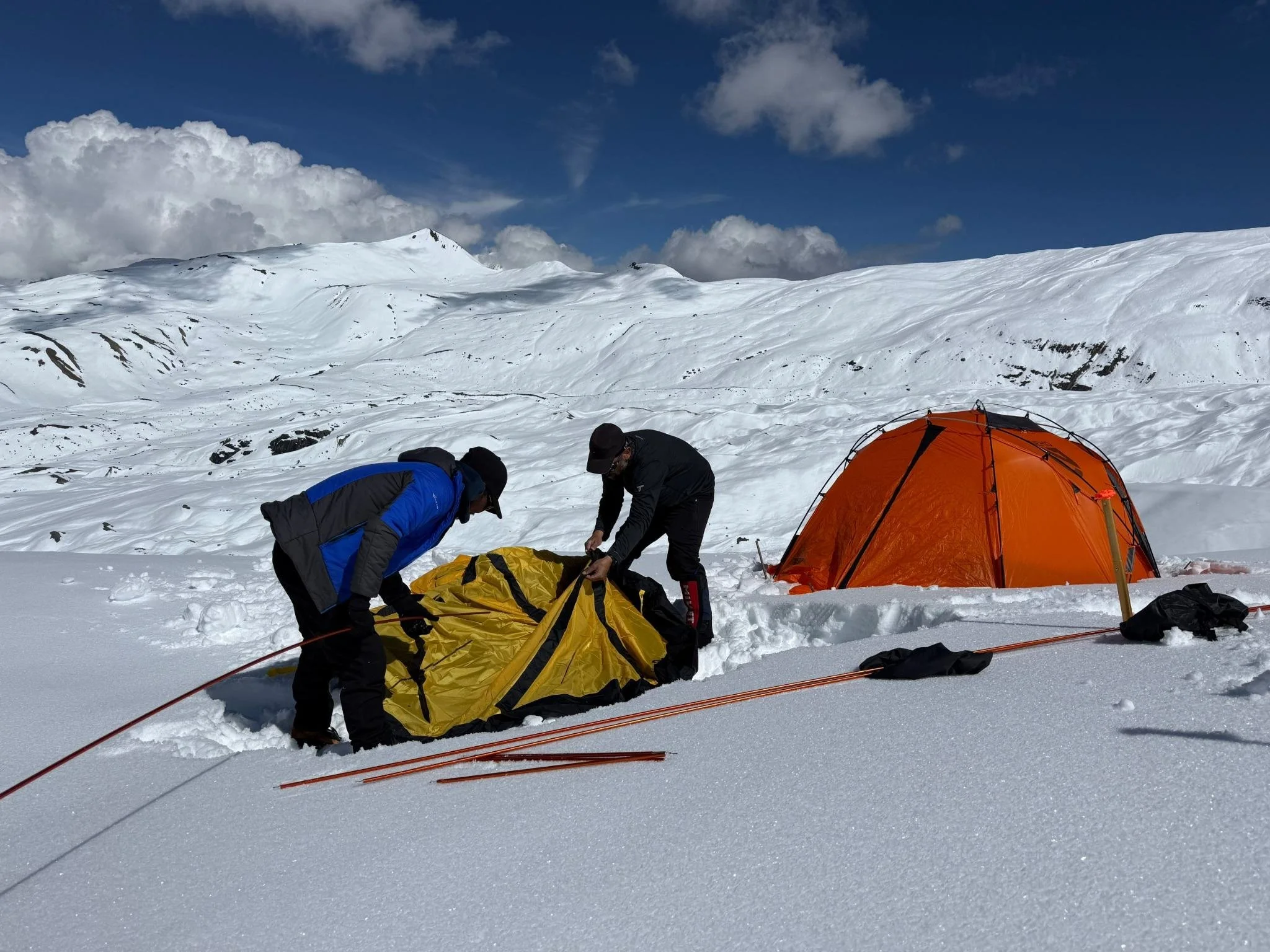
Setting up a camp at 6000-8000 m altitude requires proper expedition tents that protect climbers from weather and extreme temperatures. A proper and suitable expedition tent protects climbers from extreme winds, heavy snowfall, and freezing temperatures. This is why choosing a proper high-altitude expedition tent is important, as it provides balance in structural strength, weather protection, proper ventilation, and dealing with weather. Expedition tents are designed to withstand challenging mountaineering conditions. But which expedition tents to choose during a 6000 m-8000 m adventure? The answer depends on altitude, campsite exposure, numbers of occupants, and overall expedition conditions.
In this blog we provide information about the best expedition tents for high camps (6000 m - 8000 m). The tips for setting up high-altitude tents and ways to choose the right high-altitude expedition tents are also provided.
What Makes a Tent Suitable for High-Altitude Expeditions?
Expedition tents come in different types, have different built qualities, and have different sizes and are used in various locations. Not all tents are suitable for every location. For high-altitude locations of 6000 m - 8000 m or above, a suitable high-altitude expedition tent is required to withstand harsh weather to provide safe and comfortable shelter to mountaineers. A tent for 6000 to 8000 m must have wind resistance and structural stability, weather protection and fabric, weight and packability, ventilation, and condensation control features for safety and comfort.
Wind Resistance and Structural Stability
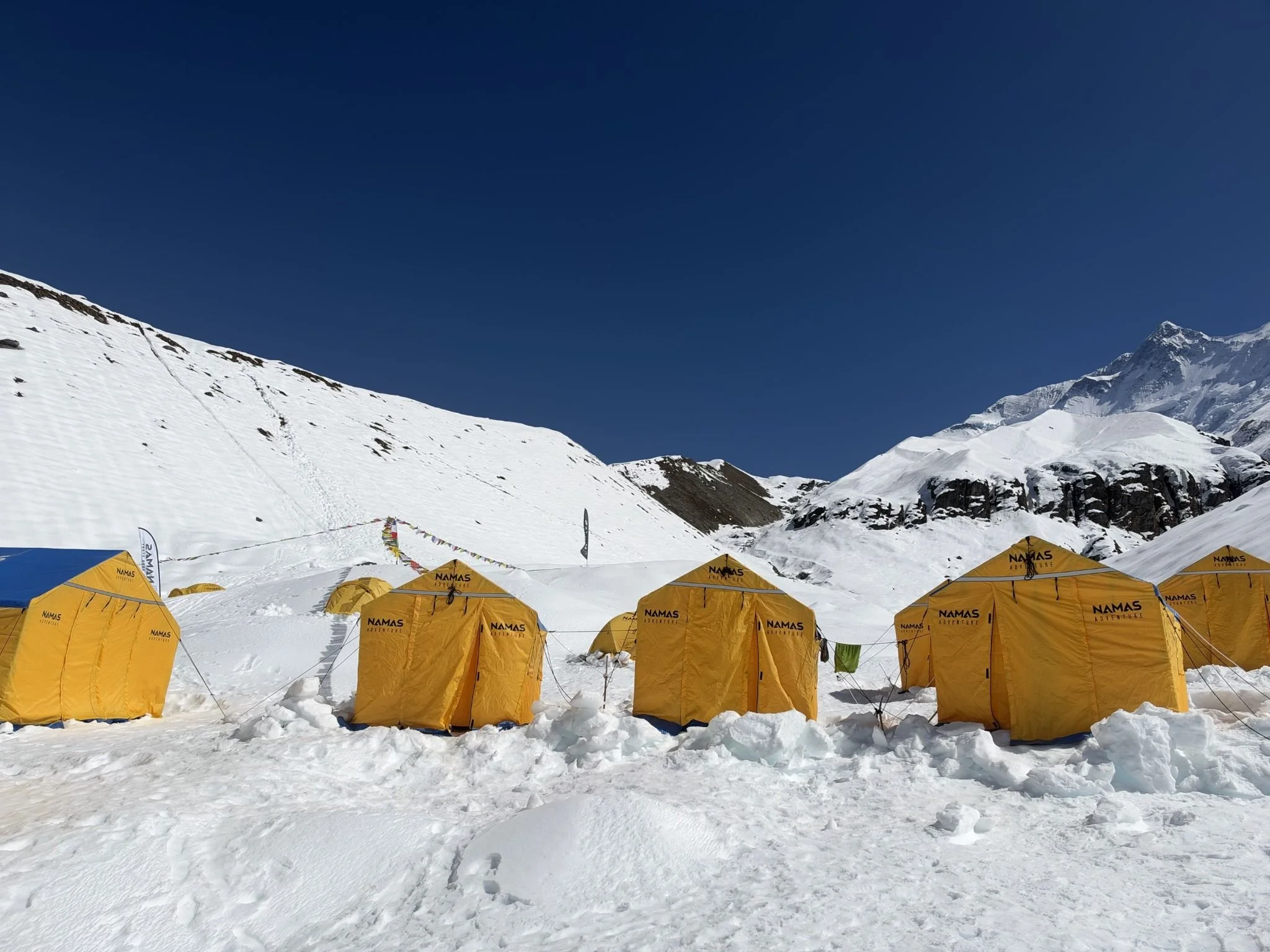
As high-altitude wind puts strong pressure on tent fabric, poles, and connection points, the tent must be built with strong aluminum, reinforced joints, and multiple guy-out points. The dome and geodesic design of the tent provide good stability, as their frame distributes wind pressure across several points. For stability, proper anchoring at exposed camps is equally important.
Weather Protection and Fabric
A high-atitude expedition tent must also protect climbers from snow, wind-driven moisture, and freezing temperatures. When choosing the tent, one must check the flysheet materials, floor, reinforced seams, and zippers. Strong fabrics and design are important for durability and exposure to high-altitude environments.
Weight and Packability
One of the important factors to consider when choosing an expedition tent is its weight. Weight is important to consider during high-altitude expeditions, as it adds additional weight and increases physical effort during the ascent. Climbers must consider balancing weight with structural strength and weather protection.
Ventilation and Condensation Control
Ventilation is an important factor to consider when choosing an expedition tent. As poor ventilation leads to moisture inside the tent from breathing, wet clothing, and melting snow, it turns into ice. And in these situations, tents with proper ventilation help in releasing moisture while maintaining protection from outer environments. A well-ventilated tent also makes the sleeping environment comfortable during camp stays.
Best Expedition Tents for 6000m to 8000m
| Tent Model | Capacity | Approx. Minimum Weight | Main Use | Key Features |
|---|---|---|---|---|
| Nemo Chogori | 2–3 persons | 3.2 kg | Four-season mountaineering and extreme weather conditions | Strong frame, two vestibules, and snow flaps. |
| The North Face VE 25 | 3 persons | 4.31 kg | High-altitude expeditions | Reinforced structure, multiple poles, and ventilation. |
| Hilleberg Jannu | 2 persons | 2.8 kg | High-altitude expedition | Lightweight dome design and compact footprint. |
| Mountain Hardwear Trango 3 | 3 persons | 4.58 kg | Alpine and high-altitude expedition | Spacious interior, strong frame, and two vestibules. |
| MSR Advanced Pro 2 | 2 persons | 1.3 kg | Technical alpine and summit climbs | Durable tunnel design and two vestibules. |
1. NEMO Chogori
The NEMO Chogori is 2-3 person four-season tent designed for demanding mountaineering conditions. NEMO Chogori features an external pole structure and an integrated fly, which allow mountaineers to set the tent quickly during the challenging weather conditions. The silicone-treated fabrics of the tent improve its durability, while the DAC Featherlite NSL poles provide structural support. With a minimum weight of 3.2 kg, the NEMO Chogori offers balance in space, durability, and weather protection for mountaineering expeditions.
2. The North Face VE 25
The North Face VE 25 is a three-person expedition tent designed for demanding mountain environments. Its five-pole structure, reinforced attachment points, and high-strength guy lines provide support in exposed conditions. It features two doors, a vestibule, and ventilation options to manage moisture inside the tent. The durable rainfly and fully taped floor offer additional weather protection. With a minimum weight of approximately 4.31 kg, it provides a balance of interior space and structural strength.
3. Hilleberg Jannu
The Hilleberg Jannu is a lightweight, two-person tent designed for 6000 m to 8000 m mountaineering. Its compact footprint makes it useful at high camps where flat pitching areas are limited. The self-supporting dome structure has multiple pole crossing points to provide stability in strong winds and support against snow loads. It uses Kerlon 1200 outer fabric and 9 mm poles. With a minimum weight of approximately 2.8 kg, it is a practical option for climbers looking to reduce their equipment load.
4. Mountain Hardwear Trango 3
The Mountain Hardwear Trango 3 is a three-person expedition tent offering spacious interiors in comparison to the Mountain Hardwear Trango 2. It uses a five-pole DAC Featherlight NSL frame and features two doors and two vestibules for convenient access and equipment storage. Its waterproof flysheet, bathtub floor, snow flaps, and multiple guy-out points provide protection in demanding weather.
5. MSR Advance Pro 2
MSR Advance Pro 2 is an ultra-light two-person tent design for four-season technical alpine mountaineering. The tent features single-wall construction and a compact footprint, making it ideal for narrow ledges and limited areas at high-altitude locations. MSR Advance Pro 2 uses Easton Syclone poles designed to resist breaking in severe conditions and reinforced guy points for additional support. The hybrid pole sleeve and cable design allow one person to set the tent quickly. With a weight of just 1.3 kg, the MSR Avdance Pro 2 is a lightweight option for climbers who prioritize light weight during technical summit attempts.
How to Choose the Right High-Altitude Expedition Tent
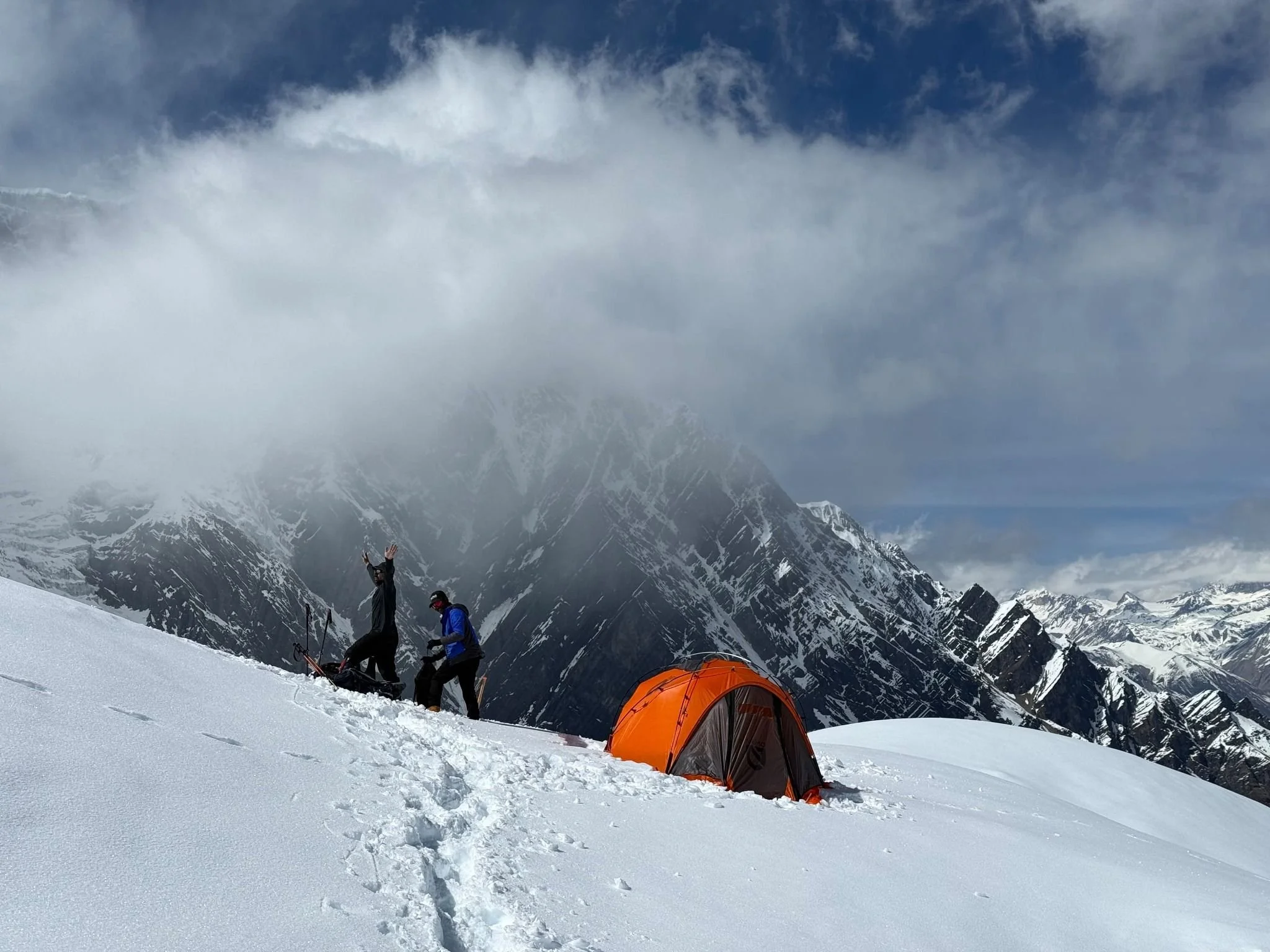
Choosing a high-altitude expedition tent requires considering the number of people, climb area or tent setup location, altitude, and climate profile. A tent suitable for a 6000 m expedition may not perform better at 7000 m or above altitude. Before choosing a tent, it is important to consider the following factors:
Camp location and exposure: Ensure the tent placement on the mountaineering adventure will be on exposed terrain, a steep slope, or a rocky platform. If the tent is required to be placed in steep and exposed locations, a stable structure with strong poles and multiple anchoring points is required.
Attitude and weather: For camps above 7000 m, prioritize choosing a compact wind-resistant tent that can be placed securely in the limited space. The tent must be strong enough to protect from strong winds, freezing temperatures, and spindrift.
Climbers number: If you require placing tents in narrow high camps, a two-person tent can be a suitable choice. Meanwhile, 3 or more person tents can be installed in an area with sufficient space.
Tent structure: The design and building of tents matters. The geodesic and dome design of the tent provides multiple pole-crossing points for exposed mountain environments. Tunnel tents give good space-to-weight ratios but require reliable anchoring and sufficient pitching space.
Weight and protection: While lightweight tents reduce loads during high altitude ascents, they may compromise strength. When choosing light tents, it is important to consider one providing satisfactory structural durability.
Tips for Setting Up Tents at High Camps
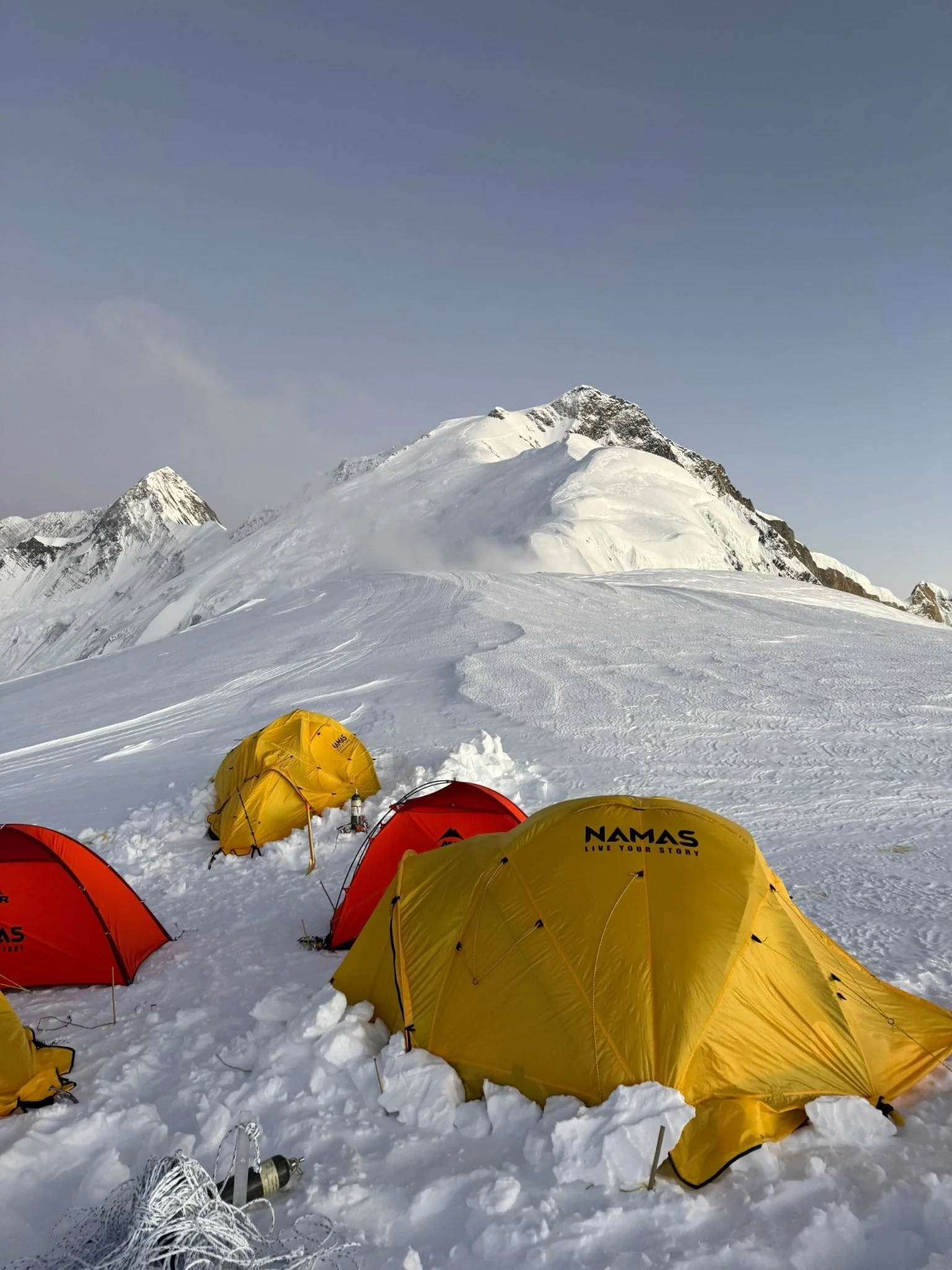
Proper installation technique is as important as choosing the right tent for proper safety and comfort for the climbers at high altitude. Without popper placement, even a strong tent can get unstable. Some of the important tips that climbers must follow when setting up tents at high camps include the following:
Choosing a sheltered location: Installing tents in locations that are not exposed to direct wind, ridges, cornices, and avalanche-prone locations.
Ground preparation: Before pitching the tent, level and compact the ground to create a stable surface for sleeping.
Securing tent: Secure the tent using snow anchors, buried dead man anchors, and other appropriate equipment.
Guy lines: Use all available guy lines to distribute the wind pressure across the tent structure.
Ventilation: Maintain ventilation to reduce condensation and promote circulation, and adjust according to weather conditions.
Inspection: Inspect the tent regularly by checking poles, connections, zippers, guylines, and anchor points for stability.
It is important that every climber has knowledge of setting and securing tents while wearing climbing gloves.
Conclusion
A suitable and reliable expedition tent is important for the safety and security of climbers during high-altitude mountaineering above 6000 to 8000 m. And when selecting a right expedition tent, one must consider its structural strength, weight, weather protection, and ventilation against the usage location or altitude.
For detailed information about the suitable expedition tents and other mountaineering equipment, contact Namas Adventure. Whether you are planning for a 6000 m, 7000 m, or 8000 m expedition, the expert team and guide from Namas Adventure help you with proper itinerary, training, equipment selection, and logistical support to make your mountaineering expedition safe and successful.
